We need your help now

Support from readers like you keeps The Journal open.

You are visiting us because we have something you value. Independent, unbiased news that tells the truth. Advertising revenue goes some way to support our mission, but this year it has not been enough.

If you've seen value in our reporting, please contribute what you can, so we can continue to produce accurate and meaningful journalism. For everyone who needs it.


File photo of detainees at an ICE detention centre. Alamy Stock Photo

Sitdown Sunday: Does the US have concentration camps?

Settle down in a comfy chair with some of the week’s best longreads.

IT’S A DAY of rest, and you may be in the mood for a quiet corner and a comfy chair.

We’ve hand-picked some of the week’s best reads for you to savour.

1. Does the US have concentration camps?

el-paso-in-usa-and-ciudad-juarez-in-mexico-seen-from-space-seen-from-space-contains-modified-copernicus-sentinel-data-2019 Aerial view of El Paso, Texas. Alamy Stock Photo Alamy Stock Photo

Irishman Seamus Culleton made headlines this week for speaking out on his detainment by US Immigration and Customs Enforcement (ICE) in a detention centre in El Paso, Texas. Speaking to the Irish Times, he described the centre as “like a concentration camp”. On RTÉ’s Liveline this week, he described his experience in El Paso’s Camp East Montana as “torture”, adding that the facilities are “filthy” and detainees are given “child-sized” portions of food. This week, The New York Times analysed the conditions of the huge Camp East Montana and the situations detainees are left in when released.

(The New York Times, approx 10 minutes reading time)

“El Paso County leaders, immigration lawyers and advocacy groups say ICE officials are leaving people to languish in harsh conditions in hopes that they will choose to self-deport, even if some have temporary legal status or may be eligible for asylum. Those who successfully challenge their detention are often left stranded at shelters along the border and forced to find their way home.”

2. Can weight loss injections help cure addiction?

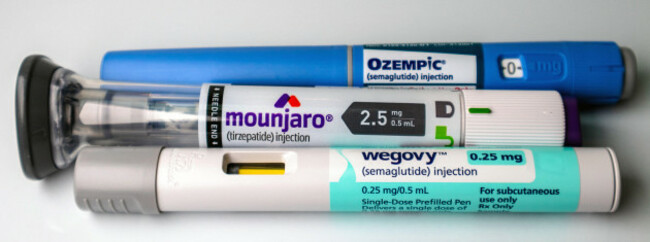
ozempic-mounjaro-and-a-wegovy-pen-on-white-background Alamy Stock Photo Alamy Stock Photo

There’s been no shortage of news – both good and bad – about weight loss injections in recent years. But could the medication cure addiction as well as aid weight loss? This article by The New Yorker says there is growing evidence that the drugs can help people curb drug and alcohol use. 

(The New Yorker, approx 25 minutes reading time)

“Last year, at a bar, Mary noticed that the same friend had hardly sipped her drink. She told Mary that she’d started taking Ozempic for weight loss. “If I have more than two beers now, I go outside and barf,” the friend said. Mary was perplexed. Ozempic, or semaglutide, originated as a diabetes medicine; more recently, as an obesity treatment, it has made its manufacturer, Novo Nordisk, one of Europe’s most valuable companies. What did it have to do with drinking? The next day, Mary saw an advertisement on Facebook: a nearby clinical trial was studying semaglutide’s effects on alcohol addiction. She enrolled.”

3. Ireland’s hidden suicide statistics

An investigation from Patricia Devlin of The Journal Investigates found that hundreds of patients died by suspected suicide shortly after being in contact with healthcare services in Ireland. Almost 450 suicides were reported to the HSE between 2022 and 2024 – but they are not publicly reported, and don’t appear in official suicide figures until after a coroner’s inquest officially determines a cause of death, which can take place months or even years later.

(The Journal, approx eight minutes reading time)

“The Journal Investigates has found that Ireland’s mental health system routinely funnels those in suicidal crisis through busy Emergency Departments [EDs], with little capacity to track or protect them after they leave. It comes just weeks after the National Self Harm Registry revealed that more than one-third of those attending emergency departments with self harm injuries were not assessed by a mental health professional during their visit. Families of those who have lost loved ones say this critical gap in Ireland’s suicide-prevention system must now be fixed to save lives.”

4. What’s so great about Hannibal Lecter?

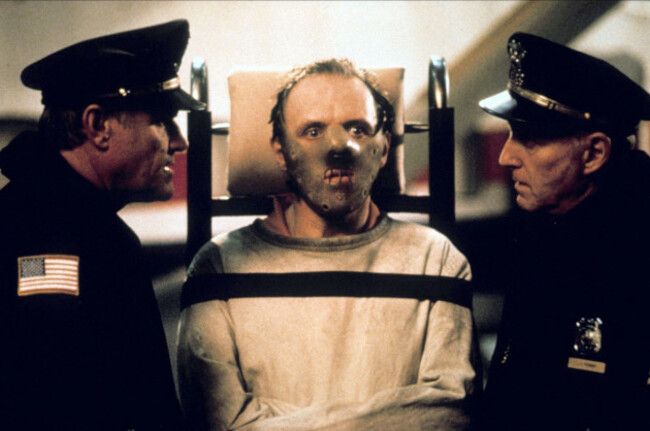
anthony-hopkins-the-silence-of-the-lambs-1991 Alamy Stock Photo Alamy Stock Photo

How did a cannibal from a 1991 film become such a cultural phenomenon? This excerpt from Brian Raftery’s book, Hannibal Lecter: A Life, delves into the public’s obsession with Hannibal Lecter and how The Silence of the Lambs revived the Hollywood career of Anthony Hopkins. 

(Longreads, approx 15 minutes reading time)

“Hannibal Lecter had captured the public’s imagination—for better or for worse. One New York City psychologist told the press that nearly a third of her male patients wanted to talk about Lecter. ‘They’ve lost three or four nights’ sleep after that movie,’ she reported. And Lecter became a frequent topic of conversation at Manhattan power lunches, where high-priced attorneys spoke in trembling tones about watching The Silence of the Lambs. ‘These are people who work on deals worth millions of dollars and it doesn’t strike fear into their hearts,’ noted a lawyer at a large New York City firm, ‘but for some reason, Hannibal Lecter did.’”

5. Are we in danger of overdiagnosing mental illness? 

top-view-closeup-of-unrecognizable-senior-woman-holding-tissue-in-hands-during-therapy-session-and-crying-copy-space Alamy Stock Photo Alamy Stock Photo

The conversation and understanding around mental health has evolved significantly, and for the better, in the past 50 years. In a controversial take, this doctor, writing for The Guardian, is now asking if we are now overdiagnosing people?

“Many people now use the words ‘mental health’ as interchangeable with ‘mental illness’ – as in, “I’m here for my mental health, doctor.’ The ubiquity of this kind of language has had some real benefits: it has destigmatised emotional and mental distress, encouraged sufferers to seek help, fostered communities of people with similar problems. But medical words are powerful, and medical labels can become self-fulfilling spells that curse as often as they cure. Today’s worrying statistics on deteriorating mental health may represent long-overdue recognition of widespread mental illness, or they may represent a pathologising trend to categorise normal human experiences as clinical disorders.”

(The Guardian, approx 15 minutes reading time)

6. Hollywood’s secret smear machine

Screenshot 2026-02-13 at 10.50.45 The slander sites are allegedly attacking celebrities in high-profile scandals, such as Blake Lively and Justin Baldoni.

The New York Times made waves when it published an article in 2024 alleging that some of Hollywood’s most famous faces can pay for others to be cancelled. Now, The Hollywood Reporter has examined a network of anonymous slander sites, which may be set up by a small group of operatives, and are attacking celebrities in high-profile scandals — from Blake vs Baldoni to an ugly K-pop feud. 

(The Hollywood Reporter, approx 15 minutes reading time)

…AND A CLASSIC FROM THE ARCHIVES…

7. The export of the Irish pub

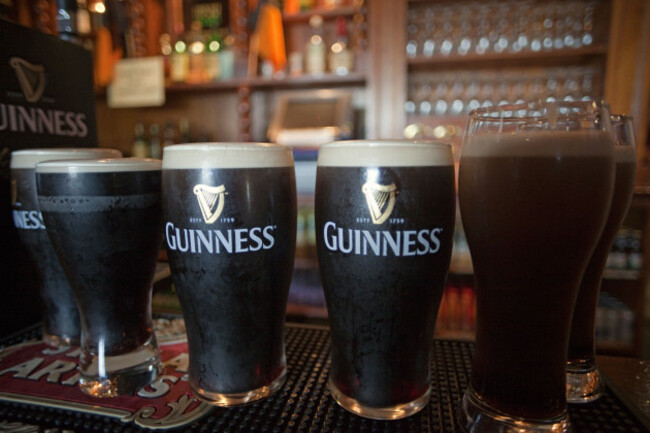
republic-of-ireland-pints-of-guinness Alamy Stock Photo Alamy Stock Photo

The High King’s 2013 Irish Pub Song highlighted how the simple Irish pub has travelled across the world, providing work, community and pints to the Irish diaspora, as well as the locals. There is famously an Irish pub on every continent except Antarctica (so far). This article delves into the story behind the Dublin-based Irish Pub Company, and its founder Mel McNally, who has designed more than 2,000 pubs in over 100 countries around the globe.

“The Irish Pub Company evolved out of a project McNally did about pub design for a competition when he was an architecture school student in Dublin in the 1970s. What the professors believed to be a cheeky excuse to spend time drinking pints turned into a two-year expedition through Ireland in which McNally and some architect friends visited more than 200 pubs in cities and remote country villages. ‘We recorded the essence of what makes a pub a pub—in the scale, the architecture, the mix of details, the craftsmanship,’ McNally says. ‘No two are the same, but they have an essence that we carry into projects we do now.’”

(Smithsonian magazine, approx 10 minutes reading time)

Readers like you are keeping these stories free for everyone...
A mix of advertising and supporting contributions helps keep paywalls away from valuable information like this article. Over 5,000 readers like you have already stepped up and support us with a monthly payment or a once-off donation.

View 14 comments
Close
14 Comments
This is YOUR comments community. Stay civil, stay constructive, stay on topic. Please familiarise yourself with our comments policy here before taking part.
Leave a Comment
    Submit a report
    Please help us understand how this comment violates our community guidelines.
    Thank you for the feedback
    Your feedback has been sent to our team for review.

    Leave a commentcancel

     
    JournalTv
    News in 60 seconds