Sign in. It’s quick, free and it’s up to you.
An account is an optional way to support the work we do. Find out more.
Sign in. It’s quick, free and it’s up to you.
An account is an optional way to support the work we do. Find out more.
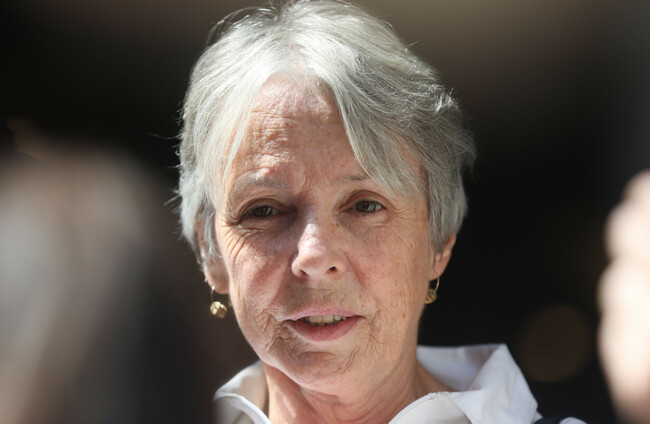
IN HER FIRST public appearance since her resignation as chairperson of the RTÉ board, Siún Ní Raghalliagh said there is “political inertia or, more likely, wilful neglect” of public service media in Ireland among TDs.
Speaking on public service broadcasting at the Macgill Summer School today, Ní Raghalliagh made the comments in the context of funding public service broadcasters – something she claims successive Government have failed to adequately do.
On Thursday, despite multiple reviews, committees and other bodies recommending the TV licence fee be scrapped, The Journal reported that the Government intends to retain the tax and also introduce a plan for “multi-annual” funding from the exchequer for RTÉ and public service media.
Ní Raghalliagh told the audience today: “I believe that we have moved on from the debate for the necessity of public service media, but the funding issue has remained for many years and successive Governments have remained firmly in a political stranglehold.
“We have a household licence fee, with an outdated trigger point, centred around the ownership of a television set, despite the fact that out public service content is accessible across all platforms.
“We have the highest evasion rate in Europe and the fee is not index-linked. In fact, it is the most inequitable tax – with around only 50% of households actually paying the fee.”
Ministers have been at loggerheads over recent months about how to fund the national broadcaster, with Media Minister Catherine Martin arguing for full state funding on a multi-annual basis.
Ní Raghalliagh acknowledged some concerns about this plan, such as the possibility of the independent of the broadcaster being jeopardized as a result, but said that, regardless, she believes the funding model is already “firmly in the control of the political system”.
The former chairperson also pointed to how TG4′s funding, which is allocated on a year-to-year basis from the exchequer, provides no room for future planning or certainty that the same budget will be available the next year.
“[This is] exactly what is to be avoided [with RTÉ] according to Government,” she said.
According to Ní Raghalliagh, who has been involved in public service broadcasting – between TG4 and RTÉ – for the majority of her career, RTÉ has suffered a continuous decrease in funding, as evasion rates increase and the TV licence rate remains the same.
“I would call this a form of political inertia or, more likely, wilful neglect. It is a form of state control of our public service media – not an active control but more an inertia from indecision and failure to grasp the nettle.”
It is understood that at next Wednesday’s Cabinet meeting, a mixture of the TV licence fee and a “multi-annual” State payment will be approved.
The ring-fenced funding will ensure stability for RTÉ and their plans for transformative reform in the years ahead, meaning it will not be subject to annual rounds of budgetary allocations.
But the findings of the scandal in RTÉ over the last year, according to Ní Raghalliagh, have shown that “culture trumps governance” and that while steps are being made to ring fence and improve the governance of the station – the culture must also be examined.
Ní Raghalliagh said: “Reports have been commissioned and delivered to Government and a variety of suitable funding models have been suggested.
“And it would appear from reports that the decision will be to continue for the dual-funding model for RTÉ, with exchequer top-ups, and I assume continue with direct funding for TG4.
“The devil will be in the detail. The questions will be what will be the trigger point for liability to pay a licence fee? How will the licence fee be collected? Will Coimisúin Na Meán be the body that will divide out the licence fee income?
“Will RTÉ get a fixed-percentage? How will the exchequer funding be calculated and grunted? One thing is for sure: the debate will continue,” she added.

To embed this post, copy the code below on your site









have your say