Sign in. It’s quick, free and it’s up to you.
An account is an optional way to support the work we do. Find out more.
Sign in. It’s quick, free and it’s up to you.
An account is an optional way to support the work we do. Find out more.
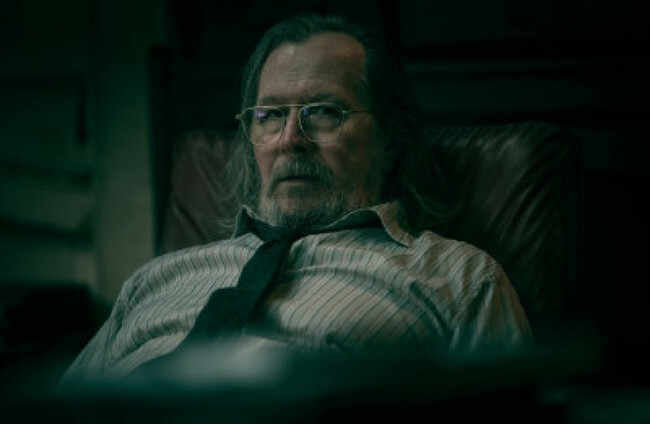
WHAT IS IT that has made Slow Horses such a success?
For starters, there’s the brilliant text that it’s adapted from: Mick Herron’s slyly clever spy thrillers. Herron’s gift for creating characters that are equal parts silly and lovable means that since it debuted in 2022, Slow Horses the TV show has been a gift for those of us who want a series that’s suspenseful and entertaining rather than basic and boring.
But another part of its screen success comes down to how it has been adapted so wonderfully. The Apple TV adaptation hasn’t lost the essence of what makes Herron’s work so great, with the makers of Slow Horses approaching each series with brio. For the past five seasons, the show has felt lived-in, familiar, thrilling, and never betraying the fact that it is made at speed (two seasons are filmed per year).
But like any creative work that’s been made over time, some series can be better than others. So what about the sixth season of Slow Horses, which is streaming on Apple TV now. Is it worth watching?
Changes
There are some changes behind the scenes which might make you wonder how successful season six could be. Its original showrunner, Will Smith, has departed and been replaced as lead writer by Gaby Chiappe (who has written for shows like Shetland). Plus, rather than adapting one book as all the previous seasons have done, this adapts Joe Country and Slough House, the sixth and seventh books in the series.
So: a change of personnel and trying to cram two books into one six-part series… Might Slow Horses start to limp?
Thankfully, the answer is it’s as energetic as ever. Chiappe continues to celebrate what makes Slow Horses the great show it is, and has managed to combine both books’ stories relatively seamlessly. In fact, this season feels somewhat lean overall, which is quite the achievement.
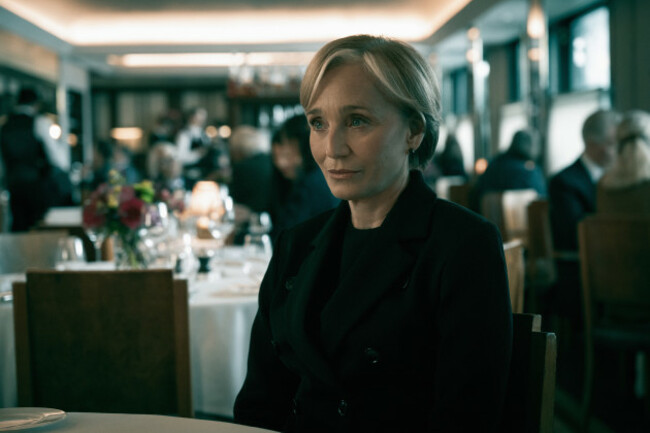
The usual team are back in Slough House: Gary Oldman as leader Jackson Lamb, Jack Lowden as the grumpy agent River Cartwright, Saskia Reeves as the smart yet undermined office administrator Catherine Standish, Christopher Chung as obnoxious but talented tech expert Roddy Ho, Aimee Ffion-Edwards as the grumpy but well-meaning agent Shirley Dander, and Tom Brooke as the supremely odd J.K. Coe. In MI5, we have Kristin Scott Thomas as its ‘second desk’ Diana Taverner and Irish actor Ruth Bradley as Emma Flyte, head of security (aka ‘The Dogs’).
Not to spoil things, but you can also expect the reappearance of a familiar yet unexpected face from a past series of Slow Horses, which adds a frisson of excitement to the action.
Under threat
The series opens with what sounds like a dog barking, but is actually former Slow Horse Struan Loy (Paul Higgins, who you will recognise from The Thick of It) demonstrating karate moves to bored children. The reveal of the audience to his demonstration is classic Slow Horses, showing Loy’s self-confidence isn’t matched by his mortifyingly humble circumstances. The series finds empathy for its characters through highlighting how pathetic they can be, which makes us wince.
Loy is also running a business selling shipping containers as houses, and it’s when he returns to his own shipping container/home that the action kicks off. Let’s just say that Loy meets a grisly end, and soon we realise that the Slow Horses agents are all in danger.
Now, it’s not like the Slow Horses haven’t been in danger in other series, but this time it feels extremely serious.
As well as this imminent threat, there are other issues the agents are dealing with. River Cartwright is glum and grieving after the death of his granddad, and sympathy is hard to find. Plus River’s father, the dastardly ‘worst father of the year’ winner Frank Harkness (Hugo Weaving) reappears, which adds another layer of danger.
The agents have also discovered that they haven’t been paid, leading to further revelations about their status in MI5. Then there’s the reappearance of an important former Slow Horse member which proves pivotal, but I’ll leave you to watch that unfold.
And what about MI5 head Diana Taverner? Well, her bulletproof status is looking shakier by the episode. The appearance of Samuel West’s character Peter Judd, an odious former MP who spells disaster wherever he goes, certainly bodes badly for Taverner.
Funny games
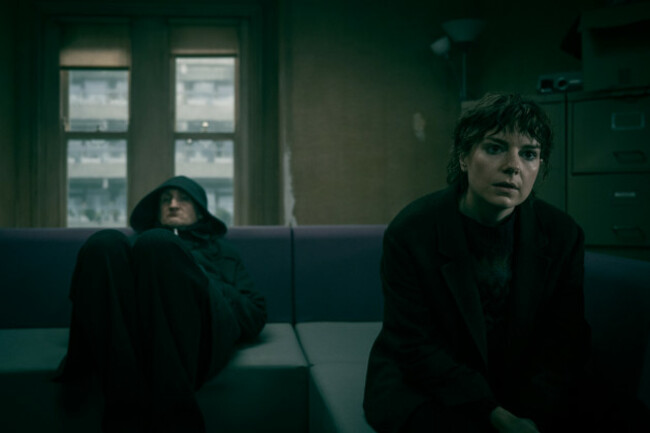
After six seasons, you might think we’d tire of seeing the Slow Horses being undermined by MI5, under threat from various dangers, and being shouted at by the frustrating yet smart Jackson Lamb.
But we can’t help but love these underdog characters, who make us fiercely root for them thanks to their blend of whipsmart humour, dogged focus, and commitment to riding out every dangerous storm. We don’t want to see ourselves in them because they are underdogs, and yet that’s what surely makes us feel close to the Slow Horses – most viewers will know what it is like to be underestimated. Same goes for Diana Taverner, who is a thorn in their side but in her own way is consistently undermined (likely due to sexism) in an organisation that she’s given her entire life to.
There’s also something magnetic about the fact that the Slow Horses – and, particularly in this season, Taverner – make mistakes and find themselves mixed up in situations they really don’t want to be mixed up in. In season six, the normally in control Taverner finds herself destabilised by Peter Judd, and his relationship with a nasty right-wing media outlet. Herron is always great at reflecting Britain’s social and political issues through his characters, and a scene where Taverner does a rare media interview feels very real indeed.
As the series moves forward, the various threads begin to intertwine, and we see that the assassins, Taverner and Judd’s conversations, and the Slow Horses’ lack of payment are all connected.
One of the most enjoyable aspects of this latest season is the delicious humour that Chiappe and the writing team inject into what is already a very funny series. It’s frequently droll, dark and sarcastic, and the dialogue in this series is perhaps the funniest yet. These moments puncture the gloomy mood that’s hanging over the characters, who are under threat in a London that’s being drenched in never-ending rain.
This bodes well for characters like Roddy Ho. He could sometimes feel like a bit of a caricature in previous seasons, but he imparts many great zingers this time around which show us how deep down he’s a softie.
River Cartwright is justifiably in a foul mood throughout most of the series, but that feels earned. When his grumpiness lifts, it’s with the hope that something better is out there for him. You really feel that by this stage he’s earned some happiness, but as this is Slow Horses you know it’s unlikely to work out.
And as for Jackson Lamb, he’s as clued-in, annoying and flatulent as ever. He even gets to indulge in a fart-off with new character Reece Nesmith, played by Lenny Rushe (of Am I Being Unreasonable?). But as usual, it’s his knowledge and experience that proves key to everything.
Six seasons in, it’s a huge relief – and a joy – to see Slow Horses in as fine a form as ever. The new blood and new approach to narrative both work wonderfully, and the lean, compact story contains enough action and thrills to hook in both longtime and new fans.
Looking again at that question of its success, there’s no doubt that a lot of it comes down to the series’ sense of humanity. A spy thriller could hold its characters at a remove, making them feel like ciphers rather than humans. The Slow Horses themselves could become the butt of a joke, making us viewers pity them rather than root for them.
But, like the books, Slow Horses shows us the humanity behind these characters, making them complex people who cope in different ways with the hand that’s been dealt them. Their decisions sometimes confound us because these are characters with deep backstories and emotions that get tangled up with their need to constantly prove themselves. They are flawed, just like us, and feel deserving of not just our sympathy but our love. And there’s much to love in the new, twisty-turny season six of Slow Horses. Season seven can’t come fast enough
Slow Horses is streaming on Apple TV now.

To embed this post, copy the code below on your site














have your say