Sign in. It’s quick, free and it’s up to you.
An account is an optional way to support the work we do. Find out more.
Sign in. It’s quick, free and it’s up to you.
An account is an optional way to support the work we do. Find out more.
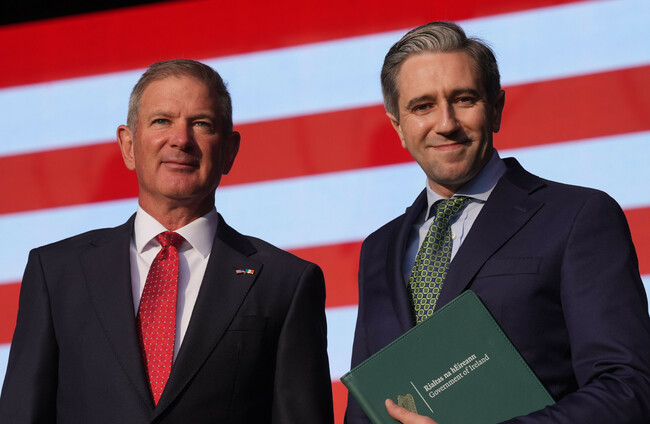
STUDENTS SHOULD NOT be “deprived” of a J1 visa for expressing their views on “horrific issues that are happening around the world”, Tánaiste Simon Harris has said.
It comes after the US Embassy in Dublin announced last month that students applying for J1s will now undergo “enhanced social media vetting”.
A US State Department official said consular officers will conduct a “comprehensive and thorough vetting of all student and exchange visitor applicants”.
All applicants are now required to list all of their social media profiles and set them to public to allow screening for anti-American content, with anyone failing to do this running the risk of having their application rejected.
The changes also apply for other exchange visitor applicants in the F, M and J non-immigrant classifications.
The US embassy said it will use all available information in its visa screening to identify those who “are inadmissible” to the US, including those who pose a threat to national security.
It said it wanted to ensure those applying for admission into the US “do not intend to harm Americans and our national interests”, adding that a US visa “is a privilege, not a right”.
The national students’ union said the new measures represent a significant and disproportionate intrusion into personal lives and digital privacy, and that they raise serious concerns about freedom of expression and online surveillance.
Speaking to reporters today following a meeting with US ambassador to Ireland Ed Walsh, Simon Harris said the two men had “a really good conversation” about student visas.
“I think Ambassador Walsh knows the importance of the people-to-people connection between our two countries,” Harris said.
“I was making the point that we live in a country where young people have very, very strong views – as do I, by the way – on a lot of what’s going on in the world and they have every right to express those views.
“Freedom of speech matters and being able to freely express yourself – online, offline, through protest – is an important part of our democracy, and I know President Trump is somebody who, I’d imagine in his own country, would champion free speech.”
He added: “We very much want our young people to continue to be able to articulate their very strongly-held views on horrific issues that are happening around the world, but that shouldn’t deprive somebody from going on a J1.”
Harris said that while immigration policy and visas is a matter for the US, he said he and the ambassador agreed to keep in touch on the matter.
“Ireland and the US have been friends for hundreds of years. It’s important we keep those connections going, and I wouldn’t like to see anything that causes apprehension for a young person travelling to the United States – and I just made that point to Ambassador Walsh.”
Taoiseach Micheál Martin previously said there should not be “any overzealous examinations of people’s records” when speaking about the matter.
“Obviously, authorities do monitor for potential criminal activity and that’s generally done by the police services,” he said.
“But I wouldn’t be in favour of any overbearing inquisitorial approach to young people or their social media for that matter in terms of traveling from here to the United States, or indeed to any other part of the world.”
Martin said J1 visas “work both ways”, adding: “It works very well for the United States in terms of a lot of workers in the hospitality sector.”
Roughly 5,000 Irish students avail of the J1 visa programme every summer.

To embed this post, copy the code below on your site















have your say