Sign in. It’s quick, free and it’s up to you.
An account is an optional way to support the work we do. Find out more.
Sign in. It’s quick, free and it’s up to you.
An account is an optional way to support the work we do. Find out more.
In Beirut, a day before I left for Damascus, I had coffee with a Syrian friend who works at a coffee shop in Gemmayzeh in East Beirut.
The area had been left untouched by the Israeli air strikes that levelled so much of the southern suburbs of the city but the economic tail-spin of the war between Israel and Hezbollah had still been felt here.
After months of little foot traffic on the usually busy thoroughfare in Gemmayzeh, the coffee shop was closing down and my friend was going to have to look for another job.
Would he return to Syria, I asked. It’s not that simple, he said. He had a life in Beirut: an apartment, a dog and a girlfriend, and if he crossed the border into Syria he would have difficulty returning on a Syrian passport.
Of course, he was happy that Assad had fallen, but returning to Syria was not a straightforward decision for the millions of Syrians who had sought refuge from the brutal regime of Bashar al-Assad.
14 years of civil war is a long time, 53 years of the Assad family’s rule even longer.
My friend wasn’t religious and abhorred violence. His refusal to pick up a gun left him with little choice but to leave Syria or face lengthy military conscription in the Syrian army. But he said he was willing to give Hayat Tahrir al-Sham (HTS), the Islamist rebel group that overthrew Assad in December, a chance and hoped that Ahmad al-Sharaa would be “smart”.
“Syria needs security,” he said. “That is the most important thing. Everything else comes after but first we need an end to violence.”
As I crossed into Syria on New Year’s Eve, I saw the return of Syrian officials to the border control offices that had been left deserted since 8 December. I grumbled as I waited nearly two hours for an entry stamp, but, in truth, it was a sign that the HTS regime was trying to restore order after a tumultuous few weeks.
Also waiting to enter was Abdullah, who was visiting Syria from the Netherlands for the first time in 14 years, with his father. “I have lots of family waiting for me in Damascus,” he said excitedly.
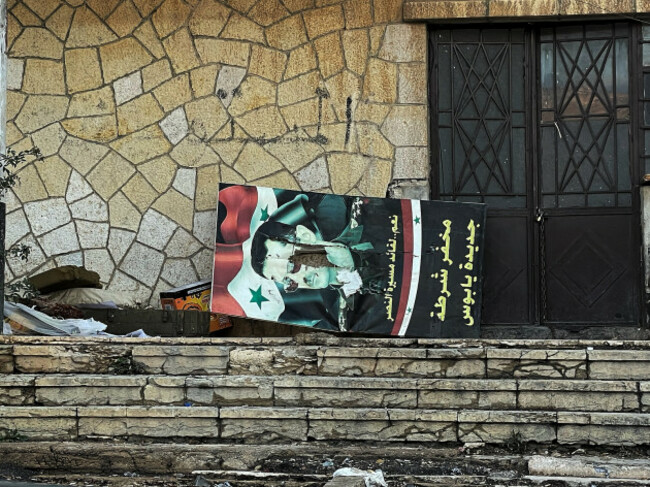
On the road into Damascus, posters of Assad had been torn down and a Syrian army tank still lay deserted on the main highway.
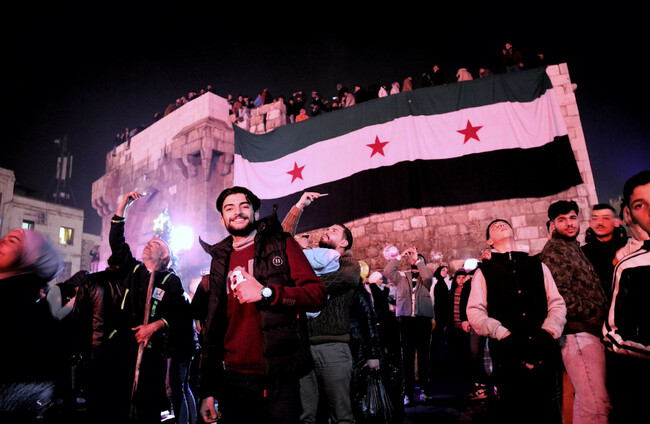
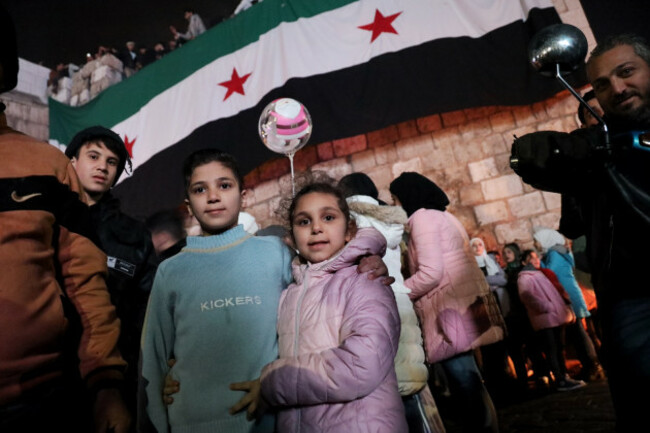
In the main square of Bab Touma in the old city of Damascus, a festival atmosphere had taken hold. The neighbourhood lies in the city’s Christian quarter and was decorated with Christmas trees, with Santa Clauses selling flashing balloons and children asking their parents for candy floss.
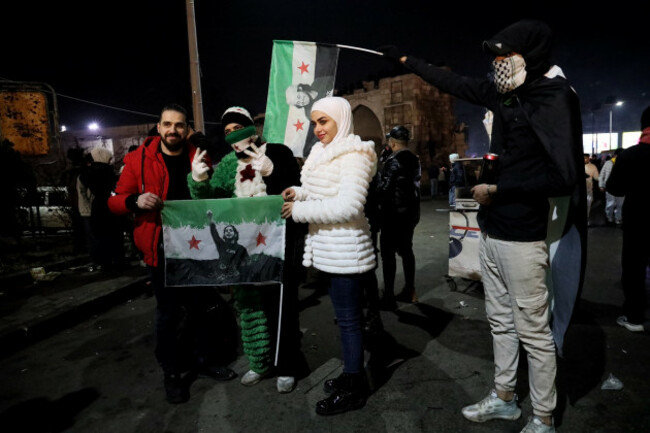
Syrians sang anti-Assad chants and posed for photos in front of large screens displaying the rebel’s Syrian flag which replaced the traditional red with green.
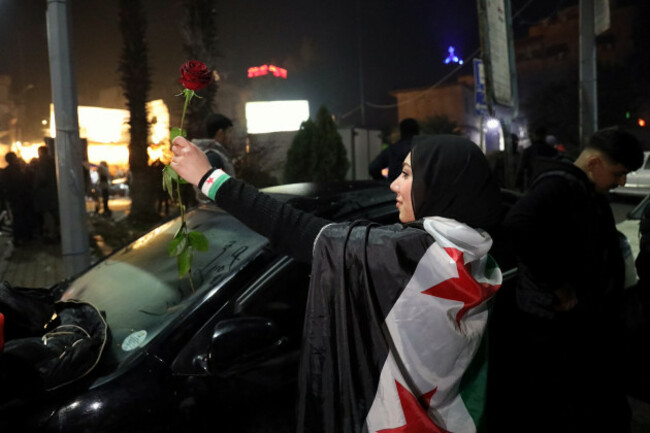
Among the revellers were Syrians visiting from Lebanon where they had sought refuge when the civil war broke out. Sidr and her sister had travelled from Akkar in northern Lebanon for New Year’s Eve. Draped in the rebel’s Syrian flag and holding a rose, Sidr said this was her first time in her home country in 15 years.
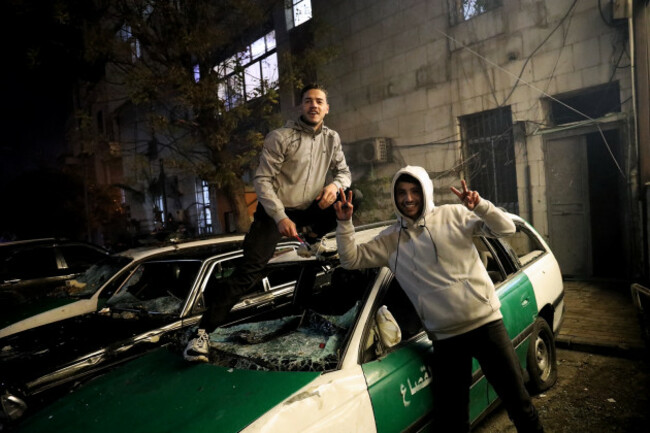
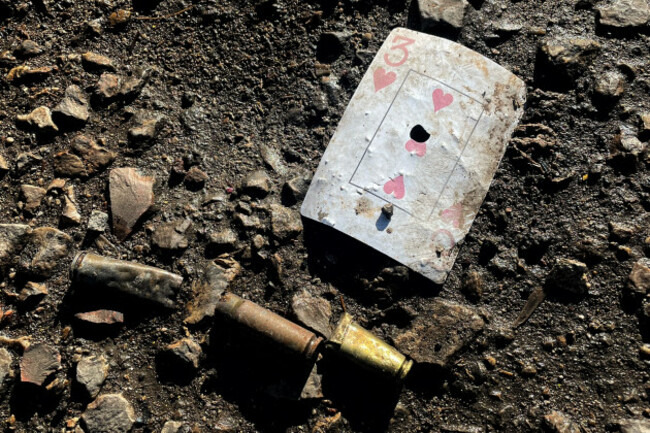
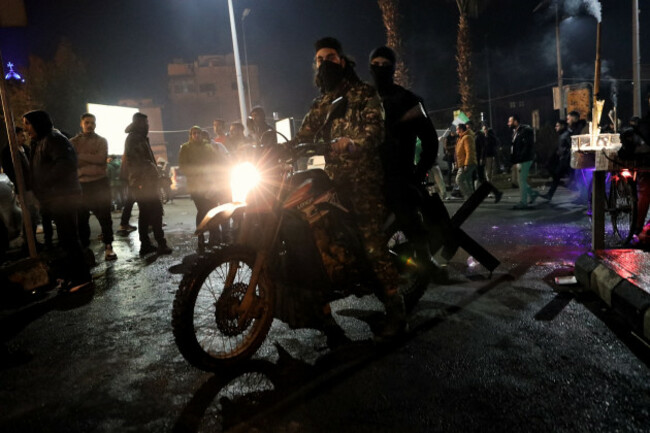
In front of the police station on the square, several crashed police cars with smashed windows were parked. The station is now manned by rebels in military fatigues with Kalashnikovs slung across their bodies. Two of the rebels occasionally toured through the crowds celebrating in Bab Touma square but mostly they surveilled the revellers from the station.
In December, an agreement was reached for the rebel factions to become part of Syria’s Defence Ministry, while soldiers who defected from the Syrian army would also be incorporated into the country’s formal military structure.
The Kurdish-led and US-backed Syrian Democratic forces in northern eastern Syria have not yet signed up to the deal, a sign of the difficult year Syria could have as what type of post-Assad country will be formed comes into focus.
HTS leader Ahmed Sharaa has said he is not interested in new conflicts and in 2025 will be embarking on a diplomatic mission to convince Western officials to remove the sanctions imposed on Syria under the Assad regime.
The leader has said it will take a year for Syrians to see real change and that he expects it to take up to four years to draft a new constitution and hold elections. Syria is a Sunni Muslim majority country, but with several sizeable minority ethnic and religious groups, as well as a significant secular base.
Sharaa says he wants Syria’s constitutional arrangement to ensure all groups can participate in government, but has said it should not be based on a quota system, similar to what has been used in Lebanon and Iraq (as well as Northern Ireland). This quota system doles out ministries and state positions based on party or sectarians affiliations and Sharaa has said these models have resulted in chronic state paralysis and a failure to deliver even basic needs.
On New Year’s Eve, the battle-hardened rebel leader met in Damascus with senior clerics from Syria’s Christian minorities, whose numbers dwindled sharply during the civil war. A few days earlier, hundreds of protestors had taken to the streets in Damascus including in Bab Touma to demonstrate against the burning of a Christmas tree in Hama and chanted “we will sacrifice our souls for our cross.” Syria’s new Islamic leadership wil face a new type of battle in 2025 to reassure and unite all of Syria.
Meanwhile, many displaced Syrians are returning to survey the wreckage of their homes, with questions of what happened to their loved ones at the hands of the Assad regime. Wafa Moustafa left Syria after her father, Ali, was forcibly disappeared during the Syrian uprising in 2013.
At a gathering in Damascus where Syrians held posters of their missing loved ones, Moustafa said: “Our search for our loved ones did not stop yet. It will not end until we find the full truth of what happened to them. We accept nothing less than knowing all details related to what happened to them, who is responsible for their detention? Who tortured them? If they were killed, unfortunately, who killed them? And where they were buried.”
Hannah McCarthy is a journalist based in Beirut.

To embed this post, copy the code below on your site










have your say