Sign in. It’s quick, free and it’s up to you.
An account is an optional way to support the work we do. Find out more.
Sign in. It’s quick, free and it’s up to you.
An account is an optional way to support the work we do. Find out more.
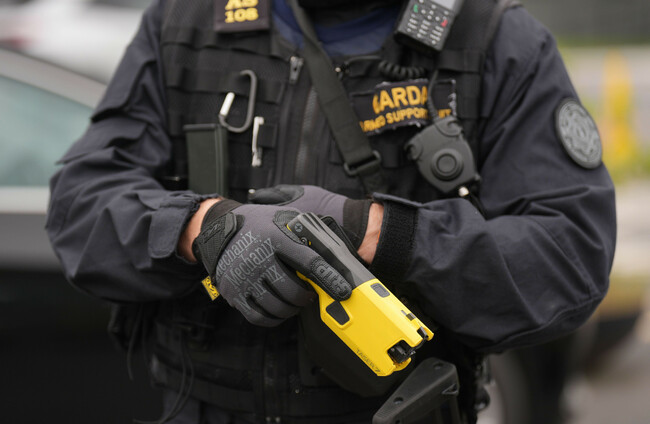

GARDAÍ WHO POINT their taser’s targeting laser at a suspect and discharge the device will have to notify the Garda ombudsman.
It’s part of a set of protocols setting out strict rules and monitoring measures for the newly deployed devices.
On Tuesday the Cabinet cleared the way for 128 gardaí to be issued with the less lethal electric shock weapon as part of a new six-month pilot scheme.
The Justice Minister had told his government colleagues that the Conductive Energy Devices (CEDs), also known as the brand name ‘taser’, are being introduced in regions where body worn cameras are already in use.
The areas are Dublin South Central and North Central, Waterford and Kilkenny.
It follows a lengthy campaign by garda representatives groups to have the devices issued to gardaí.
The weapons are currently issued to members of the regional based Armed Support Unit and the national Emergency Response Unit but are not given to uniform response gardaí – they are issued with a metal extendable batons and pepper spray.
The minister has said the weapons will add a “tactical option” in violent encounters.
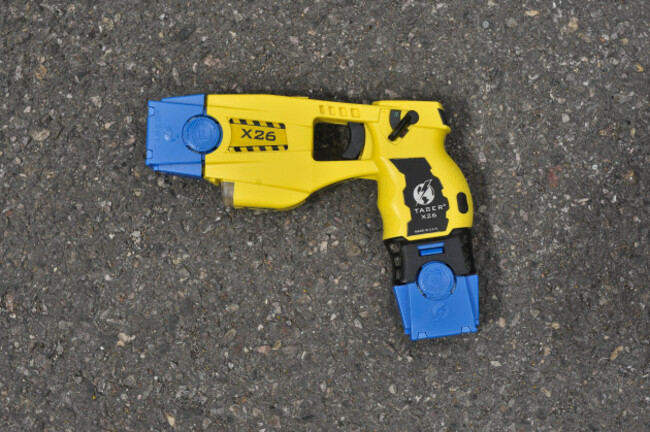
The practicalities of the deployment of the taser X26P will mean that they will be provided for small numbers of officers on units.
Sources have told The Journal that specialist secure safes have been installed in garda stations where the pilot scheme is happening.
Gardaí have already been trained to use the devices and it is understood that units have favoured experienced gardaí first.
The three-day course covers the laws and regulations around the use of the weapon. Unlike previous training in tasers the gardaí will not have the device fired on them.
It is understood that the weapons issued to gardaí are the more antiquated model with two prongs which are fired from the device with a detachable cartridge. Each garda will be issued with two cartridges.
The prongs make contact with the skin of the suspect and conduct an electric shock to disable the person.
The two-pronged version is the older model formerly used by the Armed Support Unit which was replaced by a four pronged device as it is more effective.
Sources have stressed that the taser is not a panacea for ending assaults on gardaí as it can prove ineffective against people wearing heavy clothing. It is understood gardaí, who have been advocating for the devices, are happy that it is seen as an additional tactical option.
The rules and procedures for its deployment for uniformed gardaí will centre around use of force protocols.
All gardaí carrying the device will have to be equipped with a body worn camera.
Garda training states that they must fill out multiple forms when it is used and must automatically notify Fiosrú, the Office of the Police Ombudsman.
A doctor must also examine the arrested suspect and should they be taken to hospital there will be forms to be filled out by the medics also.
The use of a taser is judged to be at the same scale as a strike from a baton. Gardaí already must record when they use their baton. The procedures determine that verbal commands, control with hands and up to use of pepper spray must be considered before it is deployed.
Should a suspect have a knife, the uniformed gardaí will have to wait for a fully armed garda to be deployed, sources have said. This is in-keeping with international best practice.
The issue for locations such as Waterford, where the pilot will take place, is that their nearest Armed Support Unit is based out of a station in Wexford – a one-hour drive away. There are also units in Cork.
Some detectives have handguns and can be called to assist but sources have said that these will not be available at certain hours of the day due to shift patterns.
The effective range of the tasers, should they be fired, is between seven feet and twenty feet. It records trigger presses and the duration of the interaction and this information can be downloaded to determine if the garda used the weapon correctly. The cartridge case containing the fireable prongs can also be taken off and internal
The six-month pilot will begin this month. Gardaí with tasers will be the first responders to emergency calls for service.
Garda Commissioner Justin Kelly said earlier this year that he was considering provision of tasers as he believes gardaí are under significant pressure. He said he receives weekly reports of injuries.
From 2014 to 2024, an average of 299 gardaí were assaulted each year.

To embed this post, copy the code below on your site













have your say