Sign in. It’s quick, free and it’s up to you.
An account is an optional way to support the work we do. Find out more.
Sign in. It’s quick, free and it’s up to you.
An account is an optional way to support the work we do. Find out more.
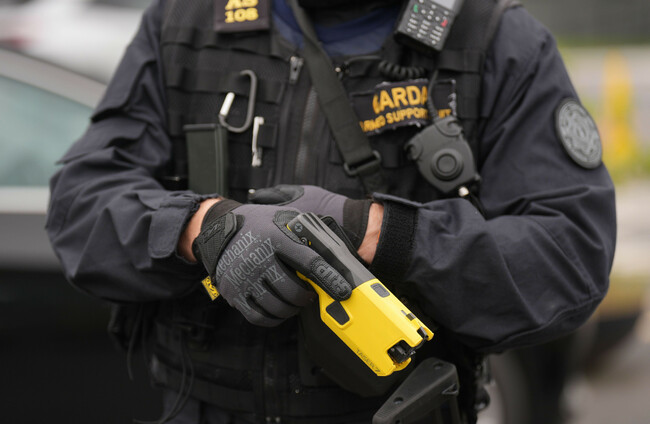
MORE THAN 100 gardaí are to be given taser guns as part of a new six-month pilot project.
The Justice Minister will tell Cabinet today that the Conductive Energy Devices (CEDs), also known as the brand name ‘taser’, are being introduced in regions where body worn cameras are already in use.
These areas are Dublin South Central and North Central, Waterford and Kilkenny.
Minister O’Callaghan will argue that currently frontline gardaí have “limited tactical options” in potentially violent encounters. These comprise verbal de-escalation and requesting assistance from armed colleagues.
CEDs are a “less-lethal” way for gardaí to manage “high-risk” situations, the memo says. The aim is to reduce the need for more forceful interventions.
The brand chosen is Taser X26P, which An Garda Síochána has used previously.
The 128 frontline gardaí who will be armed with the tasers are specially-trained on their use, Minister O’Callaghan will say.
The six-month pilot will begin this month. Gardaí with tasers will be the first responders to emergency calls for service.
Garda Commissioner Justin Kelly said earlier this year that he was considering provision of tasers as he believes gardaí are under significant pressure. He said he receives weekly reports of injuries.
From 2014 to 2024, an average of 299 gardaí were assaulted each year.
The Irish Council for Civil Liberties (ICCL) said it is concerned about the use of what they described as “dangerous weapons” in situations involving vulnerable people.
“Their introduction into frontline community policing would completely change policing in Ireland, and the relationship between gardaí and local communities,” the council said in a statement.
It referenced other countries, where tasers “have been repeatedly used against people experiencing mental health crises and in extreme cases have led to death”.
Speaking today, Joe O’Brien, Executive Director of ICCL, said: “There appears to be a pattern of government equipping gardaí with new tools on a pilot basis, then moving swiftly to a national rollout, without independent assessment of whether the tool is working to achieve its intended purpose.
“The bodyworn cameras pilot has become what ICCL warned against – an opening to introduce new technology nationwide, without publishing pilot findings or carefully weighing up the evidence for and against.”
Over the last two years, body cams have been rolled out in a number of counties.
The force expects that the cameras will improve safety for members, reduce complaints of police misconduct, save time in court preparation and appearances and lower costs in relation to those.
They also anticipate that they will result in less challenges around arrests and provide better policing outcomes, along with increased professionalism and accountability within the force.
With reporting by Christina Finn

To embed this post, copy the code below on your site















have your say