Sign in. It’s quick, free and it’s up to you.
An account is an optional way to support the work we do. Find out more.
Sign in. It’s quick, free and it’s up to you.
An account is an optional way to support the work we do. Find out more.

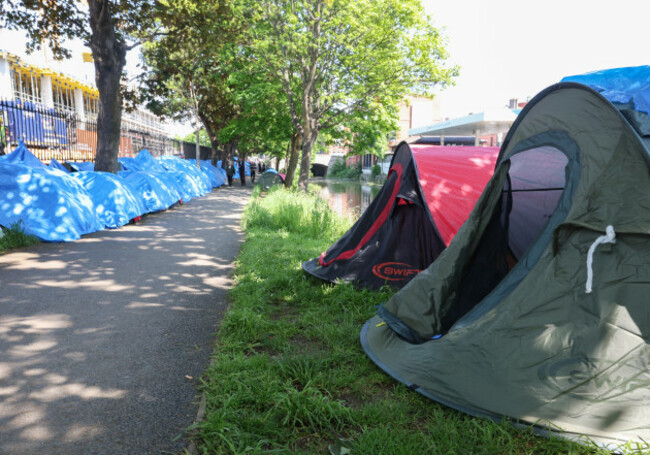
TENTS ON THE streets of Irish cities is “not our Rwanda policy” to deter people from coming to Ireland to seek protection, Tánaiste Micheál Martin has said.
Martin, speaking to RTÉ Radio One’s Morning Ireland this morning, said that any scheme similar to the UK’s controversial policy to send people seeking asylum to Rwanda is something “I would not support”.
The Government is under renewed pressure to tackle the increasing number of people resorting to sleeping in tents in Dublin city centre after it failed to provide them with State accommodation.
In recent weeks, the Government has clamped down on growing ‘tent cities’ which have been populating areas of Dublin, specifically Mount Street and along the banks of the Grand Canal.
While the Government scrambles to locate new sites to re-accommodate people seeking protection, the camps have since moved around the city including at a different location along the bank of same canal the original site began.
Labour Party leader Ivana Bacik likened the situation to the United Kingdom’s Rwanda policy – which plans to send migrants to Rwanda, pay authorities there to house and protect them and is being used a deterrent for people arriving to the UK.
This morning, the Tánaiste and foreign affairs minister denied the charge put to Government by the Dublin Bay South TD and claimed he would never support similar legislation.
Martin said: “No. It’s not a Rwanda policy. [I] could ever comprehend that we would send people to a particular state and pay that state money. That’s something I would not support.”
The Tánaiste said that global conflicts are what is driving up the number of people fleeing their home countries in fear of prosecution and that it’s the State’s responsibility to strengthen its procedures and better its processing time to deal with that.
Martin said methods such as reclassifying countries and placing them on the ‘Safe Countries’ list will help to alleviate the current pressure on the processing delays.
He claimed that the redesignation of a number of countries has already decreased applications by 50%. He added that such measures will ensure that those who need protection are granted it and those who aren’t entitled are told to leave.
Challenged on the ratio of deportation orders to actual deportations, Martin said he understands that those who aren’t forcibly removed are not receiving state payments.
“They disappear into the ether, or go elsewhere. But they’re not on our records,” he said.

To embed this post, copy the code below on your site












have your say