Sign in. It’s quick, free and it’s up to you.
An account is an optional way to support the work we do. Find out more.
Sign in. It’s quick, free and it’s up to you.
An account is an optional way to support the work we do. Find out more.
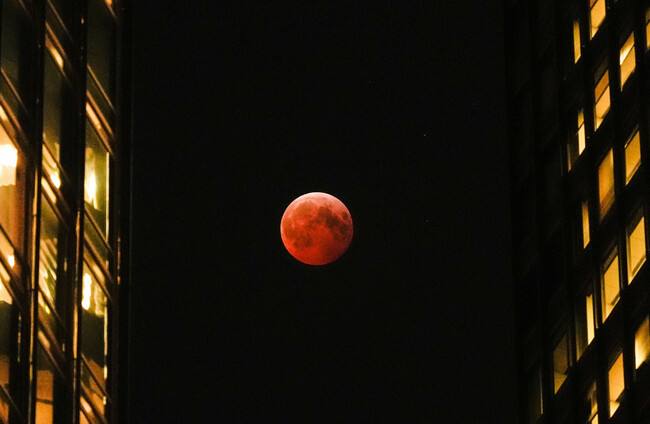
IN THE EARLY hours of this morning, people in Ireland had the opportunity to view a total lunar eclipse and catch a glimpse of the rare “Blood Moon” effect.
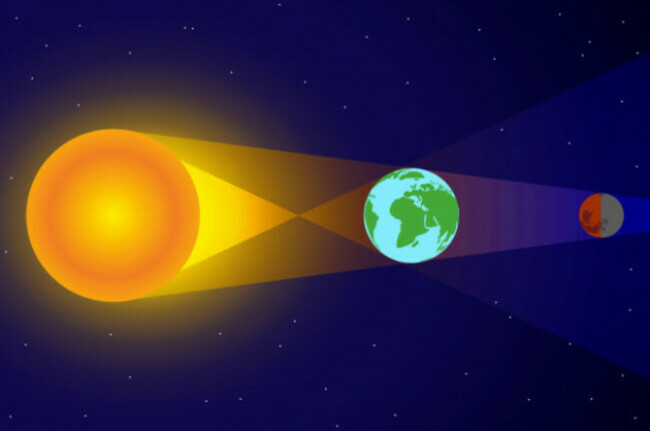
During a total lunar eclipse, the Sun, Earth and Moon line up, and the Moon enters the Earth’s shadow.
But as the Earth’s shadow creeps across the Moon, it does not entirely blot out its white glow.
Instead, the Moon turns a reddish colour as sunlight filtered through Earth’s atmosphere is refracted off the Moon’s surface.
The lunar eclipse began in the early hours of this morning in Ireland, shortly after 5am, as the Moon slowly slipped into the Earth’s shadow.
By around 6.30am, the Moon was totally eclipsed.
However, the famous “Blood Moon” effect was not as obvious in Ireland as it was in other parts of the world.
This is because when the lunar eclipse happened here, the Moon was low in the west as seen from Ireland, and by then, the Sun was close to rising.
The “Blood Moon” effect is more pronounced when it happens high in a dark sky.
However, David Moore, editor of Astronomy Ireland magazine, was able to capture a good image of an event he described as “one of the most spectacular sights I have ever seen”.
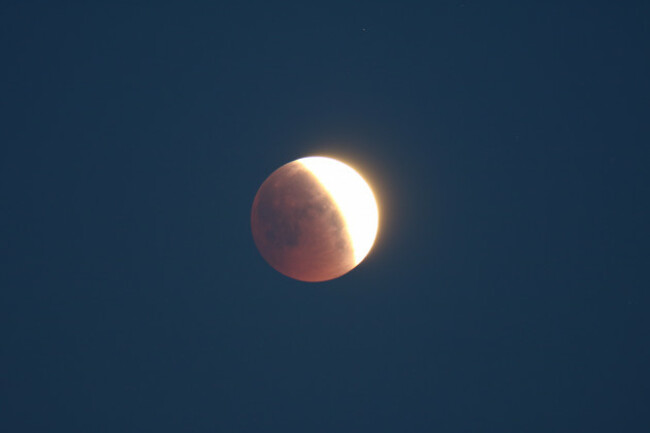
Below is how the lunar eclipse looked from the Co Antrim village of Portglenone, as captured by photographer Colleen Webb.
The lunar eclipse taken early this morning from Portglenone. @angie_weather @barrabest @bbcniweather @WeatherCee @Louise_utv @WeatherAisling pic.twitter.com/f3LddzZwJf
— Colleen Webb (@ColleenWebb0) March 14, 2025
And while a low Moon was an issue in Ireland, so too was cloud for most.
But in other parts of the world, the Blood Moon effect was instantly obvious, as seen here in downtown Chicago.
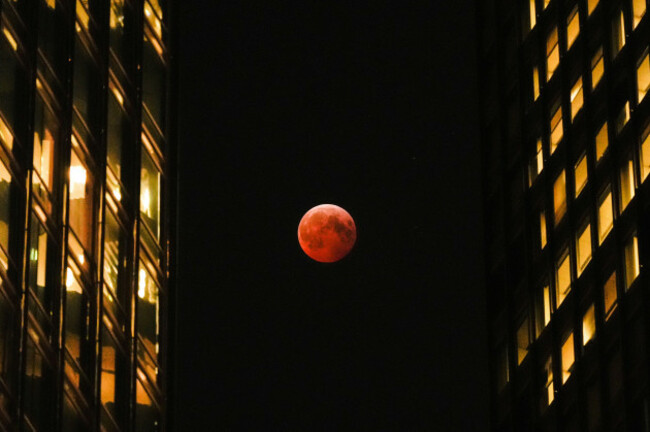
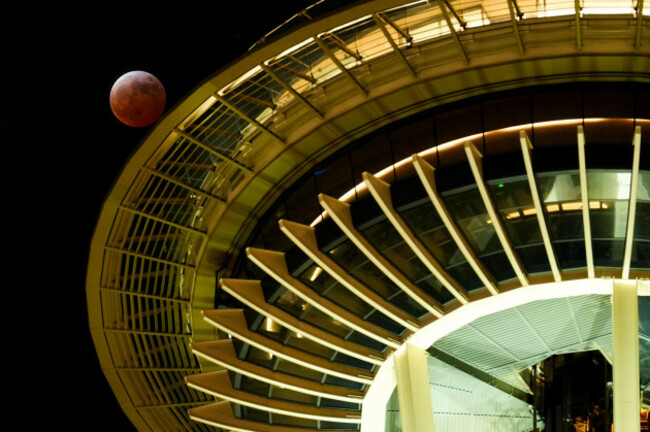
And in Seattle, the “Blood Moon” was visible over the famous Space Needle.
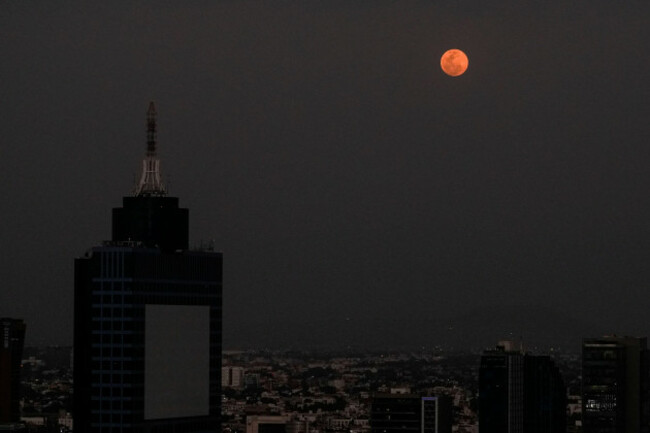
It was also visible high in the sky over Mexico City.
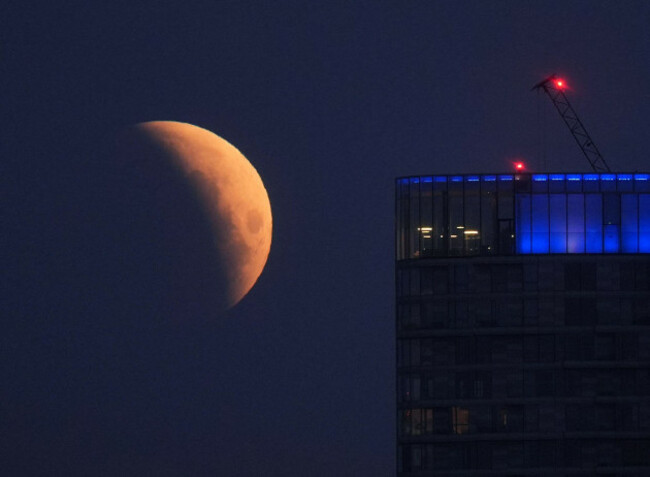
Londoners also had a nice view, as seen here above Canary Wharf.
Meanwhile, for those who missed the lunar eclipse overnight, it could be close to four years before there is another total lunar eclipse visible from Ireland.
David Moore, editor of Astronomy Ireland magazine, said the next total lunar eclipse will take place on 31 December, 2028.
But not too worry for those who missed it, because another eclipse will be visible from Ireland this month.
A partial solar eclipse will occur on 29 March – this will be a “very deep” partial eclipse.
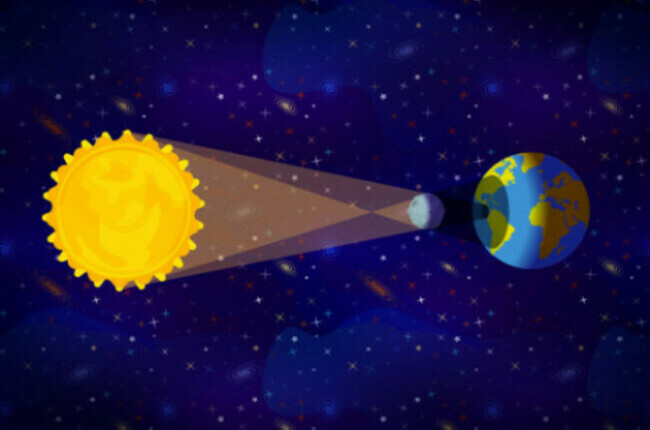
A partial solar eclipse occurs when the Moon passes between the Earth and the Sun, and casts a shadow on the Earth but does not fully block out the Sun.
But a reminder that viewing even a partial solar eclipse with the naked eye is dangerous – keen sky gazers are advised to use special eclipse glasses or pinhole projectors.

To embed this post, copy the code below on your site













have your say