We need your help now

Support from readers like you keeps The Journal open.

You are visiting us because we have something you value. Independent, unbiased news that tells the truth. Advertising revenue goes some way to support our mission, but this year it has not been enough.

If you've seen value in our reporting, please contribute what you can, so we can continue to produce accurate and meaningful journalism. For everyone who needs it.


Debunked: A real explosion in Kerry was followed by fake footage that claimed to show it happening

An AI programme appears to have used real images of the location to fabricate the video.

A DRAMATIC VIDEO said to show an explosion in Tralee, Co Kerry, was generated by artificial intelligence and has been shared online.

Despite the footage being fake, the area it depicts is a real location on the outskirts of Tralee, where a real explosion did recently occur.

And although the AI-generated video includes tell-tale signs of being fake, its ability to mimic a real location is an example of the ability of modern technology to fabricate believable footage.

Gardaí launched an investigation into a suspected gas explosion that occurred on 5 November at a house near the Manor West Hotel on the eastern outskirts of Tralee.

A spokeswoman said: “A technical examination of the scene is ongoing but at this time [the incident] is not being treated as suspicious. No offences have been disclosed at this time.”

A man was rescued from the blaze by firefighters and was taken to University Hospital Kerry with serious injuries.

However, less than a day later, images that appeared to depict the explosion were shared on social media and chat apps.

The Journal / YouTube

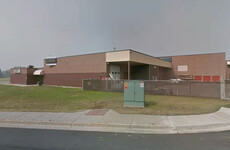
The footage appears to show the real location where the explosion took place.

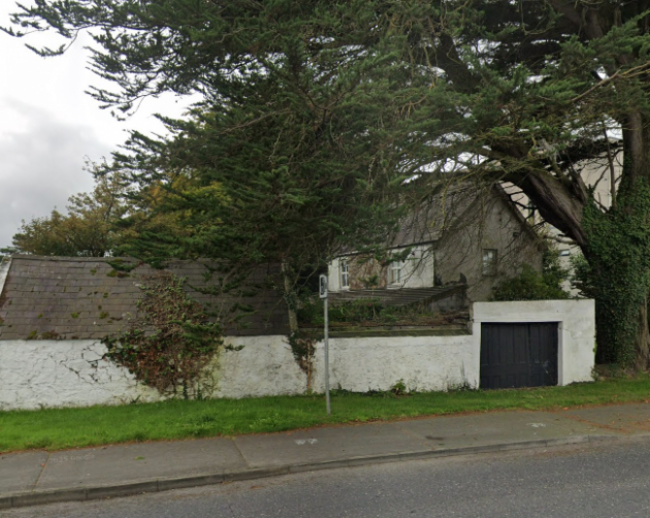
Features that are visible include part of the unique shape of the building and an adjoining garage; the Manor West Hotel in the background; and even foliage on a stone wall across from the site, which accurately matches ivy growth seen on Google Maps images of the area.

Screenshot 2025-11-11 155206 The area of the real-life explosion was captured accurately in the AI video. Google Maps Street View Google Maps Street View

The majority of AI-generated imagery seen by The Journal often depicts places that do not really exist; for example, such images often show streets and buildings that look typical of Dublin city, but which do not match any actual place.

Journalists often rely on discrepancies between footage and real locations, or the real events that they are supposed to depict, to determine whether the images are real or fabricated.

However, the new video’s use of a real location (possibly fed into a computer programme from a service like Google Maps) means that while it is not particularly realistic, it represents a new problem when it comes to identifying AI-generated footage.

The fact that it came after a real event makes it believable, because it does not contradict publicly available details of the explosion that actually happened, making it harder to debunk.

In this case, the AI programme that made the video also made some mistakes which do allow viewers to determine that it is a fake.

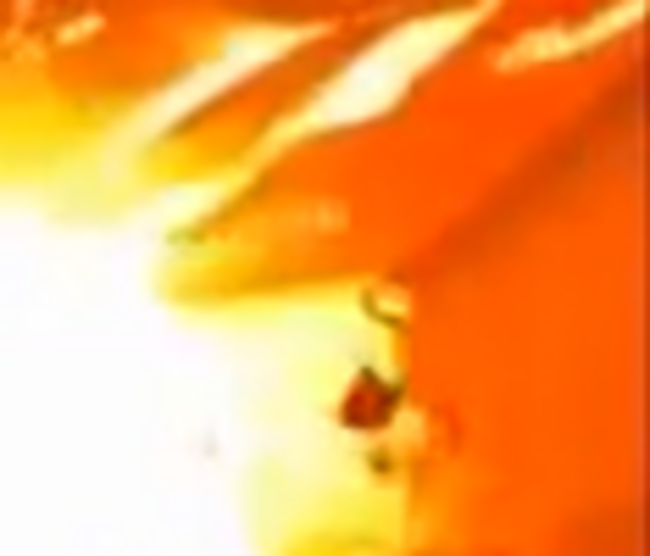
For example, it appears to have interpreted a dark patch on the corner of the building as a drainpipe that projects off the wall and casts a shadow during the explosion.

Screenshot 2025-11-11 155538 A screenshot from the video which appears to show a drainpipe projecting away from the building.

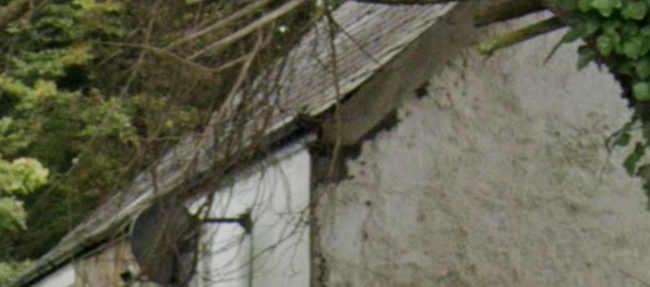
In actuality, images from Google Maps show that, although there is a drainpipe on that part of the building, it does not jut out from the wall — the dark patch on the wall is simply a curved patch of discolouration, likely caused by weathering.

Screenshot 2025-11-11 155648 No such drainpipe is shown in Google Maps Street View images.

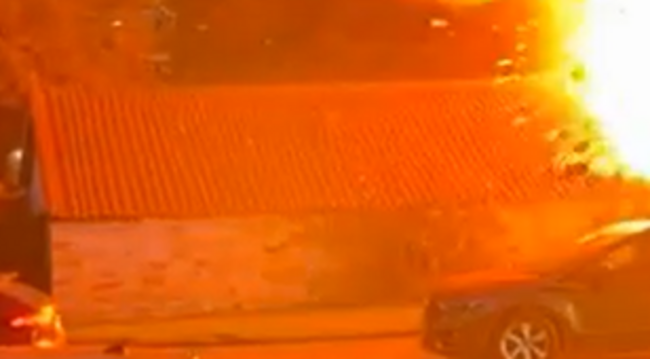
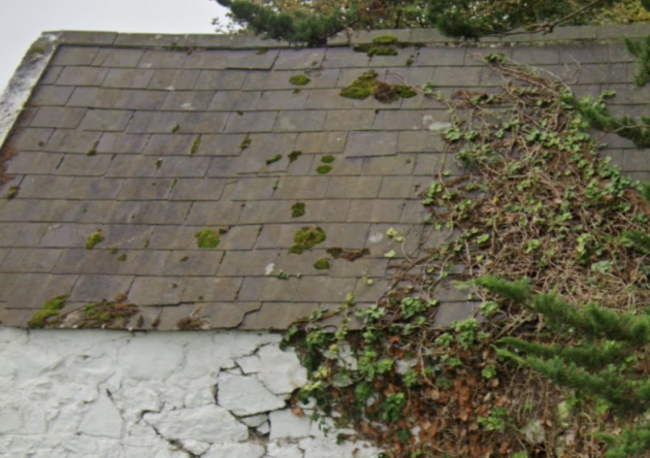
More tellingly, the programme also appears to have interpreted a roof as having a corrugated surface, with multiple vertical ridges being illuminated as the blast happens.

The shadows from the explosion seem to illuminate thin vertical ridges on the roof.

In real-life, the roof is tiled with flat slates in staggered rows.

Real images of the roof show there are no straight vertical ridges.

The AI-generated video also appears to have added plants to the eastern side of the house, while removing huge trees to the western side, as well as a satellite dish that was on the side of the building.  

For most observers, the detail most likely to give the fake video away is the explosion itself, which appears to drop a flaming substance similar to napalm, and even cause a smaller mini-explosion outside the property’s walls.

With additional reporting from Niall O’Connor.

The Journal’s FactCheck is a signatory to the International Fact-Checking Network’s Code of Principles. You can read it here. For information on how FactCheck works, what the verdicts mean, and how you can take part, check out our Reader’s Guide here. You can read about the team of editors and reporters who work on the factchecks here.

Readers like you are keeping these stories free for everyone...
It is vital that we surface facts from noise. Articles like this one brings you clarity, transparency and balance so you can make well-informed decisions. We set up FactCheck in 2016 to proactively expose false or misleading information, but to continue to deliver on this mission we need your support. Over 5,000 readers like you support us. If you can, please consider setting up a monthly payment or making a once-off donation to keep news free to everyone.

Close
JournalTv
News in 60 seconds