Sign in. It’s quick, free and it’s up to you.
An account is an optional way to support the work we do. Find out more.
Sign in. It’s quick, free and it’s up to you.
An account is an optional way to support the work we do. Find out more.
LAST UPDATE | 22 Jul

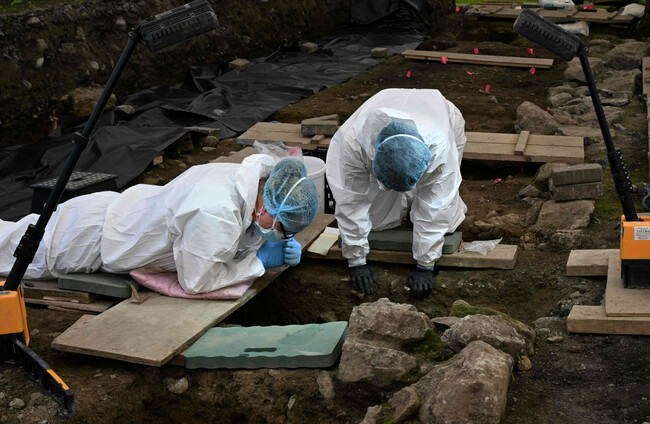
AFTER A YEAR of excavation at the site of the former mother and baby home in Tuam, Co Galway, forensic investigators have uncovered the remains of 99 infants.
It’s the latest update from the office responsible for the excavation, and adds 22 more remains to a previous figure of 77 uncovered over the past year.
These 22 infants were found in coffins outside the memorial garden.
Work continues to uncover the extent of the remains buried at the former site of the mother and baby home in Tuam, which closed in 1961.
In 2014, research led by local historian Catherine Corless indicated that 796 babies and young children were buried on the site of Co Galway institution, including in a sewage system, across that time period.
Archaeologists and other specialists started working at the site on 14 July last year.
The team is examining the surrounding areas of the memorial garden on the site, which hosts the sewage tank where it is believed the largest number of infant remains may have been left by the Bon Secours nuns, who ran the home.
Excavation has focused on the surrounding areas, as bringing in the equipment to excavate the tank area would have disturbed the outskirts of the site where the infants have so far been recovered from.
An independent statutory office established to investigate and uncover the remains of these babies and toddlers today held a briefing for media to update the public on their work to date, as well as unveiling their new facility in Toghermore.
The Office of the Director of Authorised Intervention, Tuam (ODAIT) received the keys to the forensic facility and mortuary on Friday. Media were brought to view the area this morning.
The HSE building, which has received investment of around €4.1 million from the State to bring it up to performance standards, will become the base for where infant remains are brought and examined.
It marks the beginning of the next step in the work carried out by ODAIT. To date, no analysis of the recovered remains has been carried out.
In this new facility, teams will forensically examine the recovered remains and try to determine the age, sex, and any additional information possible about the conditions of these babies and children at the time of their deaths.
They will also send on a skeletal element from each of the remains to Forensic Science Ireland (FSI). FSI has attained DNA samples from 62 people believed to be living relatives of babies buried at the site. They will compare these samples with the ones collected by ODAIT and attempt to match up the remains to the family.
This work is to kick off next week, with DNA analysis to follow in the coming months.
A team of worldwide experts will operate at the facility and work to establish the identity and story of the individual children.

To embed this post, copy the code below on your site












have your say