Sign in. It’s quick, free and it’s up to you.
An account is an optional way to support the work we do. Find out more.
Sign in. It’s quick, free and it’s up to you.
An account is an optional way to support the work we do. Find out more.
LAST UPDATE | 9 Nov 2022
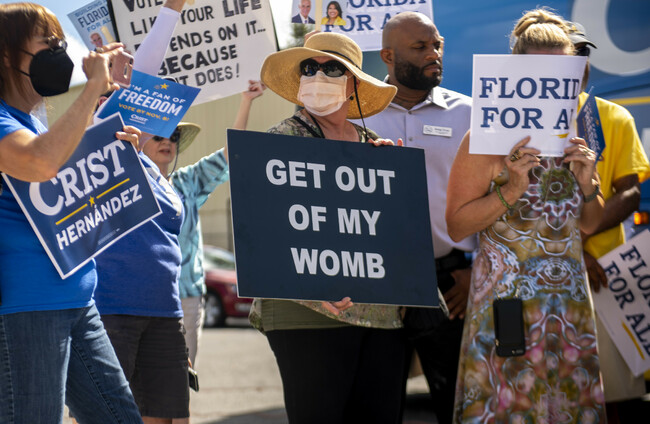
WOMEN’S REPRODUCTIVE RIGHTS were on the ballot in five US states for this year’s midterms.
The states of Montana, Kentucky, California, Michigan and Vermont were all asked to vote on their state’s current abortion rules.
AP VoteCast, a broad survey of the US electorate carried out ahead of this year’s votes, showed that high inflation and concerns about the fragility of democracy were heavily influencing voters.
Overall, 7 in 10 voters said the Supreme Court ruling overturning the 1973 Roe vs Wade decision enshrining abortion rights was an important factor in their midterm decisions.
That 49-year-old ruling stated that the Constitution of the United States conferred the right to have an abortion. However, this was removed in June of this year, meaning it was now in the hands of each individual state to legislate for its own abortion services.
Results
In California, voters decided on Proposition 1 – this would amend California’s constitution to say that the state would not be allowed to interfere with or deny a person’s right to abortion or contraceptives.
All major US networks have projected that the proposition has passed by a margin of 2 to 1.
In Vermont, voters backed an amendment to the state’s constitution which would guarantee abortion rights to those in the State.
The constitution will now be amended to read: “That an individual’s right to personal reproductive autonomy is central to the liberty and dignity to determine one’s own life course and shall not be denied or infringed unless justified by a compelling State interest achieved by the least restrictive means.”
Michigan joins Vermont and California in consolidating abortion rights for its citizens.
Voters are expected to approve the passage of Proposal 3 which changes Michigan’s constitution to establish an “individual right to reproductive freedom, including the right to make and carry out all decisions about pregnancy.”
In Kentucky, the ballot measure supported by anti-abortion groups was rejected by a relatively narrow 52 percent to 48 percent margin.
The Guttmacher Institute, which advocates for abortion rights, acknowledged that the procedure will remain prohibited in Kentucky after Tuesday’s vote.
“While abortion is still banned in the state except in very narrow circumstances, defeating this measure is a significant win and could set the stage for future progress on abortion rights,” it said.
In Montana, the fifth state with an abortion measure on the ballot, a preliminary count indicated voters there also opposed legislation hostile to the procedure.
Last month, our reporter Rónán Duffy travelled to the US ahead of the midterm elections and found that reproductive rights were one of the main issues affecting voters in the state of Pennsylvania.
“It’s about my right to take care of my body and the government telling me I can’t,” said Kathleen O’Brien, a voter who gave up an hour of her time to post leaflets for Democrat Senate candidate John Fetterman.
We’re going backwards instead of forward. So for me I think that’s number one.
You can read Rónán’s full report here.
Additional reporting from © AFP 2022

To embed this post, copy the code below on your site














have your say