Sign in. It’s quick, free and it’s up to you.
An account is an optional way to support the work we do. Find out more.
Sign in. It’s quick, free and it’s up to you.
An account is an optional way to support the work we do. Find out more.
(Seo alt ónár bhfoireann Gaeltachta. Is féidir an bunleagan as Gaeilge a léamh anseo.)
THE MEASURES IN an action plan to improve services through Irish from the Public Service published today will cost more than €21m between now and 2028, a spokesperson for the Minister for Gaelic Affairs has told The Journal.
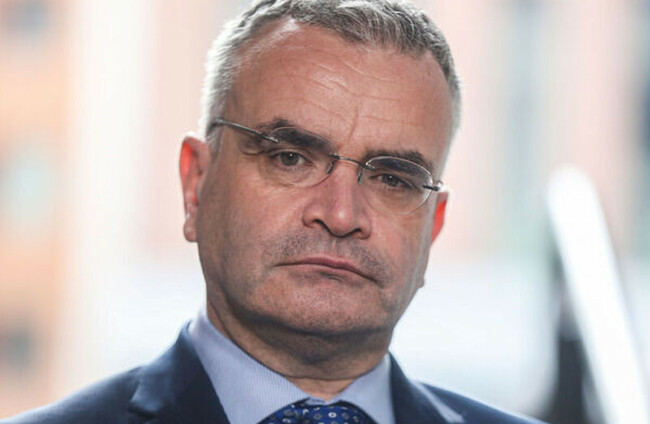
Dara Calleary, Minister for Rural and Community and Gaeltacht Development (DRCGD), announced the overall plan at a press event in Government House. According to a statement issues in response, it was confirmed that the measures would cost €6m in 2026.
The spokesperson added the measures were estimated to cost €7.5m in 2027 and €7.8m in 2028, equating to a total of €21.3m.
No estimate was given of the costs associated with implementing the action plan’s measures in 2029 and 2030.
The statement said that it was expected that the DRCGD and other agencies such as Údarás na Gaeltachta and Foras na Gaeilge would draw from their existing budgets to meet the commitments made in the plan. It was pointed out that much of the plan was already in place and funded accordingly.
However, it was stated that €1m per year could be made available to support workers in the Public Service who would like to improve their Irish language skills.
Among the aims mentioned in the action plan, which seeks to support the Public Service and the Government’s target of 20% of new recruits being in the Stat Córas, it is stated that it is intended that public services will be provided through the medium of Irish in the Gaeltacht.
A policy mentioned to support the achievement of this goal is that a feasibility study be carried out on the establishment of service hubs/clinics where central services will be provided through the medium of Irish for the Gaeltacht communities and for Irish speakers outside the Gaeltacht.
It is also proposed that a shared translation service be established which would be used by Government departments and other public agencies for the provision of materials in Irish for signage and documentation.
Other measures outlined in the plan include the establishment of a pilot fund and the development of an awards system and ceremony to encourage innovation in the context of the implementation of the Act. It is also recommended that a dedicated network for Official Languages Officers be established, a quarterly newsletter be published and regular information seminars be held.
In his speech at the launch of the plan, Minister Calleary said that he was ‘greatly honoured’ to publish this plan at a time when ‘the level of interest and positivity towards the language has never been higher’.
“This plan places support and innovation at the heart of the developments to come and I look forward to progressing the work in collaboration with my Government colleagues and other key stakeholders,” the Minister said.
Among the measures outlined in the plan is the ‘embedding of the Irish language in developments in artificial intelligence’.
It is also intended to ‘undertake a feasibility study to see if citizens could register their language preference (Irish and/or English) in one place so that this information could be used in the various common public services, taking into account models already in use’.
The Journal’s Gaeltacht initiative is supported by the Local Democracy Reporting Scheme

To embed this post, copy the code below on your site












have your say