Sign in. It’s quick, free and it’s up to you.
An account is an optional way to support the work we do. Find out more.
Sign in. It’s quick, free and it’s up to you.
An account is an optional way to support the work we do. Find out more.
THE MAJORITY OF the public believe the Government is not doing enough to tackle climate change but very few are willing to change their own behaviour.
The annual Worldwide Independent Network World Survey on global warming and climate change has also found that just 60% of the public believe the Government is not taking enough climate action.
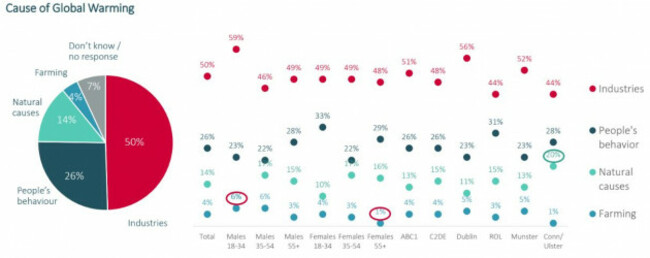
Half of the Irish public said the main cause of climate change were emissions from industries, while just a quarter pointed to personal human behaviour.
Ciara Reilly, the group director in RED C Research (the Irish partner for this study), said that it was clear that many are “shifting the blame outward” instead of reflected on personal responsibilities based on the research’s findings.
Despite 25% of the Irish public attributing personal behaviours as the cause of global warming, very few are willing to changes those patterns.
Just 17% said they would stop taking flights, 16% said they would stop driving and just 15% said they would reduce their meat consumption.
Most people (80%) said they would instead prioritise recycling as a means to combat climate change. But earlier reports, from November last year, reflect that less than a third of plastic packaging gets properly recycled, while most if it is just incinerated.
Irish people are far more likely to consider cutting out fast-fashion brands when compared to consumers from the rest of the world, despite previous targeted-ad campaigns being launched the Government last year to cut down the number of customers purchasing from the retailers.
Young Irish people, aged 18-34, are much more likely to take steps towards cutting their emissions by way of altering their personal behaviours. Much fewer young people believe that the Government is taking enough climate action.
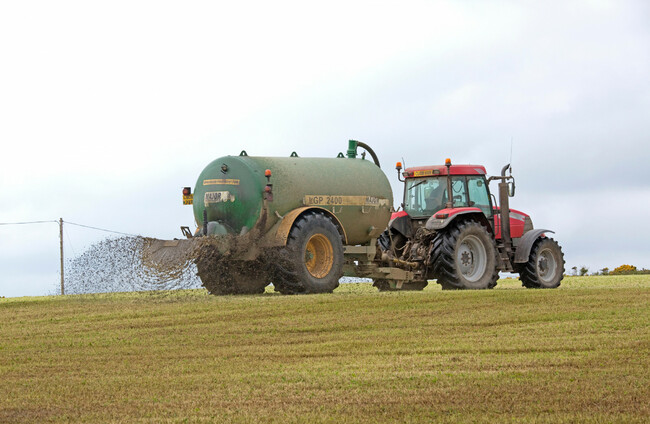
Just 4% of the Irish public identified farming as the main cause of global warming.
Agriculture, forestry and other land use changes account for 23% of human-caused greenhouse gas emissions, according to a 2019 report by the Intergovernmental Panel on Climate Change, which warned that emissions from farming are projected to increase, driven by population and income growth and changes in consumption patterns.
Agriculture has the largest emissions of any domestic sector in Ireland, according to the Environmental Protection Agency, accounting for 38.5% of total national emissions in 2022, with industry accounting for 17%.
The survey found attributing global warming to industry was much more prevalent in Ireland – at 50% – than internationally. Industry accounted for 17% of Irish greenhouse gas emissions in 2022.
The transport sector is the fastest growing source of greenhouse gas emissions in Ireland.
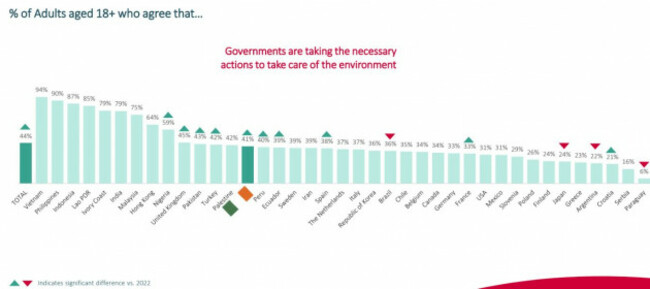
Just 41% of people believe this Government is doing enough to take steps towards tackling climate change.
The same EPA report, which annually projects Ireland’s greenhouse gas emissions for 2030 and 2050, put Ireland on a path to fall “well short” of its national and EU targets. The same report, last year, projected much of the same.
Globally, the Irish public’s view of the Government’s performance placed 14th, below the global average and even India, where 79% of the public believe the Government is doing enough to tackle climate change despite the country being the second-largest emitter in the world.
Speaking at an event by The Journal last month, Dr Rory Monaghan, a lecturer of Energy Systems Engineering at the University of Galway said while the majority of the electorate are in favour of climate action, it is a matter for the public and politicians to set the political will in order to achieve the targets.
The research published today shows that the majority of the public are not pushing politicians to achieves these targets but instead look to Government for guidance.
Trust in Governments to tackle climate change has risen, internationally, from 39% last year to 44% this year.
*This article was corrected on 6 June to clarify the proportion of national emissions from agriculture.

To embed this post, copy the code below on your site













have your say