Sign in. It’s quick, free and it’s up to you.
An account is an optional way to support the work we do. Find out more.
Sign in. It’s quick, free and it’s up to you.
An account is an optional way to support the work we do. Find out more.
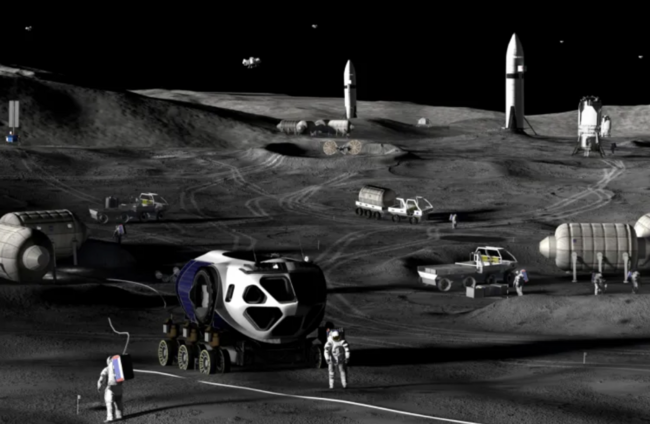
NASA HAS UNVEILED plans for its first ‘moon base’ near the lunar South Pole – and it plans to have people living and working there within six years.
The area eventually may have sites spread out over hundreds of square kilometres, featuring rover vehicles and habitation modules.
Nasa said it selected the lunar South Pole region as the site of the Moon base because of its potential to support long-duration human exploration, but said it is one of the “most challenging environments” humans have ever attempted to operate in.
The area is prone to extreme temperature swings, long periods of darkness, abrasive lunar dust, rugged terrain, and permanently shadowed craters.
Unveiling the plans, Nasa chief Jared Isaacman said the public were excited about a moon base and the “grand return” to the lunar surface.
He said: “It means people are looking up again, believing in big things again, and paying attention as America returns to the moon again, and this time to stay.”
“We are leveraging the Nasa playbook from the 1960s figuring out what works and what doesn’t in this epic science of survival, because the moon base is as beautiful as it is hostile.”
The news comes following the Artemis II team travelling farther from Earth than humans have ever before.
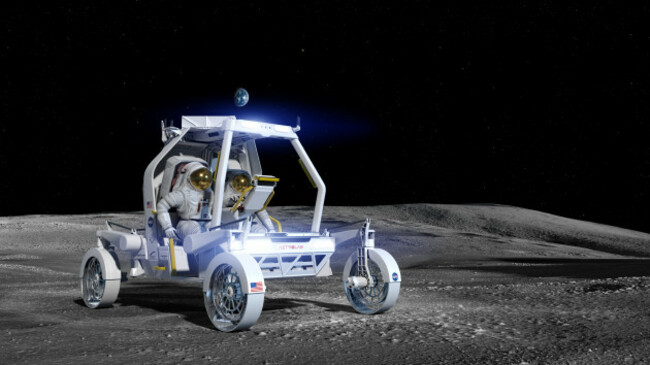
The first stage towards building a base between now and 2029 will see robotic missions scout the lunar region, test technologies and prepare for surface operations.
Under the proposed blueprint, from 2029 to 2032 it is planned to provide early habitation and create a semi-permanent infrastructure.
This would include testing out technologies that could pave the way for future nuclear power systems for use on the lunar surface. It would also see the use of pressurised rover vehicles that would enable astronauts to operate in shirtsleeves for up to 30 days while carrying out experiments.
In the third and final phase from 2032, it is planned to have a continual human presence on the Moon with routine crew rotations.
This would include larger habitation modules with expanded environmental control, power and life-support capabilities, and large-scale uncrewed cargo return capabilities from the lunar surface to Earth.
The three stages will involve multiple launches and landings.
With additional reporting from PA.

To embed this post, copy the code below on your site














have your say