Sign in. It’s quick, free and it’s up to you.
An account is an optional way to support the work we do. Find out more.
Sign in. It’s quick, free and it’s up to you.
An account is an optional way to support the work we do. Find out more.
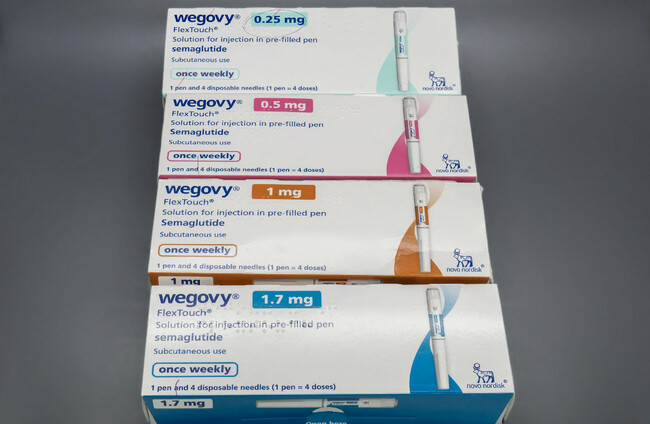
THE HSE HAS been advised to consider public funding for semaglutide, the drug marketed as Wegovy, for weight-loss.
The National Centre for Pharmacoeconomics (NCPE) found that Wegovy is cost-effective for Irish healthcare, even though it will be very expensive.
Up to one million Irish people could benefit from treatment with Wegovy, but this would come at a cost of €4.4 billion over five years, the NCPE has found.
Michael Barry, clinical director of the NCPE, said this afternoon that the scale of the potential cost of funding weight loss drugs puts them out on their own.
Other expensive drugs such as those for cancer and for rare diseases might cost €20-30 million over five years, Barry told RTÉ Radio 1′s News at One.
Even if the health service restricts eligibility for Wegovy to those with a body mass index (BMI) over 40 – severe obesity – and a weight-related condition, the cost would be €265 million over five years.
The NCPE is the independent body that assesses the clinical effectiveness, health benefits, costs and potential savings of drugs for the HSE.
After weighing up the costs and benefits, including in terms of health outcomes, it has recommended that the HSE consider Wegovy for reimbursement, meaning it would be publicly funded or part-funded for people who need it.
It’s understood the criteria considered were that patients had a BMI of 30, or a BMI of over 27 with a weight-related complication. A BMI of 30 is typically taken to indicate obesity, while above 27 would be in the higher range of overweight.
The NCPE’s recommendation to the HSE stated that the budget impact associated with publicly funding Wegovy would be “substantial”.
“Consideration will need to be given, regarding the affordability of semaglutide, when making a decision regarding reimbursement,” the NCPE concluded.
Barry, of the NCPE, said Wegovy had been found to be cost-effective for all groups of patients considered, from those with a BMI of between 27 and 30 to those with a BMI over 40.
He noted that one important trial has shown that Wegovy not only reduces weight but also reduces the risk of cardiovascular disease and non-fatal strokes.
The health service is currently considering several applications for public funding of GLP-1 drugs, a recently developed class of medication that can manage diabetes and obesity.
Barry said the NCPE has found Wegovy to be more cost-effective than Mounjaro, a rival GLP-1. Mounjaro is more effective for weight loss but was also more expensive when the NCPE considered it last December.
The HSE said this afternoon that the NCPE’s recommendation was “nuanced”.
The state’s approach to GLP-1 drugs raises important matters of health policy, and the potential impact on the health budget will need to be discussed over the coming months, the HSE said.
It added that its corporate pharmaceutical unit will negotiate with manufacturers on pricing.
Obesity is a chronic, relapsing disease. Government research indicates that one in five Irish people has obesity.
Thousands of Irish people have already been prescribed GLP-1s to treat their obesity, and are paying for the drugs privately at a cost of thousands of euro per year.
In Ireland, patients who qualify for a medical card – through being over the age of 70 or on a lower income, among other criteria – are entitled to free medication.
Under the Drugs Payment Scheme there is an €80 cap on the monthly amount a family can spend on drugs listed on the HSE reimbursement list. The Drugs Payment Scheme is not means tested.

To embed this post, copy the code below on your site











have your say