Sign in. It’s quick, free and it’s up to you.
An account is an optional way to support the work we do. Find out more.
Sign in. It’s quick, free and it’s up to you.
An account is an optional way to support the work we do. Find out more.
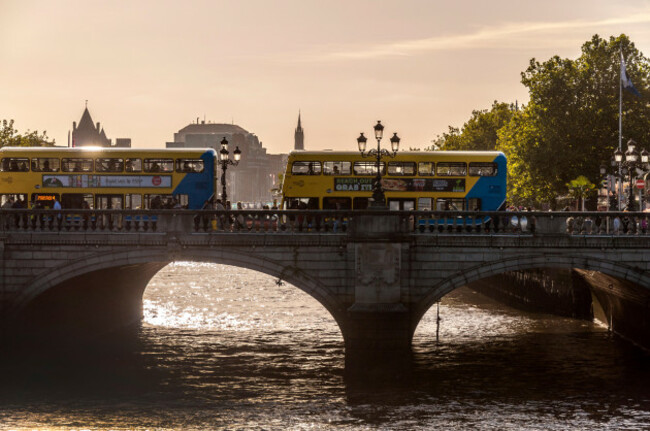
TRAFFIC CHANGES UNDER Dublin’s transport plan take effect in the city centre from today.
New traffic flow management measures are being implemented on and near the quays around the O’Connell Bridge area, the first step in a series of changes intended to ease congestion in the capital.
The transport plan is aiming to reduce traffic jams by restricting private vehicle access on certain roads and changing some routes in the hope of freeing up more space for public transport, walking and cycling and discouraging private vehicles from using the city centre as a through-route.
In addition to easing traffic, it is hoped that reducing private cars in the city centre will help to lower greenhouse gas emissions that are harmful to the climate from the transport sector.
Today’s set of measures have been dialled down from the original proposals after accessibility concerns raised by Disabled Persons’ Organisations (DPOs).
The changes will apply from 7am to 7pm, Monday to Sunday.
Here are the changes taking effect, according to Dublin City Council.
Currently, there are around 252,000 movements at the Bachelor’s Walk/O’Connell Street junction between 7am and 7pm, according to Dublin City Council around half of which are Dublin Bus users (123,885 passengers).
Pedestrians make up 22% of movements at the junction and Luas users account for 14%, which means those three main forms of transport make up the majority (85%) of movements.
Other bus users (i.e. non-Dublin Bus) account for 10%, taxis for 2.4%, cars for 2% and cyclists for 2%.
“The measures on the north quays, which will affect approximately 200 users an hour (0.08% of all users each day), will allow for more space to be allocated to public transport initially which will improve the reliability, speed and service for public transport,” Dublin City Council has said.
“Similarly, on the south quays between 7am and 7am, just 2% of the users at the Burgh Quay/O’Connell Bridge/Aston Quay junction are undertaken by people in cars. However at least 50% of the road space is assigned to cars,” the council said.
“This is causing delays to the existing public transport network, particularly buses which account for 50% of the users at this junction. As creating additional road space is not an option, the existing space needs to works as efficiently as possible by moving the most amount of people whilst still maintaining access for businesses, residents and deliveries.”

To embed this post, copy the code below on your site















have your say