Sign in. It’s quick, free and it’s up to you.
An account is an optional way to support the work we do. Find out more.
Sign in. It’s quick, free and it’s up to you.
An account is an optional way to support the work we do. Find out more.
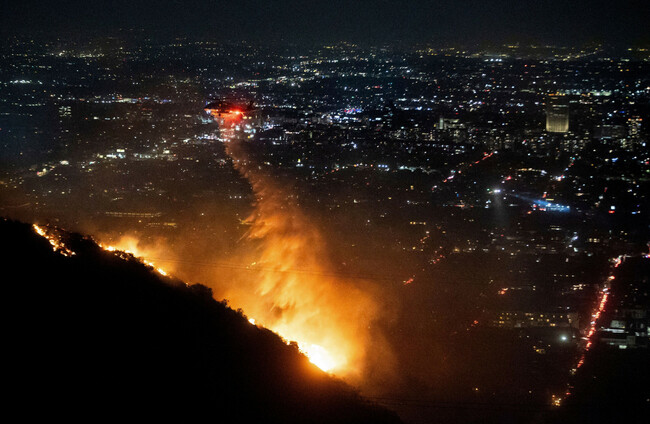
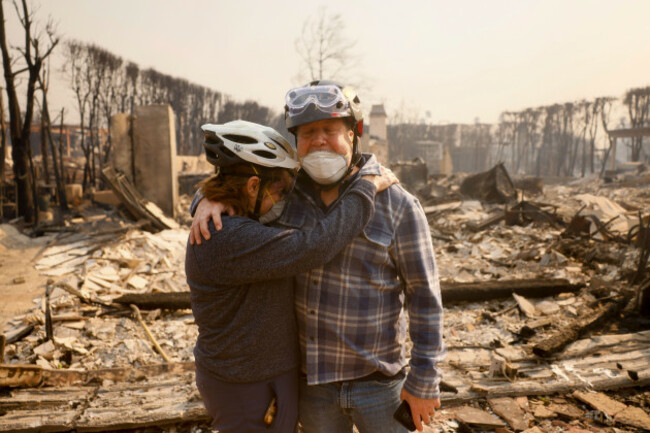
WILDFIRES ARE RAVAGING Los Angeles, resulting in mass destruction of property and land.
At least five people have died and more than 130,000 people have fled their homes.
Fires are not uncommon in California, but Governor Gavin Newsom described the alarming scale and pace of these fires as “unprecedented”.
Over 1,400 firefighters have been deployed to tackle the blazes.
So, what exactly is causing the fires to spread so quickly?
A prolonged dry spell combined with strong winds has created the “perfect conditions” for the fires to rage out of control, wildfire scientist Maria Lucia Ferreira Barbosa said.
Southern California had two decades of drought followed by two exceptionally wet years.
The region experienced very heavy rainfall in the first half of 2024, due to the El Niño weather system, resulting in excessive vegetation growth.
But the second half of the year was marked by drought, setting the stage for what scientists call “precipitation whiplash” – essentially turning the area into a tinderbox.
The Santa Ana winds are also playing a large role.
These strong winds blow from inland towards the coast, moving in the opposite direction of the normal onshore flow that carries moist air from the Pacific into the region. Crucially, they cause low humidity.
The extreme lack of humidity in the air causes vegetation — living and dead — to significantly dry out and become susceptible to fire.
The winds also carry embers from one area to another, igniting another fire in a new area, Rory Hadden, Professor of Fire Science at the University of Edinburgh, explained.
This can quickly overwhelm firefighters and “make escape challenging, as visibility is reduced,” he added.
While it’s not yet known what started the blazes, “human-caused climate change is intensifying the heat that drives wildfires”, Patrick Gonzalez, a climate change scientist at the University of California, told AFP.
Average temperatures in southern California have increased by up to two degrees Celsius (3.6F) since 1895, he added.
2024 is set to be named the hottest year on record for both the United States and the world, capping a decade of unprecedented heat. (It was Ireland’s fourth hottest year on record.)
Apostolos Voulgarakis, an atmospheric scientist at Imperial College London, said research shows that the official fire season in California is “widening” as a consequence of climate change.
“The ongoing wildfires in California are unprecedented, in the sense that they are dramatic for this time of the year,” Voulgarakis told AFP.
Kristina Dahl, vice president for science at Climate Central, an NGO which researches climate change, said fires spread “when it is hot and dry and windy, and right now all of those conditions are in place in southern California”.
“The clearest climate signal for those three conditions is with the temperature,” she added.
Contains reporting from © AFP 2025

To embed this post, copy the code below on your site














have your say