Sign in. It’s quick, free and it’s up to you.
An account is an optional way to support the work we do. Find out more.
Sign in. It’s quick, free and it’s up to you.
An account is an optional way to support the work we do. Find out more.
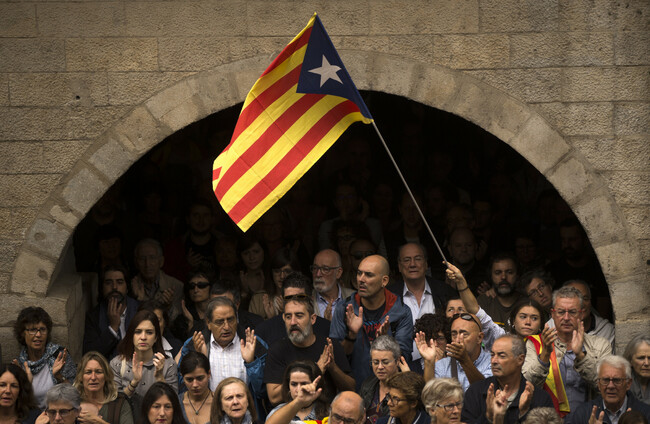
OVER THE WEEKEND, incredible scenes were filmed of Spanish police charging at civilians and dragging them away from ballot boxes and voting areas.
The vote was announced by the government of Catalonia, which has some control over their own affairs in the north-eastern Spanish region.
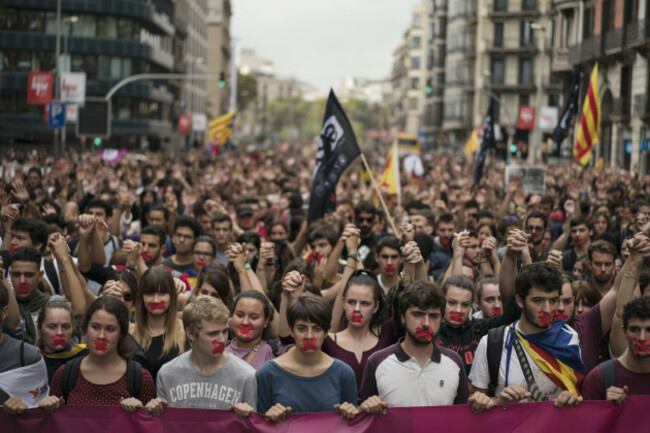
Although the referendum was ruled unconstitutional by Spanish courts, thousands turned up to vote for independence from Spain. In response to the vast numbers of demonstrators that showed up, Spanish authorities sent riot police to stop the voting and seize cast ballots.
There has been outrage at what’s been viewed as a heavy-handed response to a democratic process, albeit an unauthorised, illegal one. So why was the Spanish government’s reaction so extreme? Here’s a quick historical recap to try to understand the decision to deploy riot police.
Barcelona
Catalonia is a wealthy region of Spain with its own language and culture, and is home to Barcelona, one of the most-travelled to destinations in the world. Before the Spanish Civil War it enjoyed broad autonomy but was later suppressed during dictator Francisco Franco’s era.
Although it regained its autonomy in 1978, nationalist supporters have been going through a resurgence – particularly in the wake of the Scottish independence referendum.
Dr Mireia Borrell-Porta, an expert in European politics at the London School of Economics told Euronews that there’s still a misconception that the Catalan language is a threat to unity.
“There is this idea that everything that isn’t considered Spanish is a threat to unity. So as a consequence the Catalan language is not well regarded.”
In 2006 a statute granted even greater powers, boosting Catalonia’s financial clout and describing it as a “nation”, but Spain’s Constitutional Court reversed much of this in 2010, to the anger of the regional authorities.
It’s quite a close race
This isn’t the first unofficial independence vote held in Catalonia. In November 2014 more than 2 million voters took part in a referendum, with 80% voting for independence.
But much like this referendum, parties loyal to Spain and those against independence were likely to boycott the unofficial vote (the result of this weekends referendum was with 90% in favour of independence, similar to the 2014 result).
When you include all Catalans, the feelings are much closer. In July, a public survey commissioned by the Catalan government suggested 41% of Catalans were in favour of independence and 49% were opposed.
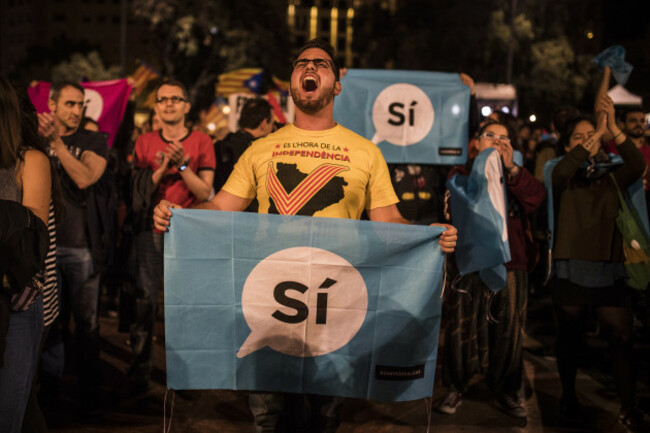
But after the clashes this weekend, support for an independent Catalonia could be on the rise.
The whole of Spain
In an interview with Sky News on Sunday, Spain’s Foreign Minister Alfonso Dastis said that he wasn’t aware of the scenes of violence that the reporter had questioned him about.
He said that the event was “not worthy of being called a referendum”, and that if there were to be a vote on Catalonia’s independence, it would have to ask the whole of Spain’s opinion.
“A part cannot decide for the whole,” he said.
Yesterday, Spain’s Justice Minister Rafael Catala said the government will do “everything within the law” to prevent Catalonia from declaring independence following the vote.
“If anyone plans to declare the independence of part of the territory of Spain, as he can’t since he does not have the power to do so, we would have to do everything within the law to impede this,” he said in an interview with Spanish public television.
Spanish Prime Minister Mariano Rajoy insisted that no independence referendum had taken place in Catalonia and that those who took part had been “fooled” into voting.
He then thanked police and said they had acted with “firmness and serenity” in clashes with voters.
Catalonia isn’t alone
For over 50 years, Spain has been fighting off another independence dispute in the north – the Basque region.
Between 1959 and 2011 nationalist groups in Spain and France launched a campaign of attacks against Spanish authorities.
Thousands of people were injured, dozens kidnapped and a disputed number had gone into exile either to flee from the violence or to avoid capture by Spanish or French police or by Europol.
The main nationalist group at the heart of the conflict signed a peace deal and laid down arms just six years ago – the Spanish government will be loath to spark another independence conflict.
- With reporting from AFP

To embed this post, copy the code below on your site












have your say