Sign in. It’s quick, free and it’s up to you.
An account is an optional way to support the work we do. Find out more.
Sign in. It’s quick, free and it’s up to you.
An account is an optional way to support the work we do. Find out more.
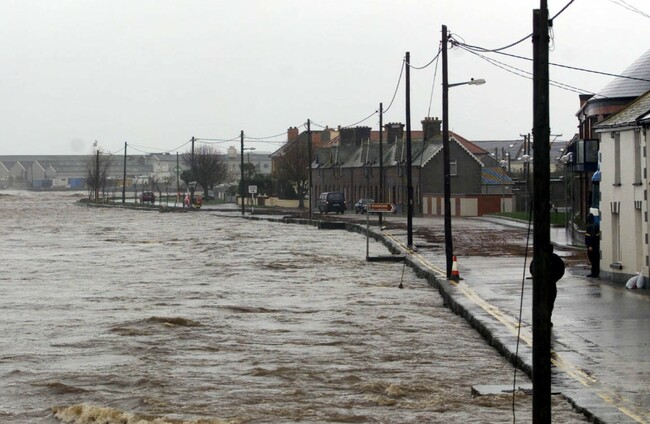
WHEN HURRICANE CHARLEY hit Ireland in late August 30 years ago it caused a significant amount of damage across the country – but no county felt it quite as much as Wicklow.
At the time it was estimated that close to 1,000 houses in Wicklow were severely damaged in the floods resulting from the storm, 500 of which were situated in Little Bray.
The storm not only damaged many homes in Wicklow, but businesses as well. It was found that over 40 businesses were damaged in the flood, putting over 350 jobs at risk.
The estimated cost of repairs for Wicklow alone was between £1.35 million and £2.15 million. In today’s money that would come to between €3.3 million and €5.2 million.
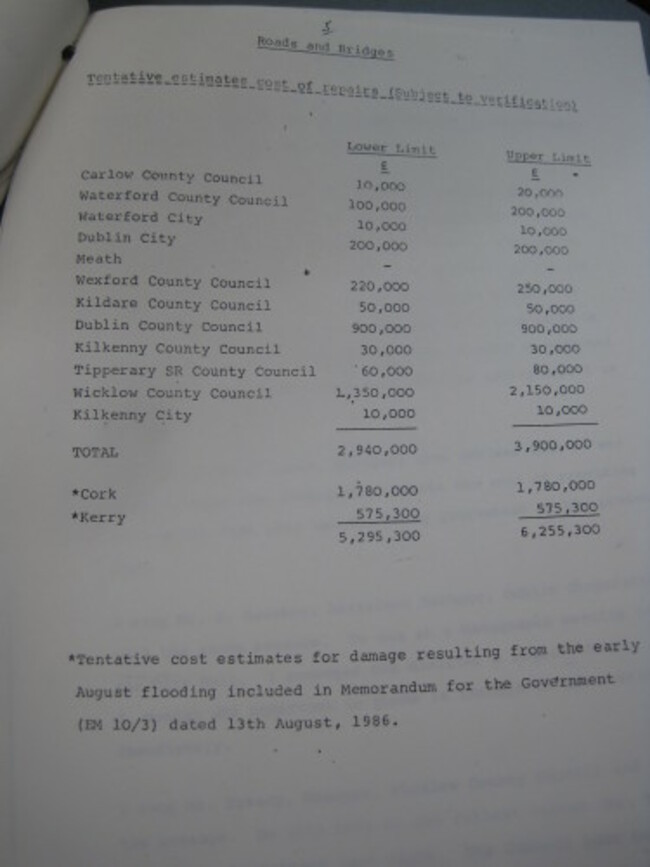
The documents showing the scale of the damage and the government’s response to it were made public by the National Archives this month under the 30-year rule.
‘People should provide for themselves’
Wicklow County Council was not happy with the response from the government in regards to the disaster, the documents show. The Council passed a resolution calling on the government to set up a compensation fund for those affected.
The fund was envisioned to compensate people for loss of furniture, damage to houses and businesses, premises and equipment as a result of the flooding.
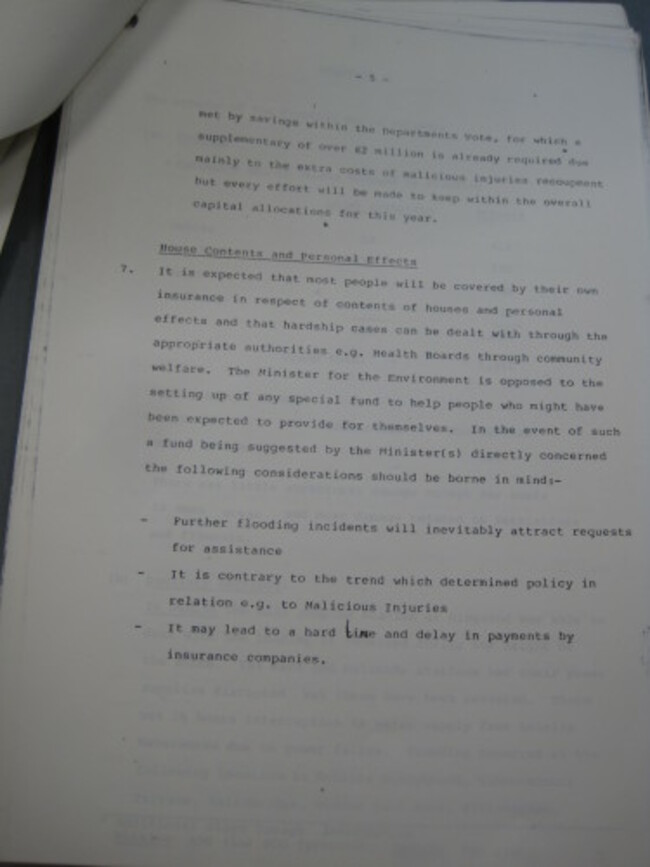
However, in a memorandum for the government about the effects the flooding had on the local authorities, the Minister for the Environment at the time was against the setting up of any special fund to help those who lost house contents and personal effects.
The Minister for the Environment is opposed to setting up of any special fund to help people who might have been expected to provide for themselves.
In the memo, Ministers are told to consider that any special fund might delay insurance payments and it may also set a precedent that flooding incidents in the future will ‘inevitably attract requests for assistance”.
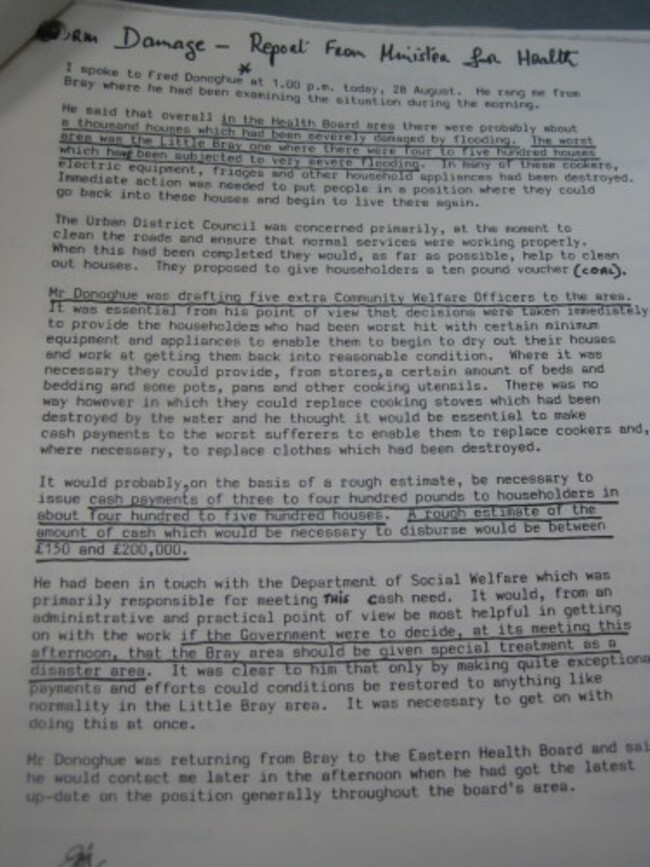
In a damage report from the Minister for Health, it was advised that cash payments should be issued to those worst affected in order to replace essentials such as cookers and clothes.
It would probably, on the basis of a rough estimate, be necessary to issue cash payments of three to four hundred pounds to householders in about four hundred to five hundred houses. A rough estimate of the amount of cash which would be necessary to disburse would be between £150 and £200,000.
The report would go on to say that making these payments to the people worst affected would go some way to restore “anything like normality in the Little Bray area”.
According to a meteorological service report for August 1986, the storm led to 45-90 millimetres of rain in the lowlands in the south, east and midlands, and 20-40 millimetres in the southwest, west, and southern areas of Ulster.
The worst affected areas were in the southern and eastern coastal counties. In the Dublin-Wicklow mountains over 190 millimetres were recorded in a 24 hour period, which was the record for the highest rainfall figure for one day at the time (and remained the record for another seven years).
The report also registered south and east winds of 50 to 65 miles per hour with isolated gusts going up to 70 miles per hour.
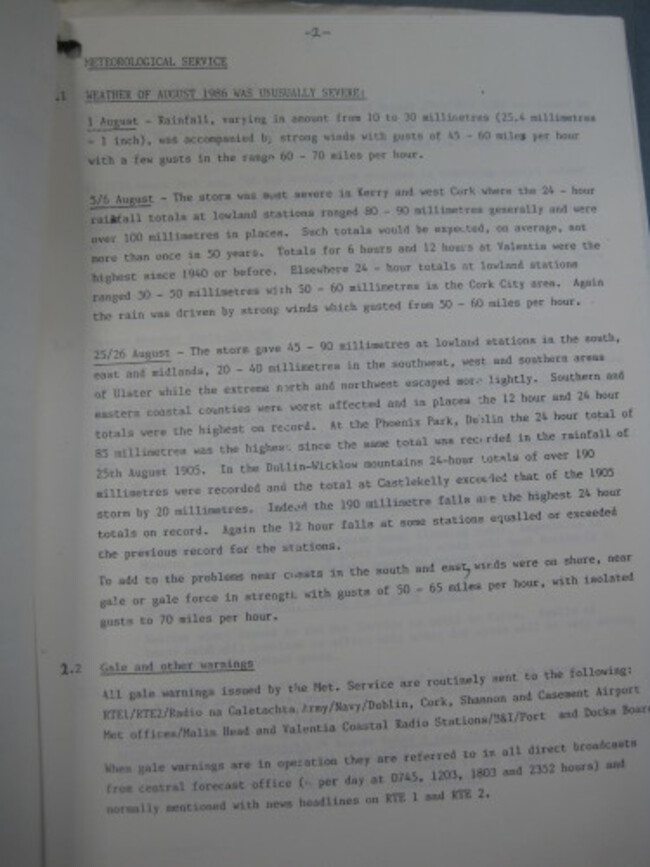
See National Archive files 2016/51/1440
To embed this post, copy the code below on your site
















have your say