Sign in. It’s quick, free and it’s up to you.
An account is an optional way to support the work we do. Find out more.
Sign in. It’s quick, free and it’s up to you.
An account is an optional way to support the work we do. Find out more.

SEAN MCPARLAND NEVER tires of telling people some key trivia about his hometown of Greystones: namely, that it’s often ranked as one of Ireland’s priciest areas outside Dublin, alternating with Wicklow neighbour Enniskerry every other month for top spot.
Aged 30 and living with his parents in Greystones, the finance professional said he has grown used to seeing old classmates struggling to buy locally and instead being scattered across Co Wicklow’s towns and villages and further, as the Central Statistics Office (CSO) puts the median price of a home locally at €580,000.
It’s the home of the Happy Pear, is popular with sea swimmers and sitting comfortably inside the Dublin commuter belt, it’s an understandably desirable spot.
For those who have been able to buy, McParland explained, they were able to benefit from inheritance or from significant help from the famous bank of mum and dad.
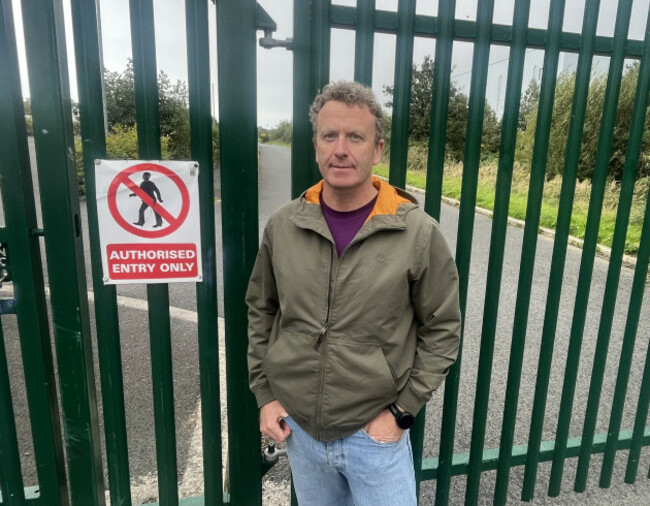
“I’m living with my parents, I had been in London so I’m not sure what I’m going to do next, but it’s looking unlikely that I’ll be able to afford somewhere to stay here,” said McParland, as he stood outside the entrance to an expansive housing estate in the town’s Charlesland area.

A site behind the suburb is becoming a fresh battleground in the government’s new housing plan, which is now fast coming down the tracks.
Last year, feeling that councils were slacking, the government instructed local authorities to start rezoning far more tracts of land for housing.
This ‘Call for Sites’ process is starting to move into gear in a handful of counties, with Wicklow County Council’s consultation process closing later this month.
But fears are growing that there is a growing chasm between the people on the ground and the government.
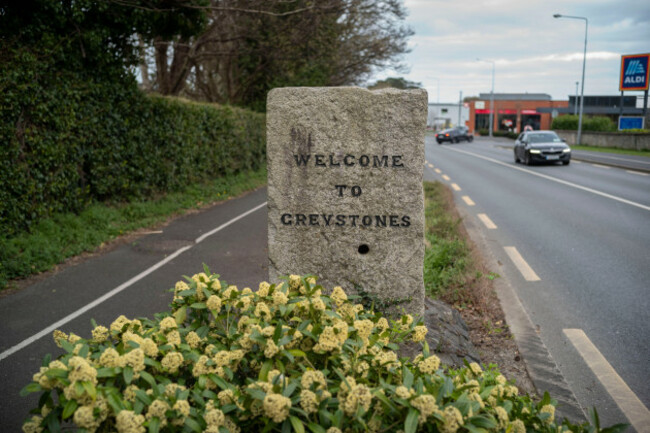
In Greystones, plans are moving ahead to potentially rezone large parts of a former golf course on the eastern edge of the town. The 148-acre golf course is no longer in use, but about 84 acres could be zoned for residential use.
Charlesland Golf Course was officially opened in 1992, but closed due to economic pressures in late 2020. Since then, it has been eyed up for its potential use for housing, with its location overlooking the Irish Sea adding to the appeal.
In its submission to the council, Dublin developer Dres Properties reckons it can hold up to 1,600 homes.
In many ways, it’s a no-brainer. The site is vast and unused since the golf club’s closure in 2020, while a good chunk of Wicklow, obviously, remains mountainous. The nearby Dart line is yet another selling point.
However, residents are increasingly divided as they believe the proposals will put too much pressure on busy schools and clogged roads.
“Everyone knows we’re in a housing crisis, but if you’re going to stall on the infrastructure then people will naturally find it hard to get behind it,” McParland said, summing up much of the mood.
All of Greystones’ councillors, from Fine Gael, Independents, Social Democrats and the Green Party, have joined forces to press the issue, as they say that questions regarding long-term planning are going unanswered.
Green Party councillor Lourda Scott argued that the government’s new Call for Sites process is a “smokescreen”, telling The Journal that it’s a way for the government to have a “headline number of sites zoned for the next election”.
So far, Scott added, the council has zoned 94 acres for housing. Aside from that, there are over 3,000 planning permissions granted but not activated in Wicklow.
Scott claimed:
They want to tell the electorate in two or three years that this is what we did, we zoned all this land for housing, but the actual delivery won’t happen in a lot of these cases.
Since March, the six local councillors have jointly written to the council chief executive Emer O’Gorman and the Tánaiste and Greystones resident, Simon Harris, to seek discussions on what they call proper planning for the area ahead of any building going ahead.
Scott added that Greystones faces heavy local congestion due to school run bottlenecks and commuter traffic along the N11/M11 corridor, which has seen plans for a park-and-ride stalled because of a lack of funding.
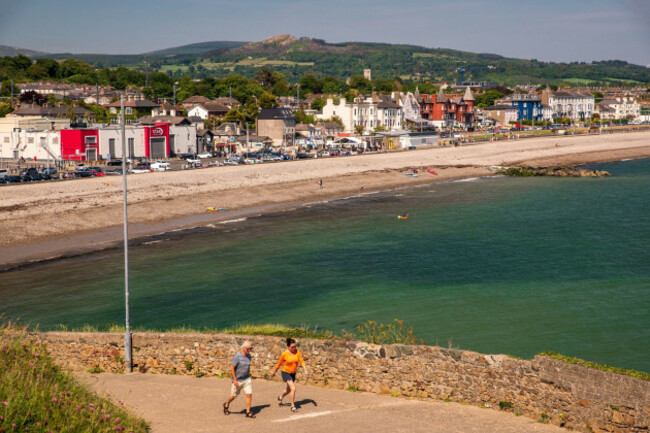
However, Carol Tallon, a Wicklow native who is touring Ireland’s towns as part of a PhD at University of Galway to coincide with Ireland’s EU presidency, had a different take.
The spatial geography researcher argued that it can be logical for a developer to weigh up the sites in front of them, and avoid the “more expensive and more viably challenged development if you have an easier win”, potentially making the Charlesland golf course a better fit given its central location.
Tallon, who has spent much of the past week examining Co Wicklow’s towns, accepted that it would be a “really painful” process for current and new residents.
She added that while there will be a “lag period” from when new estates will be built to when schools and transport are provided, the area will “actually get there in the end.”
Nonetheless, this will strain already under-pressure services, according to Social Democrats councillor Mark Barry.
“Greystones is just at the end of a campaign to see a new school after ten years of fighting. Another school here saw children spending a lot of class time in prefabs while the school waited for approval to get an extension,” Barry told The Journal.
A report published this week by the State auditor backed up these fears.
Examining how new schools and extensions are handled, the Comptroller and Auditor General said the Department of Education’s model for assessing projects was “lacking” in how it actually managed the project pipeline, while expressing concern that “a small cohort of staff” is relied on for more than 100 projects.
Keire Murphy, a policy researcher who focuses on regional development, told The Journal that this was critical to understanding the risks with any new housing plan.
Murphy said the “big disadvantage of having such a centralised system” is that it becomes difficult to adapt quickly to changes.
“Plans like this require services to be put quickly in place into communities,” Murphy said.
But as local councils “don’t have control of these things, all of it has to go to big central departments who can’t respond as quickly to competing demands from all over the country”.
So what’s the solution here? Right now, there isn’t really one, aside from a vague hope that a detailed plan with be put together to cater for the thousands of additional new people in the area.
Greystones locals are well aware they will be viewed as ‘Nimbys’, the catch-all term for not-in-my-back-yard opponents of housing.
For Murphy, the regional development expert, the “fundamental issue with nimbyism is one of trust”, and it’s slowing down attempts to deliver sizeable plans.
“If you don’t give people trust that the state will put these services in quickly, then they don’t trust it to respond as quickly as needed, and it’s going to be a serious issue for us in being able to deliver on these really big projects,” she said.
With consultations ending later this month, and a final vote on the rezoning due to be held in January, many believe time is running out to get the expansion of the town right.

To embed this post, copy the code below on your site













have your say