Sign in. It’s quick, free and it’s up to you.
An account is an optional way to support the work we do. Find out more.
Sign in. It’s quick, free and it’s up to you.
An account is an optional way to support the work we do. Find out more.
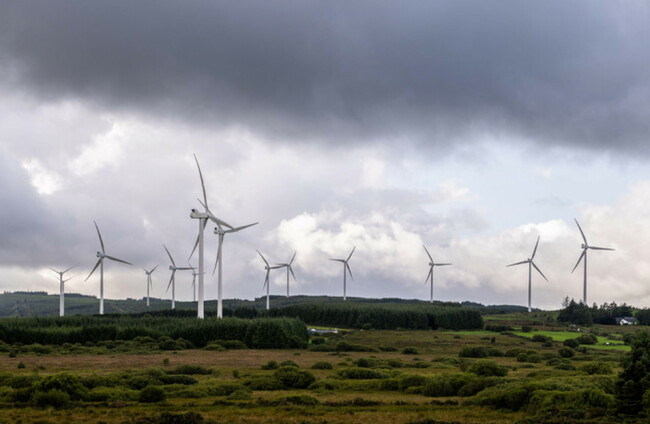
WIND GENERATION IN Ireland was the third highest on record last month, but the overall figure this year is expected to drop when compared to 2023.
Wind Energy Ireland, the representative body for the Irish wind industry, said the drop is partly due to wind energy being lost because the electricity grid isn’t strong enough to carry it.
When this happens, wind farms are instructed to reduce the amount of power they produce or shut down entirely, resulting in more fossil fuels being used instead of renewable energy.
Justin Moran, director of external affairs at Wind Energy Ireland, said Ireland is fortunate to have “natural resources like wind that can generate more affordable, clean electricity to power our local communities”.
But while Moran said wind farms performed well in October, providing 35% of Ireland’s energy, he cautioned that this year is on track to be the worst on record for the amount of wind energy wasted.
Over the first nine months of the year, 14% of wind energy production was lost because of challenges with the transmission network.
To overcome this challenge, Moran said he wants to see EirGrid “get support right across Irish society for its plans to reinforce our transmission system”.
Moran also urged public support for projects like the North-South Interconnector, which he described as “essential to a robust, modern, Irish electricity grid”.
The North-South Interconnector is an overhead line that will start in Co Tyrone and then run into Co Armagh and into counties Monaghan, Cavan and Meath, thus connecting the electricity grids in Northern Ireland and the Republic of Ireland.
Last month, wind energy provided 35% of Ireland’s electricity, with solar and other renewable energy sources accounting for 4%.
The remaining 61% of electricity was provided by fossil fuels.
This amounted to 1,219 gigawatt-hours (GWh) of wind energy being generated last month in Ireland, and Kerry account for 10.7% of this with 131 GWh of wind energy produced.
This was closely followed by Cork, accounting for 10.6%, or 130 GWh, of Ireland’s wind power.
A megawatt-hour is a unit of electricity, and the average Irish household uses around 4.6 megawatt-hours of electricity in a year.
Moran remarked that Irish wind farms, particularly those in Kerry, are playing an “enormous part in reducing Ireland’s carbon emissions by over 4 million tonnes a year and creating significant opportunities in job creation and funding for rural communities”.
He added: “By growing our renewable energy sector, we can build an Ireland that is energy independent, delivering warm homes, cleaner air and one that meets the needs of our growing economy.”
Meanwhile, 32% of Ireland’s energy came from wind farms in the first ten months of this year, though Wind Energy Ireland noted that 14% of wind power was lost in the first nine months of 2024 due to challenges with the transmission network.

To embed this post, copy the code below on your site













have your say