Sign in. It’s quick, free and it’s up to you.
An account is an optional way to support the work we do. Find out more.
Sign in. It’s quick, free and it’s up to you.
An account is an optional way to support the work we do. Find out more.
LAST UPDATE | 15 May 2025
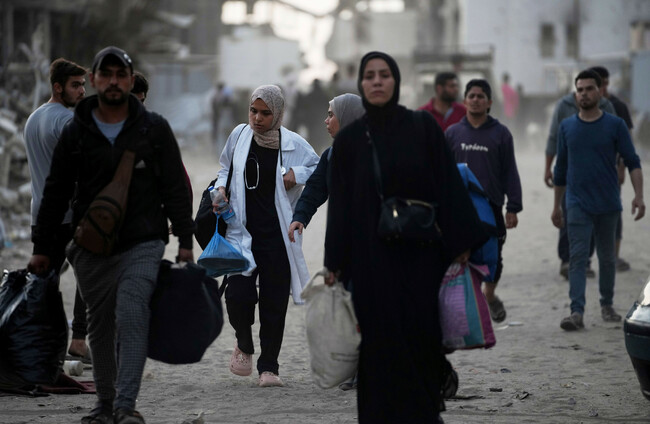
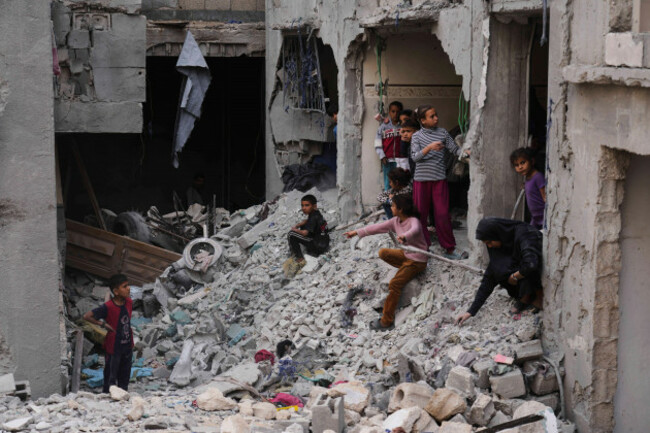
AN ESIMATED 120 PEOPLE have been killed in Israeli strikes across Gaza today, Gaza rescuers have said, as major human rights groups have warned the ongoing Israeli blockade on the territory has become a ‘tool of extermination’.
Dozens more were also injured in the Israeli attacks, the Gaza health ministry said.
Most of the victims were killed in Khan Younis in southern Gaza as airstrikes hit homes and tents, they said.
Medical staff at Nasser Medical Complex reported an influx of casualties, many of them children.
In the north, Israel also struck Gaza City and Jabalia.
The strikes come as negotiations for the release of the captives held in Gaza continue, with the latest talks taking place in the Qatari capital Doha.
Amir Selha, a 43-year-old Palestinian from north Gaza, reported “intense Israeli shelling all night”.
“Tank shells are striking around the clock, and the area is packed with people and tents,” he said.
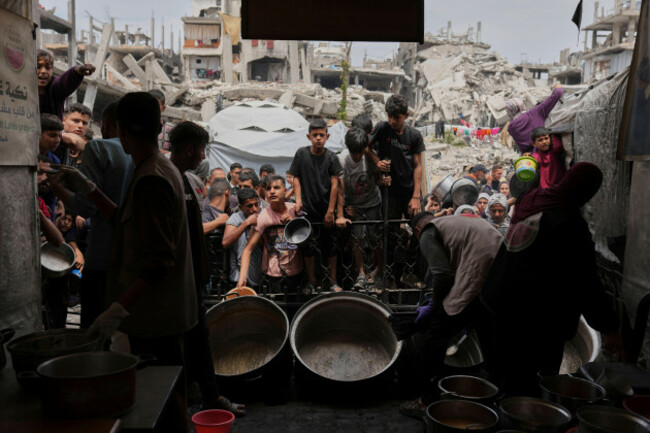
Hasan Moqbel, a Palestinian who lost relatives, told AFP: “Those who don’t die from air strikes die from hunger, and those who don’t die from hunger die from lack of medicine.”
Israel’s military yesterday told residents in part of a Gaza City neighbourhood to evacuate, warning that its forces would “attack the area with intense force”.
Israel carried out the latest strikes on the day Palestinians commemorate the “Nakba”, or catastrophe, when hundreds of thousands of people fled or were forced to flee their hometowns and villages during the 1948 Middle East war that gave birth to the state of Israel.
Hamas said in a statement that Israel was making a “desperate attempt to negotiate under cover of fire” as indirect ceasefire talks take place between Israel and Hamas, involving Trump envoys and Qatar and Egyptian mediators in Doha.
It also warned that Gaza was not “for sale” hours after US President Donald Trump, on a visit to the region, again floated taking over the territory and turning it into “a freedom zone”.
“There can be no meaningful negotiations while Gaza is being starved and bombed,” Senior Hamas official Basem Naim said.
“Food, water, and medicine are fundamental rights, not subjects for negotiation.”
Naim said that Hamas is open to a political process and ready to transfer governance of Gaza to any agreed-upon Palestinian body as soon as a full ceasfire is agreed, and Israeli forces retreat from the territory.
Human Rights Watch, an international monitor, has said that the Israeli government’s plan to demolish what remains of Gaza’s civilian infrastructure and concentrate the Palestinian population into a tiny area would amount to “an abhorrent escalation of its ongoing crimes against humanity”.
The monitor added that the humanitarian situation stemming from the ongoing Israeli blockade on Gaza, as well as plans to escalate forced displacement, demand “a more robust response from other governments and institutions”.
Federico Borello, interim executive director of Human Rights Watch, said that Israel’s blockade “has transcended military tactics to become a tool of extermination”.
Israel imposed an aid blockade on the Gaza Strip on 2 March after talks to prolong a 19 January ceasefire broke down.
The resulting shortages of food and medicine have aggravated an already dire situation in the Palestinian territory, as families in Gaza have resorted to boiling grass and eating animal feed.
Oxfam’s Khalidi said that Israel’s actions represent a “total disregard for humanitarian norms”.
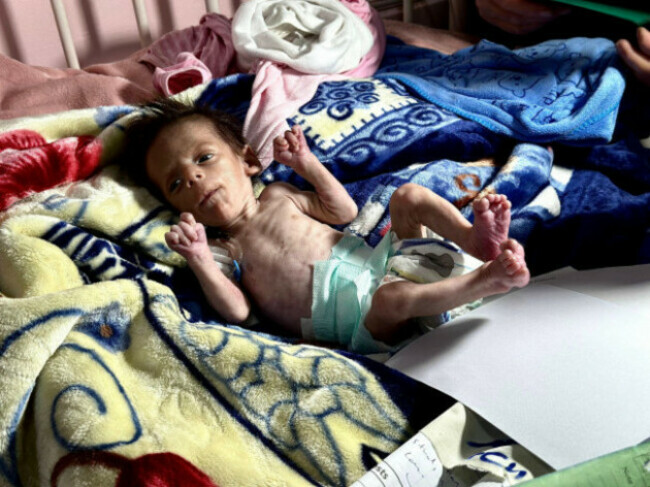
Germany’s Chancellor Friedrich Merz yesterday urged all sides to avert a famine in Gaza, while Italian Prime Minister Giorgia Meloni said the humanitarian situation in Gaza was “ever more dramatic and unjustifiable”.
UN Secretary General Antonio Guterres called for a ceasefire and “unimpeded humanitarian access” to the territory.
A US-led initiative for aid distribution under Israeli military security drew international criticism as it appears to sideline the United Nations and existing aid organisations, and would overhaul current humanitarian structures in Gaza.
Medical charity Medecins Sans Frontieres said the plan would make “aid conditional on forced displacement”, adding that Israel was creating “conditions for the eradication of Palestinian lives in Gaza”.
The United Nations ruled out involvement in the project.
“I made it clear that we participate in aid operations if they are in accordance with our basic principles,” said UN spokesman Farhan Haq.
“As we’ve stated repeatedly, this particular distribution plan does not accord with our basic principles, including those of impartiality, neutrality, independence, and we will not be participating in this.”
The initiative would effectively sideline the UN, which has trucks loaded with 171,000 tonnes of food waiting to enter the territory.
“The UN have a plan, an excellent plan, that is ready to be implemented as soon as we’re allowed to do our work,” he said.
Tánaiste Simon Harris has said he believes a proposed EU-Israel agreement needs to be “reviewed” due to what he described as “war crimes” by Israel in Gaza.
Harris spoke to reporters in Brussels, where he is attending a meeting of EU trade ministers which will discuss a list of US products that would be subject to import tariffs if trade negotiations fail.
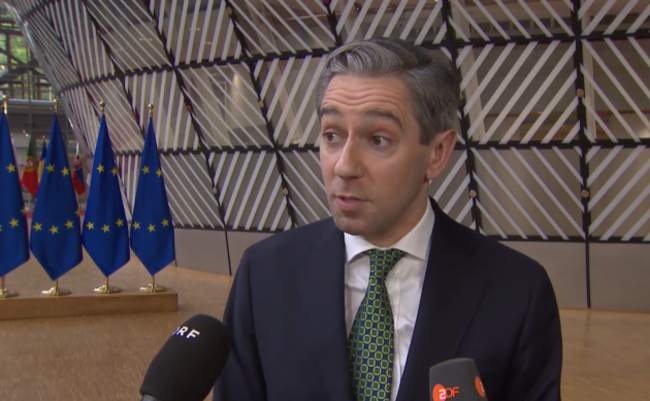
Asked on his view of a suggestion from Austrian foreign ministers that Israel and Canada should be invited to become part of an enlarged European Economic Area, Harris said he was opposed to Israel joining.
He added that he would be seeking to have the current EU-Israel association agreement changed, to reflect human rights violations by Israel.
“The Israeli government is engaging in war crimes in Gaza,” Harris said.
“There is an EU-Israel association agreement in place. Within that association agreement, there are human rights clauses.
“They’re not there to make people feel good or to pad out the document. They’re not discretionary, they’re not optional.”
Harris said he agreed with the Spanish and Dutch governments that the agreement needed to be reviewed.
“I now intend to intensify the engagement on that point with counterparts. I intend to formally raise it at the next meeting of foreign ministers. I hope to be joined by a number of other countries in relation to that.”
Additional reporting from © AFP 2025
Need more information on what is happening in Israel and Palestine? Check out our FactCheck Knowledge Bank for essential reads and guides to navigating the news online.

To embed this post, copy the code below on your site














have your say