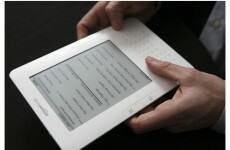
A mobile phone and organiser. They are mainly used by business people because of their ability to send and receive e-mails wherever there is mobile phone reception.
The denial comes following the emergence of new details in the case which forced the one-time French presidential favourite to resign earlier this year.
The smartphone company experienced a number of outages this week, which frustrated many customers. Now a survey says some have already bought new phones – and others are thinking of moving from BlackBerry.
The company says it is continuing to monitor the situation as services are slowly being restored to full working order following a three-day blackout across the globe.
Police were sent to areas at high risk of rioting and looting after detectives checked through the messages of handsets taken from people allegedly involved in the violence.
In the wake of this week’s violence in England and David Cameron’s Commons speech yesterday, we’re asking for your views on curtailing social network use.
INDIAN AUTHORITIES may have reached a deal with Research in Motion (RIM) over the encryption of BlackBerry messages.
Concerns that the device could be used by terrorists to plan attacks led to India marking a 31 August deadline for the means to read instant messages and emails sent via BlackBerry. Without an agreement in place by then, the government will ban the smartphone.
RIM, which manufactures the device, has indicated that it will provide a technical solution to the government next week, but the government will need time for its analysts to test if the solution works.
A similar deal was reached between RIM and Saudi Arabia recently, with the company agreeing to provide the codes necessary for accessing BlackBerry users’ messages stored in domestic servers in Saudi Arabia.
The main concern in this situation was communication between unrelated men and women in Saudi Arabia, which is legally restricted.
The UAE is planning to impose a ban on the handsets from October over fears they may be used by terrorists or assassins.
The agreements see a marked change in RIM’s attitude to privacy; the company had built BlackBerry’s reputation on the strength of its data protection.
Indian authorities will also approach Google and Skype with concerns over cyber-spying and planned attacks.
SAUDI ARABIA has scrappedits decision to ban the BlackBerry smartphone, after the smartphone’s manufacturer struck a deal to use domestic servers to store users’ chat messages – and give the government access to it.

Saudi Arabia joined the United Arab Emirates in declaring last month that the methods used by the popular smartphones in storing data offshore – outside of the jurisdiction of local laws – presented a threat to national security.
Now, however, the phone’s manufacturer Research In Motion (RIM) has handed over certain codes to the Saudi authorities that would allow the government to access messages sent using its popular BlackBerry Messenger tool.
The arrangement gives the government access to secure domestic servers on which the messaging data is stored, but only allows the government to view messages sent to and from Saudi BlackBerry owners.
The country’s three mobile networks tested their own inland servers – previously RIM had routed all chat data to its own encrypted servers housed in its native Canada – and found that they abided by local data protection laws.
The threat from the Saudi government, according to opponents of the move, is intended to limit communication between unrelated men and women, which is currently heavily restricted by law.
The United Arab Emirates, however, is more concerns with security protection since the killing of a Hamas leader in Dubai, in which fake Irish passports were used. It says it will not implemented its ban on the handsets until October.
RIM’s woes are not over, however, with the news that the Indian government has raised similar data concerns and is keen to implement its own Saudi-style solution, which would be accessed during ‘times of emergency’.
THE MAKERS OF the BlackBerry smartphone are reportedly planning to launch a new tablet PC in November that will be in direct competition with the iPad.
Research In Motion (RIM) is said to be planning a touch-screen device with a 9.7″ screen, the same size as that of Apple’s product. Crucially, however, the device will include Wi-Fi and Bluetooth options – which will allow users to access the internet through their existing BlackBerry smartphones.


iPad users wishing to use online services are currently required to either be within range of a Wi-Fi network, if they bought a Wi-Fi only model, or to buy a more expensive model featuring 3G capabilities which requires its own dedicated SIM card.
RIM have bought the rights to the BlackPad.com domain name, indicating that they may intend to also name their device similarly to Apple’s product.
It’s easy to understand RIM’s eagerness to make inroads in the tablet computer market, with Apple selling 3 million iPads within 80 days of the product’s launch.
Bloomberg quotes one analyst as saying RIM “can’t wait for a second generation of devices from Apple or they’ll fall too far behind.”
It is expected that pricing for the device will be broadly in line with that of the iPad – though significantly, as it wouldn’t be sold with a SIM card, the device could be made available through a wider variety of retail outlets.
The iPad is currently only available in its Wi-Fi only incarnations from Apple itself or selected resellers, but a BlackPad could be more widely available in high street electronics shops.
THE UNITED ARAB EMIRATES may be thought of as one of the merging business centres of the world – but that hasn’t stopped the country from ruling BlackBerries illegal.
The state declared on Monday that the methods in which the smartphones stores data offshore – outside of the jurisdiction of local laws – presents a threat to national security.
Its Telecommunications Regulatory Authority said the devices – which arrived in the country in 2006 – were essentially made illegal under a 2007 law dealing with offshore data storage.
“As a result of how BlackBerry data is managed and stored, in their current form, certain BlackBerry applications allow people to misuse the service, causing serious social, judicial and national security repercussions,” it said.
The decision – which will likely go down like a lead balloon with the local business industry, and indeed with international travellers visiting Dubai and Abu Dhabi – follows a squabble between the UAE and the BlackBerry’s manufacturer, Research In Motion (RIM), last year.
It will be welcomed by competitors like Apple and Google, however, whose iPhone and Android operating systems do not fall foul of such laws.
The state-owned mobile network Etisalat last year required local BlackBerry owners to install what it described as an “update” to their handsets’ software.
RIM insisted, however, that the ‘update’ was in fact spy software allowing the operator – and the government – to access private data, and issued instructions on how to remove the software.
The UAE operates one of the world’s broadest internet censorship routines, banning adult materials, most internet telephony services like Skype, and all web addresses ending with .il – the internet domain of Israel.
AT A HIGH-profile US Senate meeting, technology giant Apple was accused of using Ireland as a ‘tax haven’.
The multinational firm, which employs 4,000 people in Ireland, reportedly avoided paying €34 billion in US taxes by negotiating a tax rate of less than 2 per cent with the Irish government – significantly lower than that nation’s 12.5 per cent statutory rate.
The Senate heard that American children are losing out on education because Apple is transferring profits to Irish subsidiaries.
However, the Taoiseach Enda Kenny has denied that Ireland is a tax haven and rejected claims that authorities had negotiated deals with multi-national companies.
So, today we want to know, what do you think? Should Ireland be tougher on multi-national companies when it comes to tax?