Sign in. It’s quick, free and it’s up to you.
An account is an optional way to support the work we do. Find out more.
Sign in. It’s quick, free and it’s up to you.
An account is an optional way to support the work we do. Find out more.
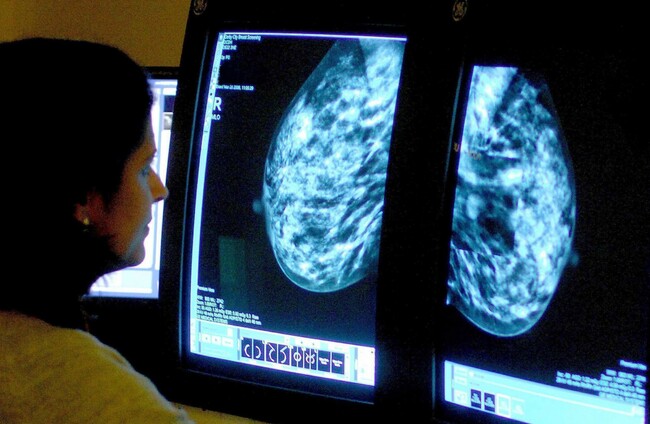
WHERE A PERSON lives majorly influences the risk of them developing cancer and – if they do – whether they will survive.
The gaps between those living in affluent areas and those in more deprived situations have been set out clearly in a new report into cancer inequalities in Ireland by the National Cancer Registry.
It highlights that older people living in deprived urban areas fare worst in terms of survival.
People living in deprived areas are 40% more likely to die from their cancer within five years of diagnosis with survival rates worse for stomach, colorectal, lung, breast and prostate cancers, as well as lymphoma and leukaemia.
There is also a higher cancer incidence rate among the most deprived population compared with the least deprived 20%. For all cancers, the rate was about 10% for men and 4% for women but it skyrocketed for three particular types: there is a 40% higher incidence rate of stomach cancer, a 60% higher lung cancer diagnosis rate and an alarming 120% higher incidence of cervical cancer for those living in poorer economic situations.
However, there is a lower incidence in deprived populations of breast cancer and melanoma. But for those who do present with these types, there are higher proportions of later-stage cancers.
According to the interim director of the National Cancer Registry, Dr Harry Comber, the findings are not unexpected.
“Nevertheless, the patterns seen – in particular in relation to variation in cancer risk by deprivation status, variation in survival by deprivation and by age, and variation in treatment by age – do point up striking inequalities that need to be targeted for improvement,” he said.
He also warned about explaining away the differences with simplistic arguments.
“This is a very complex area to tackle,” he added.
“For example, serious health conditions other than cancer are more frequent in older or more socioeconomically deprived patients and can influence their treatment and survival – so survival variation may not simply be explained by some patient groups presenting at a later stage or receiving less treatment.”
The report also found that:
>>>>Read a full summary here<<<<
Dr Comber noted that the patterns are not particular to Ireland, saying they are repeated across other countries.
Much has been written in the UK about the ‘postcode lottery‘ of cancer care. This report looks at patients diagnosed with nine types of major cancers (colorectal, stomach, lung, female breast, cervical and prostate cancers, melanoma of skin, lymphoma and leukaemia) between 2008 and 2012.

To embed this post, copy the code below on your site












have your say