Sign in. It’s quick, free and it’s up to you.
An account is an optional way to support the work we do. Find out more.
Sign in. It’s quick, free and it’s up to you.
An account is an optional way to support the work we do. Find out more.
JEAN CHARLES DE Menezes was shot dead by police officers in London after being mistakenly identified as a terrorist suspect.
The 27-year-old Brazilian electrician was shot in the head nine times when he got on the underground to make his way to work in 2005.
In 2006 the Crown Prosecution Service (CPS) – the English equivalent of the Director of Public Prosecutions – ruled not to charge any of the officers involved in the killing.
However that decision will now be reviewed at the European Court of Human Rights in a case taken by De Menezes’ cousin Patricia Armani Da Silva.

The family is challenging the decision not to prosecute anyone for murder. The case will be heard before the court in Strasbourg.
De Menezes was shot dead on 22 July 2005, the day after a police manhunt was launched to find those responsible for four unexploded bombs found on three underground trains and a bus in London.
It was feared that a further bomb attack was imminent. Two weeks earlier, the security forces had been put on maximum alert after 56 people died when suicide bombers detonated explosions on the London transport network.
Two of the terrorist suspects lived at the same address as Mr de Menezes in Scotia Road, London, which had been placed under surveillance.
As he left for work on the morning of 22 July, Mr de Menezes was followed by surveillance officers, who thought he might be one of the suspects.
Special Firearms Officers (SFOs) were dispatched to the scene with orders to stop him boarding any underground trains.
However, by the time they arrived, he had already entered Stockwell tube station. There he was followed onto a train, pinned down and shot repeatedly in the head.
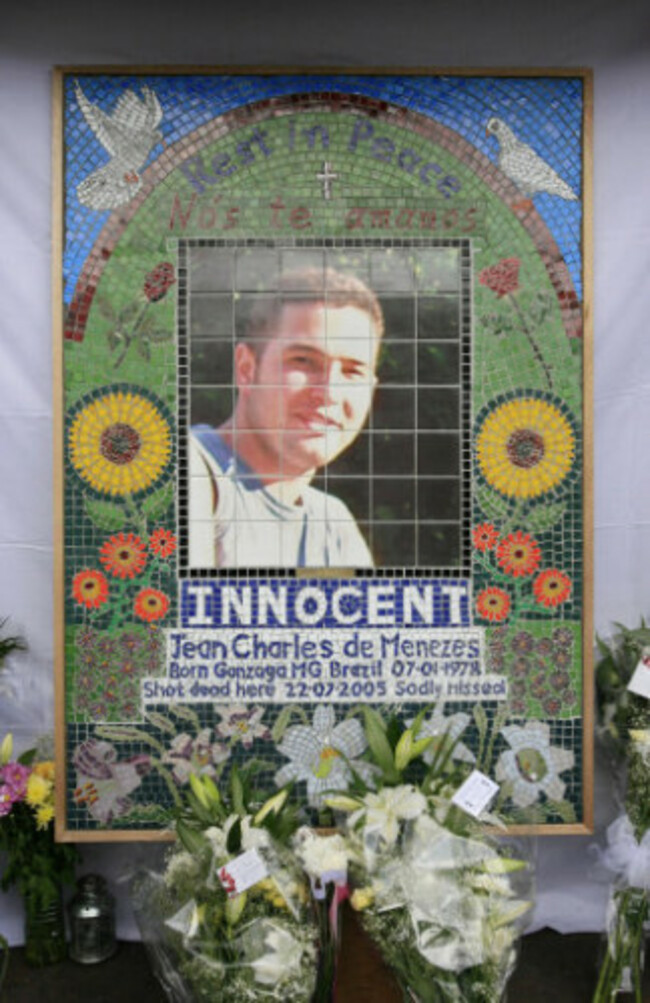
In 2006, The Independent Police Complaints Commission (IPCC), found that Mr de Menezes had been killed because of mistakes that could and should have been avoided.
The report also made a series of operational recommendations and identified a number of possible offences that might have been committed by the police officers involved, including murder and gross negligence.
Ultimately, however, it was decided not to press criminal or disciplinary charges against any individual since there was no realistic prospect of a conviction against any individual police officer being upheld.
At an inquest in 2008 the jury rejected the official version of the shooting and recording an open verdict. However, no charges were brought against the officers involved.
De Menezes’ family says the use of lethal force was unnecessary as there was a lack of evidence that the victim presented a threat.
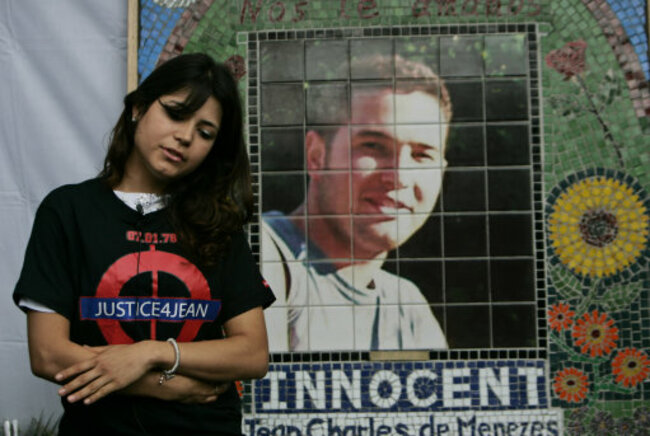
Patricia Armani Da Silva is unhappy about the decision not to prosecute any individuals for her cousin’s death.
She alleges that the evidential test to determine whether criminal charges should be brought (namely a suspect cannot be prosecuted unless it is considered that a conviction is more likely than not to result) is too high a threshold for decisions as to whether to prosecute, particularly in cases concerning the use of lethal force by State agents.
She also takes issue with the definition of self-defence in the United Kingdom, as the officers who shot Mr de Menezes only had to show that they had an honest belief (as opposed to an honest and reasonable belief) that the use of force was absolutely necessary.

To embed this post, copy the code below on your site










have your say