Sign in. It’s quick, free and it’s up to you.
An account is an optional way to support the work we do. Find out more.
Sign in. It’s quick, free and it’s up to you.
An account is an optional way to support the work we do. Find out more.

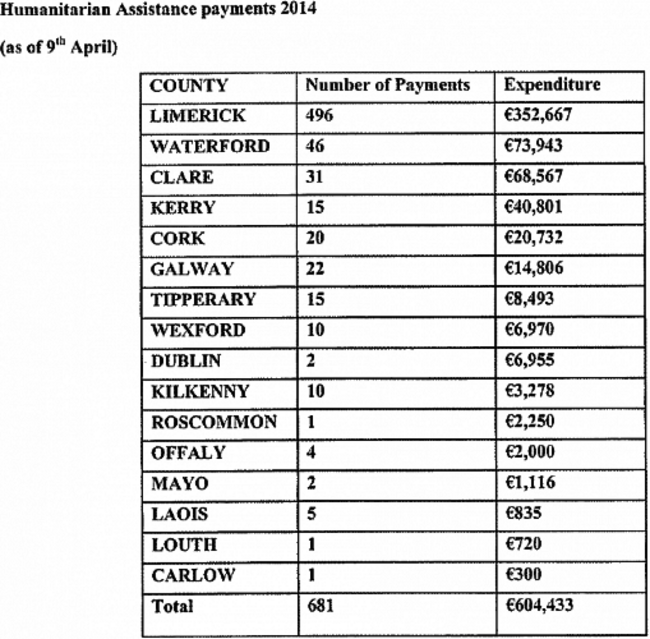
THE GOVERNMENT HAS paid out over €600,000 from the Humanitarian Assistance Fund to households affected by recent severe flooding – 4 per cent of the total €15 million extra made available.
However, the speed of payments being approved has been criticised by a flood damage action group.
The scheme involved is means tested, and described by the Department as “available to assist people whose homes are damaged by flooding and who are not in a position to meet the costs for essential needs, household items, and in some instances structural repair”.
Funding is being paid out in three stages.
The first stage relates to the immediate aftermath of the flooding, tending to basic needs, with the second stage looking at the replacement of essential household items.
The third stage focused on work such as “plastering, dry-lining, relaying of floors, electrical re-wiring and painting”.
“Several months”
“It could take several months before this stage of response commences and involves a cross Departmental/Agency response,” the Department warned.
The latest figures were revealed in a response to a parliamentary question by Senator Denis O’Donovan.
The vast majority of payments so far have been in Limerick, one of the counties worst hit by flooding.
Almost 700 payments have been made as of 9 April, totalling €604,433.
The Irish National Flood Forum has called on the government to speed up this process.
Volunteer Enda O’Donovan outlined that those affected by the flooding felt very positive with the funding was announced.
“We thought that at least someone is making some bit of an effort,” he said.
“You find two months after that only €600,000 has been paid out, they’re supposed to act promptly, that’s the annoying thing”.
O’Donovan notes that the amount averages just €720 per household, which can often not be enough if the property has been severely damaged.
He added that lack of insurance cover was something that still needs to be urgently addressed.
“There’s no safety net,” he added.

To embed this post, copy the code below on your site
















have your say