Sign in. It’s quick, free and it’s up to you.
An account is an optional way to support the work we do. Find out more.
Sign in. It’s quick, free and it’s up to you.
An account is an optional way to support the work we do. Find out more.
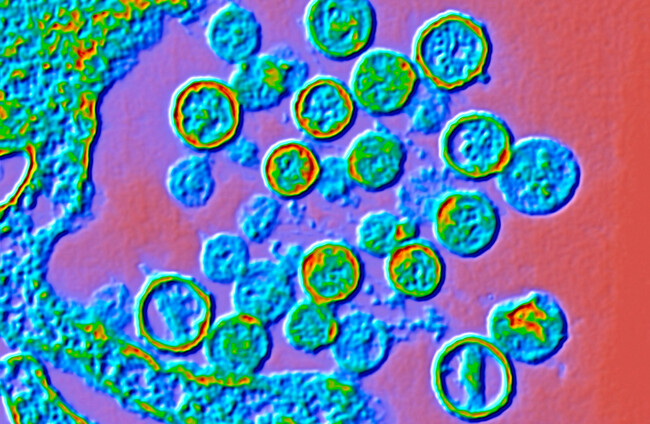
TWO IRISH CITIZENS are among the 143 people from 23 nationalities on board a cruise ship that’s seen a potential outbreak of the hantavirus.
The World Health Organisation today said it believes there may be “some human-to-human transmission that is happening among the really close contacts”.
Three people have died and two cases of the virus have been confirmed, tour operator Oceanwide Expeditions said.
A variant of hantavirus was identified in a female Dutch national who died on 27 April after disembarking the M/V Hondius in Saint Helena – her husband had earlier died on board and his cause of death is being investigated.
A third passenger died on 2 May and their cause of death is also being investigated.
The second confirmed case of hantavirus from the cruise ship involves a British passenger who is currently in a critical but stable condition in South Africa.
Hantavirus is a rare but potentially fatal disease spread by infected rodent droppings.
Only a few hantavirus species are known to cause human disease.
The virus is named after the Hantan River in South Korea, where more than 3,000 troops fell seriously ill after becoming infected with it during the 1950-53 Korean War.
Transmission of hantaviruses to humans occurs from contact with contaminated urine, droppings or saliva of infected wild rodents, such as mice or rats.
More rarely, infection may occur through bites.
Human infection generally occurs through inhaling contaminated dust and aerosols.
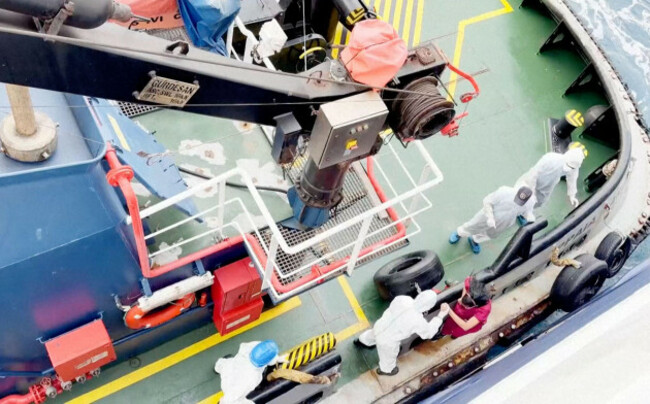
Andes virus, found in South America, is the only known hantavirus for which limited human‑to‑human transmission has been documented, and only then linked to “close and prolonged contact,” said the World Health Organisation (WHO).
The WHO says early diagnosis “can be challenging” as the symptoms resemble several other respiratory illnesses, such as Covid.
Suspected cases can be confirmed through various laboratory tests.
In the Americas, infection has been known to lead to hantavirus cardiopulmonary syndrome (HCPS), which is a rapidly progressive condition affecting the lungs and heart.
In Europe and Asia, hantaviruses have been known to cause haemorrhagic fever with renal syndrome (HFRS), which primarily affects the kidneys and blood vessels.
Different health authorities give varying time periods between exposure and symptoms starting to appear.
According to the US Centers for Disease Control and Prevention, in the Americas, symptoms usually start to show one to eight weeks after contact, while HFRS symptoms usually develop within one to two weeks.
Early symptoms typically include fever, headache, muscle aches, abdominal pain, nausea or vomiting.
In HCPS, the disease may progress rapidly to cough, shortness of breath, accumulation of fluid in the lungs and shock, says the WHO, while with HFRS, later stages may include low blood pressure, bleeding disorders and kidney failure.
The first deaths among the passengers were a Dutch couple – a husband who died on board on 11 April and his wife who died on 27 April after she disembarked the boat in St Helena to accompany his body.
On 4 May, a variant of hantavirus was identified as being present in the Dutch woman.
Meanwhile, on 27 April, another passenger on board the cruise ship became seriously ill and was medically evacuated to South Africa.
This person, who is British, is in a critical but stable condition in an intensive care unit in Johannesburg and is in a critical but stable condition.
A variant of hantavirus has been identified in this person.
And on 2 May, another passenger on board, a German national, died.
However, the cause of death in this instance has not yet been established.
The vessel remains off the coast of Cape Verde, off Africa’s west coast, and passengers will not be disembarking there, except for three people who are to be medically evacuated.
The three people to be medically evacuated include two symptomatic crew members, as well as the passenger who died on 2 May.
A disembarkation point for the remaining people on board M/V Hondius has not been finalised.
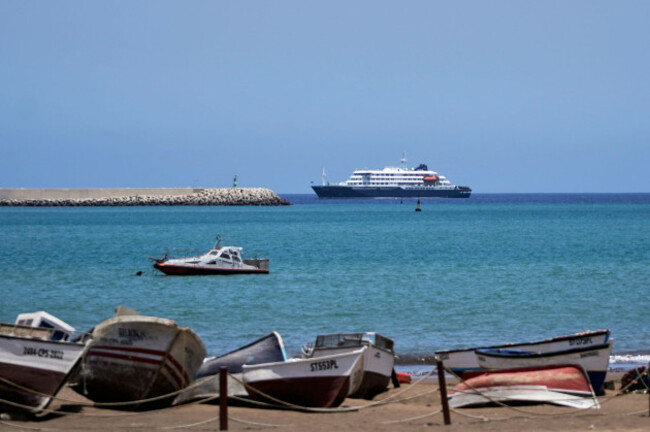
Sailing on to Las Palmas or Tenerife is being considered, where further medical screening and handling could take place, organised and supervised by the WHO and Dutch health services, given it is a Dutch-flagged cruise ship.
Spain has said it will not decide where to let the cruise ship dock until epidemiological data have been analysed.
Spain’s health ministry statement came shortly after WHO epidemic and pandemic preparedness director Maria Van Kerkhove said the ship would head for the Canary Islands.
“Based on the epidemiological data collected from the ship during its stopover in Cape Verde, it will be decided which port of call is most appropriate. Until then, the Ministry of Health will not take any decision, as we have informed the World Health Organisation,” the Spanish ministry said.
Earlier, the vice president of the islands’ regional government, Manuel Dominguez, said he preferred that the ship go straight to mainland Spain because it had greater resources to handle the stricken vessel.
“If it does not have to be in the Canary Islands, then that would be better, because there may be other resources on the mainland,” he said in a radio interview, adding that any decision should be taken “with all possible guarantees”.
-With additional reporting from © AFP 2026 and Eimer McAuley

To embed this post, copy the code below on your site














have your say