Sign in. It’s quick, free and it’s up to you.
An account is an optional way to support the work we do. Find out more.
Sign in. It’s quick, free and it’s up to you.
An account is an optional way to support the work we do. Find out more.
AHEAD OF TODAY’S announcement, there has been plenty of debate and speculation about the likely contents of Budget 2017.
In the Dáil on Thursday, Social Protection Minister Leo Varadkar fielded questions on a number of different social welfare benefits.
Sinn Féin TD John Brady asked if the Minister would commit to reversing cuts to the rate of jobseeker’s payments for young people under the age of 26.
Varadkar declined to make that commitment, and claimed:
…Even though the rates are lower [than previously], they’re still much higher than they are in Northern Ireland, where your party is in government for a very long time.
Later in his comments, the Minister alleged that Brady had said his claim was “untrue”, and invited TheJournal.ie to do a fact check.
We accepted that invitation.
(Send your FactCheck requests to factcheck@thejournal.ie, tweet @TJ_FactCheck, or announce them in the Dáil chamber).
Claim: Jobseeker’s payments are higher here than in Northern Ireland
Verdict: TRUE
What was said:
You can watch an excerpt of the exchange in the video above.
Our focus is on this claim, by Leo Varadkar:
…I would point out that, even though the rates are lower [than previously], they’re still much higher than they are in Northern Ireland, where your party [Sinn Féin] is in government for a very long time.
According to the official UK government information website for Northern Ireland, Jobseeker’s Allowance is paid to anyone (generally) over 18, who doesn’t work, or works an average of less than 16 hours per week, is looking for work, and is not in certain types of education or receiving certain other benefits.
If you’ve made National Insurance contributions through working in the previous two tax years, you’re eligible for contribution-based Jobseeker’s Allowance.
If you haven’t paid enough National Insurance contributions, you may be eligible for income-based Jobseeker’s Allowance, which you can claim jointly with your partner.
Increases (known as “premiums”) are available for certain recipients, such as those with disabilities, those looking after children, or pensioners. Details on premiums are available here.
In response to our request for evidence, the Department of Social Protection accurately provided FactCheck the basic weekly Jobseeker’s Allowance and Benefit rates in Northern Ireland and the Republic.
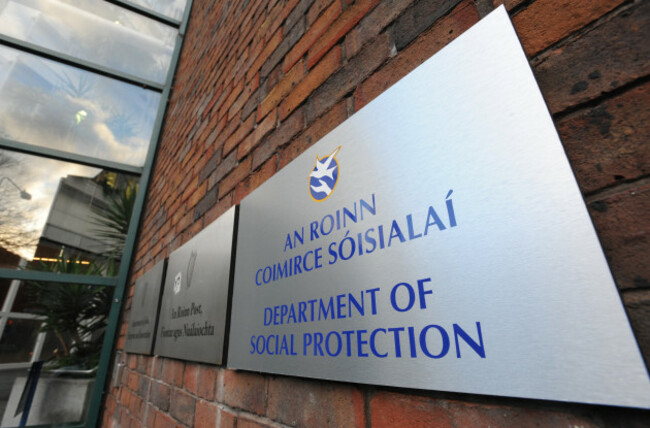
According to the official government information website Citizens Information, Jobseeker’s Benefit is paid to anyone who is unemployed for at least four out of seven days a week, available and looking for work, and who has made enough PRSI contributions.
There are other details, exemptions, and disqualifications which you can read about here.
Your weekly rate depends largely on how much you were earning before losing your job or experiencing a significant loss of income per week.
This is calculated based on your PRSI contributions two tax years before your Jobseeker’s Benefit claim (i.e. your rate in 2016 will largely depend on your earnings in 2014).
Increases on that basic personal rate are available if you have an adult dependent, or children.
Jobseeker’s Allowance, which is the specific payment discussed by John Brady and Leo Varadkar in the Dáil on Thursday, is (generally) for those who don’t qualify for Jobseeker’s Benefit due to insufficient PRSI contributions.
You must be unemployed for at least four out of seven days a week, capable, available and looking for work, and satisfy a means test, which assesses your household income (including your partner’s income), your property, and so on.
If you’re aged 26 or older, increases are available for adult dependents (i.e. partners) and children.
For those aged up to 25, increases are only available for adult dependents. For every day you work each week, one-fifth of your weekly payment is deducted.
Comparison
The highest basic weekly rate available to an individual in Northern Ireland is €81.05.
In the Republic of Ireland, the lowest basic weekly rate of Jobseeker’s Benefit is €84.50, and the lowest weekly rate of Jobseeker’s Allowance is €100 for 18-24 year-olds and €144 for 25-year-olds – the youth contingent at the centre of the Minister’s claim.
Each individual’s actual payment will depend on their specific circumstances – their age, marital status, income, and other factors such as disability, and whether they have child or adult dependents.
However, it is clear that the standard weekly rates for jobseekers are higher here than in Northern Ireland.
And while increases are available, north of the border, for dependent children, disabilities, and so on, similar (generally larger) increases are available in the Republic, too.
We rate Varadkar’s claim TRUE, but there is important context to go with it.
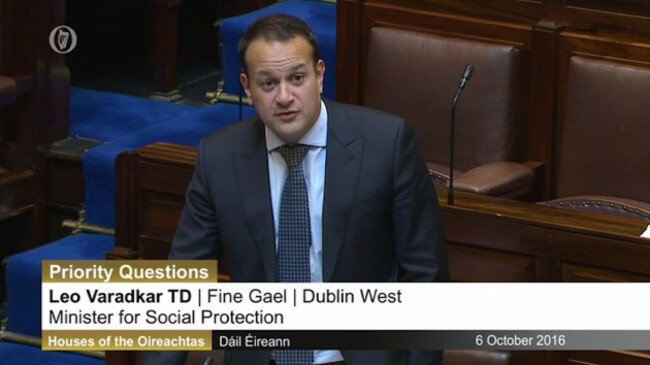
While Leo Varadkar was right about the higher level of jobseeker’s payments in the Republic, John Brady did not actually literally call his claim “untrue”, as the Minister alleged.
In the video of the exchange, the Sinn Féin TD can be heard calling the claim a “red herring”, and according to the official transcript, Brady accused Varadkar of “hiding behind false facts”, which may have led the minister to conclude he was calling it untrue.
In response to our enquiries, Brady told FactCheck that he did not reject the claim that jobseeker’s payments were lower in Northern Ireland, but that, in essence, he rejected the validity of the comparison.
In his response, the Sinn Féin TD made claims regarding differences in the cost of living between Northern Ireland and the Republic, and in the provision of free healthcare and education in Northern Ireland.
These fall beyond the scope of this fact check.
However, Brady also stated that:
Sinn Féin do not set the welfare rates. They are set in Westminster, as I pointed out during the exchange.
This is perhaps the crucial piece of context, and it is true. Benefit rates are determined by the Chancellor of the Exchequer, and are uniform throughout the UK.
Therefore, the Northern Ireland Executive, in which Sinn Féin has had ministers since the Good Friday Agreement in 1998, does not have any say in welfare rates, including Jobseeker’s Allowance.
So while Leo Varadkar’s claim is certainly true, it does not support any criticism of Sinn Féin, in this respect.
TheJournal.ie’s FactCheck is a signatory to the International Fact-Checking Network’s Code of Principles. You can read it here.
For information on how FactCheck works, what the verdicts mean, and how you can take part, check out our Reader’s Guide here.

To embed this post, copy the code below on your site














have your say