Sign in. It’s quick, free and it’s up to you.
An account is an optional way to support the work we do. Find out more.
Sign in. It’s quick, free and it’s up to you.
An account is an optional way to support the work we do. Find out more.
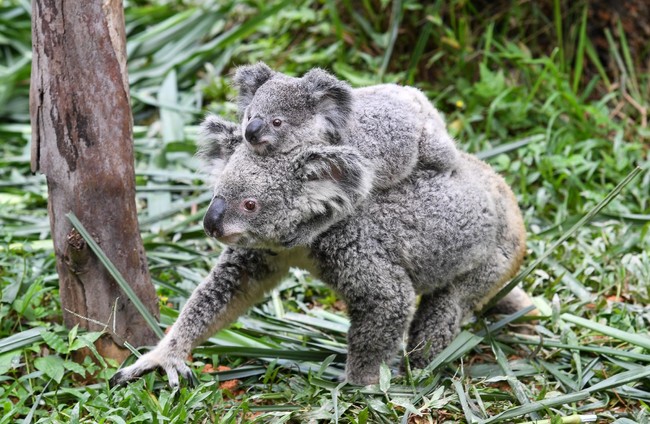
AT LEAST HALF of Australia’s only disease-free koala population, seen as key to the species’ future, is feared dead after bushfires swept through an island sanctuary.
Kangaroo Island, a popular attraction off the coast of south Australia, is home to many wild populations of native animals, including around 50,000 koala.
Massive bushfires have flared up in the southeast of the country in a months-long crisis, killing nearly half a billion native animals in New South Wales alone, scientists estimate.
While bushfires are common in Australia’s arid summers, climate change has pushed up land and sea temperatures and led to more extremely hot days and severe fire seasons.
Conditions have been particularly intense in recent days, with an ongoing blaze on Kangaroo Island spreading rapidly and razing 170,000 hectares, one-third of the island.
“Over 50 percent (of the population) has been lost,” Sam Mitchell of Kangaroo Island Wildlife Park, which is raising funds to care for the injured koalas, told AFP.
“Injuries are extreme. Others have been left with no habitat to go back to, so starvation will be an issue in coming weeks.”
A University of Adelaide study published in July found that the Kangaroo Island koala species is particularly important to the survival of the wider population as it is the only large group free from chlamydia.
The bacterial infection, which causes blindness, infertility and death in the species, is widespread in koalas in the eastern Queensland and New South Wales states and also occurs in Victoria state.
“They are an insurance population for the whole population,” the University of Adelaide’s Jessica Fabijan, who carried out the study, told AFP.
“These fires have ravaged the population.”
Fabijan said that massive bushfires in New South Wales and Victoria’s Gippsland region, home to major koala populations, is also expected to have killed many animals.
“It’s one of the biggest tragedies for the population since the late 1800s when they used to hunt them for their fur,” she added.
Habitat loss, dog attacks, car strikes and climate change have already led to a sharp decline in the furry marsupial’s population, which is believed to have numbered more than 10 million prior to European settlement of the continent in 1788.
The koalas cannot be removed from the island due to their chlamydia-free status, the state government said, adding that veterinarians were rescuing and treating the injured animals on-site.

To embed this post, copy the code below on your site

















have your say