Sign in. It’s quick, free and it’s up to you.
An account is an optional way to support the work we do. Find out more.
Sign in. It’s quick, free and it’s up to you.
An account is an optional way to support the work we do. Find out more.
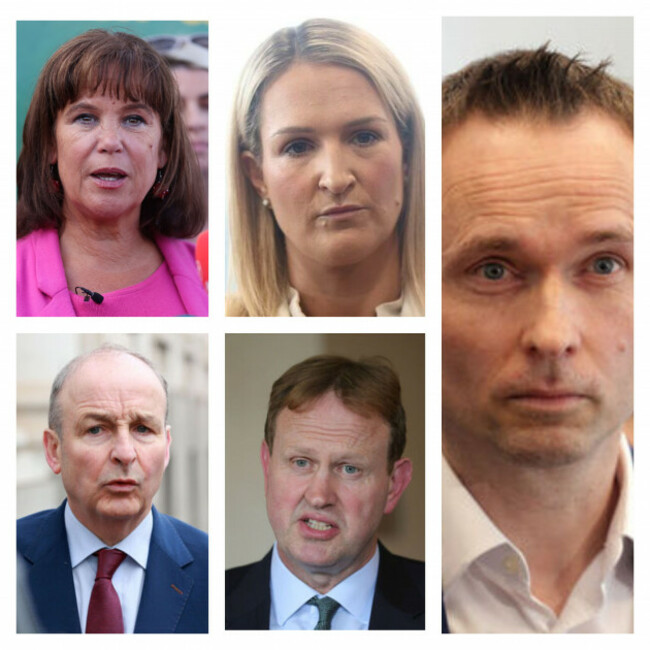
EVERY WEEKEND, OUR political team casts an eye over the events inside and outside Leinster House that have people talking.
This week saw the Dáil return from its summer recess and talk of Budget 2027 ramp up significantly. As has been the case for most of this decade, international affairs continue to feature.
So, without further ado:
It is a delicate matter to write about: the public performance of a TD after they become the subject of a violent incident, but Michael Healy Rae continued to impressively centre his constituents and his colleagues in Leinster House in the aftermath.
And not only that, but he admitted to being shook while having the composure to make important points about our political life with clarity and eloquence.
“Whatever the intention behind this attack, I will not be deterred from continuing my work or from representing the people of Kerry to the very best of my ability,” he said.
“However, we do need to have a serious conversation about the growing toxicity directed towards politicians and public representatives.
“Disagreement and robust political debate are entirely legitimate, but personal abuse, intimidation and violence can never be accepted or normalised in a democratic society.”
In an interview with the Irish Independent, he went on to say he would like politicians to watch their backs, stand up for themselves and also be careful in how they address each other during debates.
“Debate, argue, but you have people in the Dáil who stand up, and they use words that aren’t very smart, trying to, you know, put down politicians.
“Damn it, like, you’re there to do a job. You’re there to legislate. You’re there to represent people. You’re there to bring in legislation that improves things, you’re there to do a job of work.”
Amen to that.
An international focus this week as world leaders gather in New York from Monday for the 81st United Nations General Assembly has us choosing our second winner from abroad.
Seemingly uninterested in personal power or national dominance, the unlikely prime minister of Canada offers the most adult-sounding alternative to the current world order.
Speaking to the European Parliament in Strasbourg this week in the wake of suggestions of an EU-Canada alliance, he described his realistic utopia.
He argued that countries could reduce the influence of more powerful partners by diversifying their economic relationships without needing to become entirely self-sufficient.
“The leverage of the powerful in an exploitive relationship collapses well before complete independence is achieved,” Carney said.
“The objective is not self-sufficiency. It is collective resilience.”
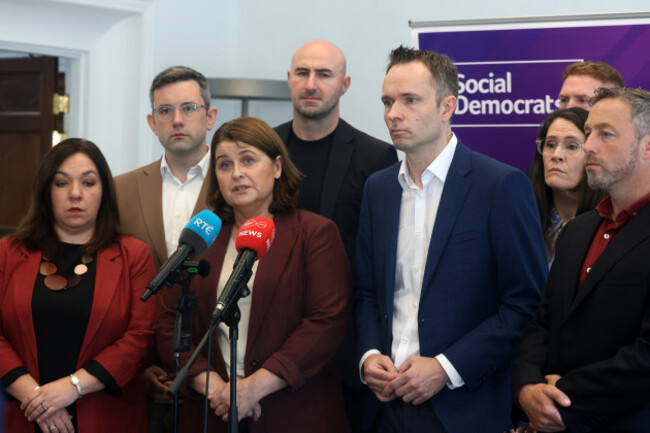
Cian O’Callaghan
Sorry Cian, we do feel bad about putting you on the list this week, but we really have no choice given this week’s disastrous press conference.
For a second year in a row, the coverage of the Social Democrats’ pre-Dáil think-in was dominated by a controversy involving Dublin Bay South TD Eoin Hayes.
O’Callaghan, who is deputy leader of the party, was left to defend the fact that Hayes wasn’t present at the press conference, after he was the subject of a news report on The Ditch last week.
The Ditch reported that Hayes had boasted online about co-leading a team that cut 200 jobs at a global tech firm.
When asked for a reaction to the Ditch’s story, instead of putting the issue to bed and moving on, O’Callaghan was left in the awkward position of having to defend Hayes’ absence from the press conference, as his colleagues stood beside him looking stone-faced and miserable.
O’Callaghan, who was running the show in the absence of party leader Holly Cairns, failed to adequately explain Hayes’ absence from the press event.
When it was put to him that Hayes had not made himself available to media during a press conference at all since the Palantir controversy when he was first elected in December 2024, O’Callaghan said he was certain Hayes would do so at some point in the coming Dáil term.
To be fair to O’Callaghan, the awkward press conference doesn’t rest entirely on his shoulders. We could have put Hayes on this list instead. But, in reality, it is a failing of the party’s leadership as a whole, whose strategy surrounding Hayes seems to be to keep him out of the spotlight and hope no one notices.
Micheál Martin
Public transport fare hikes were a hot topic in the Dáil this week, after the announcement earlier this month that bus and train fares nationwide will be increased by 15% from January.
Appearing at the Oireachtas Transport Committee on Wednesday, National Transport Authority (NTA) [NTA] officials confirmed that the increases are likely to decrease the number of passengers using trains and buses.
Despite this, Taoiseach Micheál Martin was undeterred.
Batting off criticism and questions from Labour’s Ivana Bacik, Sinn Féin’s Louise O’Reilly and Fine Gael’s Barry Ward in the Dáil that same day, the Taoiseach said the link between fare prices and public transport usage was “not a consideration” for the government in coming to its decision.
He argued that the main issue was spending ceilings, and that if public transport services are to expand, then fares must be increased to fund the expansion.
“It is not an easy choice. I would prefer if we never had to increase fares but we are doing so,” he said.
As we have said in this column previously, increasing the cost of using public transport in the midst of a climate emergency, when the evidence is there that this will make public transport less attractive for people, is hardly the soundest of policies.
A new book by former staff Siobhán Fenton opened up old wounds this week, dragging up names and tales that the Sinn Féin leader would rather leave in the past.
In the past seven days, McDonald wanted to keep focus on a reunited Ireland – an unexpected gift of top billing by Donald Trump last weekend, made her meeting with Scottish and Welsh leaders box office. (Incidentally, the Taoiseach was quick to criticise the move, saying by tying independence to other countries, Sinn Féin was setting the country back – not forward).
However, in the new book the author recounts how employees were “distraught and furious” with the party leader over revelations surrounding former Seanad member Niall Ó Donnghaile two years ago, particularly at how it was handled by party leadership.
As Sam McBride’s review in the Irish Independent said Saturday: “Ourselves Alone is far from a tell-all exposé, but the publication contains enough sustained criticism for it to be a problem for Sinn Féin.”
No minister of the Department of Justice seems to be able to get a handle on An Garda Síochána and how senior leadership deals with internal issues.
An RTÉ Investigates documentary, which aired on Wednesday night, revealed that staff working in a unit set up to protect garda whistleblowers claimed that reforms in the force are being undermined by senior management.
The garda members who were connected to the Garda Protected Disclosure Unit, Donal Corcoran and Rose Sweeney, alleged they were “forced out of the” office for protecting whistleblowers. They have since become whistleblowers themselves.
“They say they were sidelined, obstructed and penalised,” Sinn Féin TD Pearse Doherty said to some effect in the Dáil on Thursday.
Anyone watching the programme last night could see they were devastated. It has taken a real toll on all of them and their lives.
Calls for Justice Minister Jim O’Callaghan and his predecessor Helen McEntee to answer questions before the Dáil about how garda whistleblowers are treated are now only getting louder.
With additional contributions by Sinéad O’Carroll

To embed this post, copy the code below on your site








have your say