Sign in. It’s quick, free and it’s up to you.
An account is an optional way to support the work we do. Find out more.
Sign in. It’s quick, free and it’s up to you.
An account is an optional way to support the work we do. Find out more.
FANS OF TINNED fish may have come across a new addition to supermarket shelves – jack mackerel.
Despite having a similar name and appearing alongside mackerel, jack mackerel is a different species.
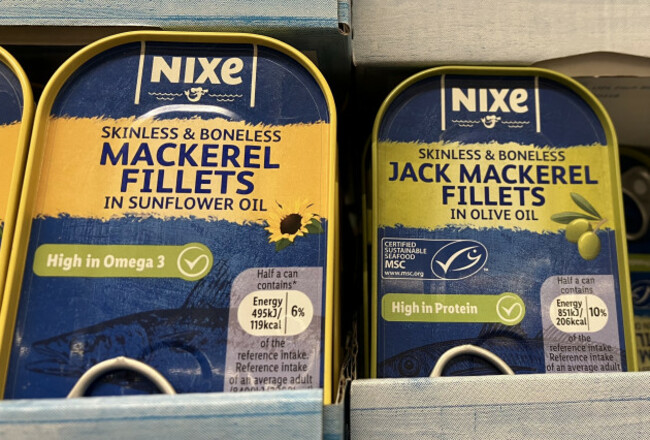
Lidl is stocking the two side-by-side and told The Journal this weekend that it is “transitioning” its tinned mackerel offering to jack mackerel from Chile.
So what’s going on?
Plummeting Atlantic mackerel stocks, caused by severe overfishing, have sent retailers scrambling for alternatives, with several UK supermarkets and now the Irish arm of Lidl adding jack mackerel to their product list.
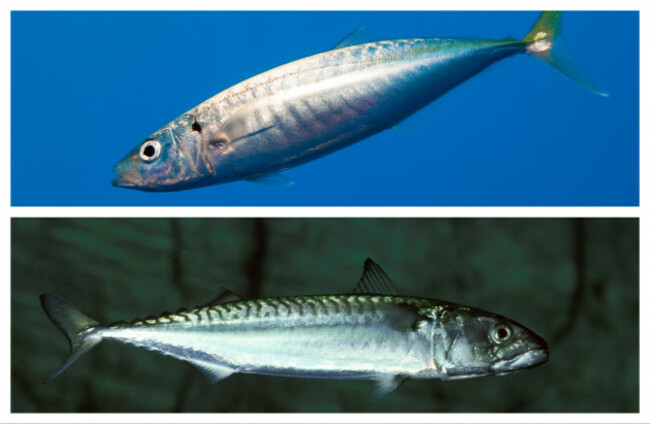
Jack mackerel, which has the Latin name Trachurus symmetricus and is also called “horse mackerel”, comes from the southern Pacific. The fish Irish people commonly refer to as mackerel, Scomber scombrus, comes from the north-east Atlantic.
Atlantic mackerel is a very popular oily fish and often considered an affordable “superfood” due to its healthy properties. It’s very high in omega-3 fatty acids and in protein.
Jack mackerel is lower in omega-3 and tastes different, having a much lower fat content.
Lidl has somewhat confused matters by labelling its tinned jack mackerel as “high in protein”, despite the fact that it contains 17g of protein per 100g, whereas its Atlantic mackerel contains 20.9g.
It is charging €1.25 for jack mackerel in olive oil and 95c for Atlantic mackerel in sunflower oil.
The Journal tried tins of each, and we thought the jack mackerel, while chewier and not as appealing looking, was quite nice, although some of us preferred the taste of the Atlantic mackerel overall.
There’s another crucial difference that may attract consumers to jack mackerel: unlike Atlantic mackerel, it’s certified as sustainable by the Marine Stewardship Council (MSC). This certification is prominently displayed on the Lidl tin.
The MSC is a non-profit that promotes environmental sustainability in fishing. It removed its certification from Atlantic mackerel in 2019 due to overfishing.
The NGO says jack mackerel is “similar to the Atlantic mackerel in taste and consistency and is also high in omega-3″.
Lidl Ireland said it was committed to sourcing fish from responsibly managed fisheries and all its mackerel meets its sourcing requirements because it was caught during a fishery improvement programme.
John Shine of Donegal-based fish supplier Shines Seafood, a fish supplier and tinned fish producer, said Atlantic mackerel is the “holy grail” in terms of quality mackerel because of its high fat content.
He said eating jack mackerel, by comparison, is a bit like eating toast without butter.

Irish fishing is at the sharp end of the mackerel sustainability crisis. The sector warned that it would be devastated by the EU slashing the mackerel quota by 70% last December, in line with scientific advice.
However, after non-EU countries such as the UK and Norway set a catch limit well above the scientific advice, the EU itself rowed back on its initial decision and set itself a more generous quota in line with that of its neighbours.
When Greenland and Russia’s catches are factored in, the estimated total mackerel catch for 2026 was 143% above the scientific advice, the World Wide Fund for Nature (WWF), an environmental NGO, said.
“With such an unsustainable catch level, coastal states are actively increasing the risk of biological collapse,” the WWF told The Journal this weekend.
Shine said Irish fishermen were getting the bill and the blame for overfishing by non-EU countries in international waters.
“Most of these businesses involved in catching or processing [mackerel] are on their hands and knees,” Shine said.
He said there should be a boycott of Norwegian salmon until it comes to the table and negotiates fair quotas.
Shine noted that Chilean jack mackerel catch has also slumped, as a result of a strong El Niño, a climate phenomenon affecting sea surface temperatures over the tropical Pacific.
The WWF warned that the scientific council on whose advice EU quotas are supposed to be set may yet recommend zero catch for mackerel for 2027. It said governments need to act now to prepare to protect fishers, wholesalers, canneries and landing ports.
Without action to tackle the potential socio-economic fallout from a zero catch recommendation, there will be even more pressure to reject the scientific advice. This could lead to a vicious cycle of countries again setting catch limits above the recommended level, the WWF said.
The Journal visited branches of the other main Irish supermarket chains in Dublin this week and did not find jack mackerel on offer, although it is being sold by Aldi in the UK.

To embed this post, copy the code below on your site













have your say