Sign in. It’s quick, free and it’s up to you.
An account is an optional way to support the work we do. Find out more.
Sign in. It’s quick, free and it’s up to you.
An account is an optional way to support the work we do. Find out more.
WORLD LEADERS ARE continuing to pay tribute to Britain’s Queen Elizabeth II, who died yesterday at the age of 96.
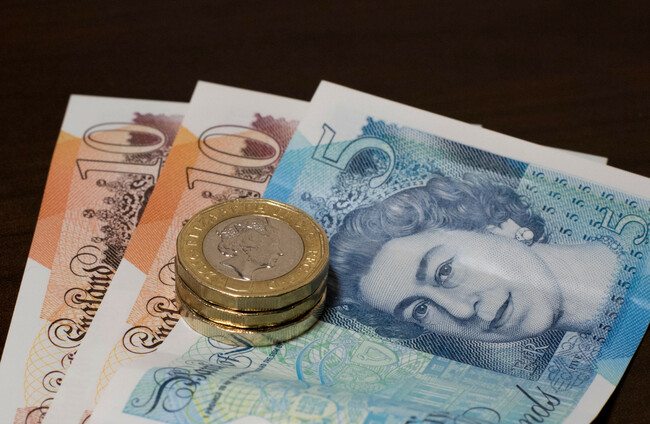
Over the course of her 70-year reign, the queen’s portrait has featured on stamps, coins and banknotes, and her initials appear on UK government buildings, post boxes and police uniforms.
Now that King Charles III is the new British monarch, some of these things will need to be changed or replaced to reflect the accession of a king.
However, due to the length of time the queen was on the throne, some of these changes are likely to take years to carry out. Here are some of the things that will need to change.
Coins and notes
According to the Royal Mint, there are currently 29 billion coins in circulation in the UK with Queen Elizabeth’s head on them, while there are over 4.7 billion Bank of England notes in circulation, all bearing her image.
Many countries who are part of the Commonwealth also use currency that features the image of the queen, including Australia, Canada and New Zealand.
These are set to remain legal tender for years before a portrait of Charles appears on the currency, a process that could take over a year. Once new coins and notes bearing Charles are introduced, the old ones will be gradually collected by banks and post offices.
The Royal Mint said it could not give information at this time when asked about the possible production of new coins.
What is known is that when Charles appears on a coin, he will be facing the opposite direction to his mother, a tradition which dates back to the 1600s.
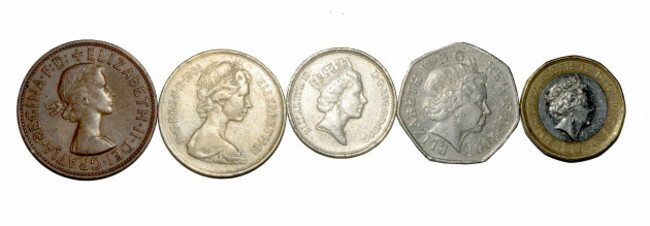
“From the time of Charles II onwards, a tradition developed of monarchs being represented on the coinage facing in the opposite direction to their immediate predecessor,” a statement on the royal family’s official website reads.
Why this tradition exists is not known, but it’s thought that it could have started because Charles II wanted to be seen turning his back on Oliver Cromwell when he came to the throne.
Either way, King Charles III will most likely be facing the left on coins, as his mother’s portrait faces right.
Stamps
Future British postage stamps are also likely to bear a new portrait of Charles, though again, it is not known when these will be issued.
The Royal Mail has confirmed that all stamps featuring the queen remain valid for use, including “definitive stamps – regular ‘everyday’ stamps – and special stamps”.
“No further announcements on stamps will be made before the funeral, and then only at the appropriate time, after consultation with Buckingham Palace,” the statement added.
Post boxes
Since post boxes were introduced in Britain in 1853, they have carried an monogram of the monarch reigning at the time. The monogram, called the royal cypher, combines the king or queen’s initials and title.
Queen Elizabeth’s was EIIR, the r standing for regina, meaning queen in latin. Around 60% of the postboxes in the UK have this, but there are still some from the reign of George VI, George V and Queen Victoria.
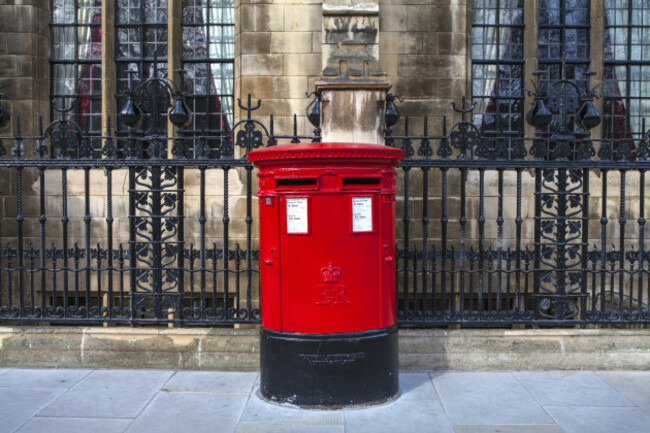
Any new post boxes installed in the UK will now likely feature Charles’s cypher, which is likely to be CIIIR.
The queen’s cypher will also likely be replaced on some government buildings, state documents and even UK police helmets.
Passports
All UK passports are issued in the name of the sitting monarch.
On the inside of the front cover, a statement reads: “Her Britannic Majesty’s Secretary of State requests and requires in the name of Her Majesty all those whom it may concern to allow the bearer to pass freely without let or hindrance and to afford the bearer such assistance and protection as may be necessary.”
Similar text appears inside Australian, Canadian and New Zealand passports.
All current passports are still valid for travel. For new passports, the wording on the inside of the cover will be updated at some point in the future to His Majesty.
QCs to KCs
In the UK, Queen’s Counsel (QC) refers to barristers and solicitors who have been appointed by the British monarch to be part of “Her Majesty’s Counsel learned in the law”, which is essentially recognition of being an expert in their legal field.
These will now be known as King’s Counsel (KC) with immediate effect, according to the UK Bar Council.
We have been advised by the Crown Office that the title Queen's Counsel (QC) changes to King's Counsel (KC) with immediate effect. The change is automatic so there are no new Letters Patent.
— The Bar Council (@thebarcouncil) September 8, 2022
Other changes
The names of Her Majesty’s government, Treasury and Customs and Excise will have to change.
Charles will now participate in Britain’s annual state opening of parliament and give the king’s speech from the throne, outlining the government’s agenda.
The Queen’s Guard, typically seen posted outside Buckingham Palace, will change its name.
Britain’s national anthem, “God Save the Queen”, will now be “God Save the King”, which hasn’t been sung since 1952.
Additional reporting from © AFP 2022

To embed this post, copy the code below on your site











have your say