TheJournal.ie uses cookies. By continuing to browse this site you are agreeing to our use of cookies. Click here to find out more »
Dublin: 16 °C Tuesday 21 May, 2013

Column: ‘I once worked an 80-hour shift’ – a junior doctor’s story

One young medic describes the sometimes nightmarish world of hospital staff shortages to TheJournal.ie.

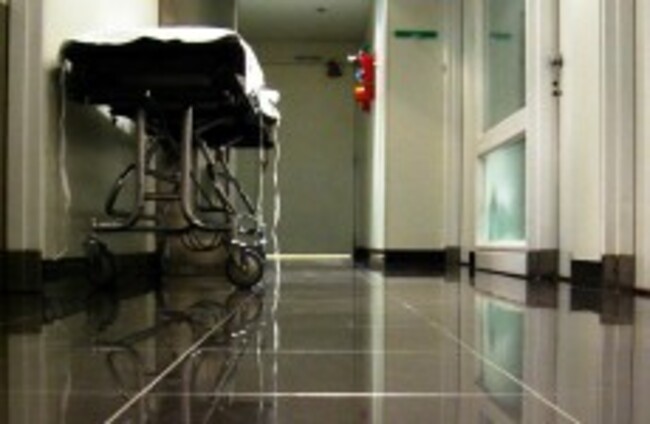
File photo
File photo

This week, Minister for Health James Reilly warned that hospitals will not be able to hire enough junior doctors by July 11. Here a junior doctor working in an Irish hospital, who wishes to remain anonymous, describes the situation on the wards.

JULY 11 IS QUICKLY becoming the doomsday of Irish healthcare. The changeover – when new doctors arrive, ex-interns flee to the new world, and emergency departments throughout the country finally crumble beneath the sheer weight of patients on trolleys.

The reality is that we will struggle on, as we have for so many years – understaffed, overworked, denied overtime payments in some institutions. It is the junior doctor who will bear the shortcomings of our health system in the months and years to come. Who would want to stay in an environment so destined for failure?

Understaffing is a hot topic, but not a complex one. When you don’t have enough doctors to do the job, the doctors who are there work longer and harder. They work more hours and more nights on call – a rota where you were on call one in every six nights might becomes one in three. The European Working Time Directive (EWTD) dictates by law that no doctor should work longer than 12 hours without a rest period. But this just isn’t possible if, after a night on call, there aren’t enough doctors to staff the facility.

You stay for the next day, and you can’t really argue with it. You could enter the hospital at 8am on a Thursday and leave at 8pm on Friday night, with two hours’ sleep. This is a reality in many hospitals where the EWTD simply cannot exist because of understaffing. The situation will worsen on 11 July.

Where the EWTD is in practice, junior doctors face different problems, again due to understaffing. If you work a week of nights, for instance, sleeping during the day after working the night (how selfish) – your regular team of five junior doctors, or non-consultant hospital doctors (NCHDs), are reduced to four. If two doctors are rostered for nights, or if someone is on leave, it becomes trickier still. But you just work harder and longer to fill the gaps, and get on with it.

Every junior doctor has a horror story. I once worked an 80-hour shift with about six hours sleep in total. I was a hero for half a day and then someone else stole the limelight. But on the whole, it’s not that bad. It can be a difficult lifestyle, but we knew this before we entered the profession. It does of course depend on where you work – some hospitals are notorious for long hours and ridiculous on-call rotas, features of an understaffed department.

‘The patient is more likely to die’

But is it just hard work, or is it dangerous work? Understaffing can be genuinely negligent in some cases. For example, cardiac arrest is a situation where understaffing simply isn’t an option.

Or so you would think.

Let me re-tell a worrying anecdote from one particular hospital. Staff are often moved around depending on where they are needed the most. Junior doctors working nights may be moved from less busy, more remote areas of the hospital to the emergency department. But if there is a cardiac arrest in that remote area, they are absent. The anaesthetist, too – who usually leads a cardiac arrest team – could be absent if working in the operating theatre. This can leave only two people to run a resuscitation – not enough, particularly when one of them will be an intern who may just be starting out on the job. The patient is more likely to die, thanks to substandard resuscitation.

A friend of mine had a horror story. She had just started on an oncology (cancer care) rotation as a new intern. This was a rotation that was notorious among the senior house officers (SHOs) for being incredibly difficult – so it was always a post that was hard to fill. While my friend was an intern with oncology, they were short an SHO all the time. She was often left alone on the wards, and described nightmarish days running from ward to ward dealing with acutely unwell cancer patients, some of whom were critically ill. Patient care no doubt suffered.

Training is another issue. As NCHDs we’re supposed to be part of an ongoing medical education programme, with formal structured teaching. This is not possible if doctors are stretched to fill a couple of positions at once. You may not be able to attend teaching because of commitments to ward jobs. You may be after a night on call – do you stay for teaching, or go home and sleep? Or if you are part of an EWTD setup, you may have fled the hospital for your ‘rest period’. If you sleep, you miss out on training.

Poor training is bad for us professionally and in terms of our confidence as medics. It’s also bad for patients who may be exposed to substandard doctors. Training also requires us to pass professional exams. Understaffing simply doesn’t equate with successful study – longer hours, more on-call, more tired, and less chance of getting a week of study leave. Ultimately, most junior doctors want good training – this will trump everything at the end of the day. But more often than not, Irish training programmes are too unstructured to compete with international standards.

So it is with this uncertain future that many of us will battle on. But suppose you’re hit with that woeful hospital – there is no teaching programme, you’re too busy with menial tasks to actually learn anything clinical, and you might not even get paid for your overtime. Typically these are severely underfunded peripheral hospitals with Third World facilities. But it is actually the huge Dublin hospitals where junior doctors are the worst affected, as their catchment areas far surpass the facilities and staff available. It’s really only word of mouth that you can rely on to help you avoid these hospitals. I feel sorry for the unsuspecting foreign doctors who are landed with a nightmare job.

It’s no surprise, then, that I’m emigrating – soon to become a statistic, an enemy of the state because I am leaving emergency departments in tatters. But do I feel bad about it? Not really. I’ll be back at some stage with good training and some idea of how a functioning health system works – two things that I may not get if I stay in Ireland.

Read more: Junior doctor shortage looming in ten days’ time, warns Minister >

Read next:

Comments (31 Comments)

  • That is a horrible comment. Best of luck to that young doctor and thank you for all your hard work.

    Reply
  • It’s about time this was sorted once and for all. When I was an intern in 2002/2003 I once did 108 hours in a seven day period. Since then I have regularly done shifts ranging from 9 hours to 56 hours, depending on the hospital. I now work in the UK since last year and the longest shift I do is 12 hours, which is a blessing. I don’t get sick often now, whereas after every overnight shift (usually once or twice in a week) I would be riddled with mouth ulcers. It is detrimental to physical and mental health working those hours. And now with a shortage of doctors in Ireland, it won’t be possible to properly implement the EWTD.

    Reply
  • That is awful…makes you think how lucky we are to have Junior doctors like this person and how sad it is that they are leaving the Irish Health System because they simply cannot take anymore. Patients all over are suffering because of under staffing and with Junior doctors leaving it will only get worse. I pray my family and I do not become ill any time soon and that those that are unwell survive this crisis.

    Reply
  • When I worked as an RN in Ireland in early 1980a these kind of hours for medical staff was common place. I had hoped that the situation had changed, obviously not. Back then they were expected to work these dangerous, crazy hours because their consultant had & ” it didn’t do me any harm”. That, too was debatable, believe me. I remember one time an orthopaedic registrar who had to do cover call 24 – 7 because the paperwork for the other 2 overseas trained registrars had not been approved. This poor guy was a wreck, never saw his family, just worked & worked & worked.

    The reason that this practice is so dangerous, I refer you to :-

    “The sleep deprivation of overworked residents impairs their neurobehavioral performance to the same degree as a blood alcohol concentration of .04 to .05, researchers here say.
    In simulated driving tests, residents who had worked a heavy call rotation had similar reaction times and rates of attention lapses, omission errors, and crashes as those who had ingested alcoho” reported J. Todd Arendt, Ph.D., of the University of Michigan, in the Sept. 7 issue of the Journal of the American Medical Association.

    So, what we have in practice is junior doctors who are working with the same effects as being over the blood alcohol limit. How scarey is that, when you want and need them to be on their toes and as sharp as can be to repond in emergency situations they are effectively ” drunk” from lack of sleep?

    Reply
  • Sue Anthony,
    I think your comment is unfair because you are generalizing the situation just based on your mother’s career outcome. Did she get into Specialist Registrar / GP scheme straight from SHO? She’s very lucky to get into such program whereas at the moment, there are many junior doctors awaiting such post. Please refer Frontline program recently.
    CURRENTLY, new consultant posts in Ireland are hardly available. Specialist registrar training positions are very limited and subsequently, NCHDs continue to provide services without knowing where there are heading in the future.
    There are many specialist registrars that have completed their training but unfortunately they are no consultants posts.
    Majority of irish doctors who are leaving have done some time here and they are not seeing any future here if the training continues to be ad-hoc, working condition haphazard and no recognition being given for their services.

    Reply
  • Once again it highlights that front line staff numbers are being cut to cover the over inflated salaries at the top end. Hospital doctors and nurses need support and resources at the front line, because if they don’t get it, you or I, or someone we care about will suffer because of the gaps in the system. Everyone should think “if my child/spouse/parent” was critically I’ll, would they get the best care I would want?” If the poor doctor has been on his feet for 108 hours, with very little sleep, I sincerely doubt it, and it’s not that he’s not doing his best. It’s surprising that there aren’t more lawsuits if this is the way things are. I remember when my kids were small, having to survive on very little sleep, and I had to drive 90 mins to work and worry about falling asleep at the wheel.

    Reply
  • Finally – was wondering when the journal was going to let us tell our story

    Reply
  • Aside from the mental and physical health, this could effect on the doctors working these crazy hours, its scary that if something went wrong, someone could die and the doctor would be blamed. If someone is constantly not getting enough sleep, how can they function properly? They are making important decisions which effect people’s lives. If someone is exhausted, it could impact on making those decisions and that could ultimately end up costing someone their life. Whatever about any other area of infrastructure our taxes pay for, I think the government need to concentrate on health first. I’m not being melodramatic when i say this but it literally could be a matter of life and death.

    Reply
  • Hi there. Just wanted to remind people to stay more or less on topic in the debate. Thanks!

    Reply
  • if we’re going to be taken seriously on this issue we have to stop writing anonymous articles because of fear of recriminations from our employers or whatever reason one may have. As an NCHD I’ve worked 80 hour shifts, had rubbish (and good) training and have not been paid my overtime also. There’s my name about 4cm above this sentence. Come and get me HSE. We need to get serious and start having the courage to put a name on whatever opinions we have or facts we wish to share, whether we’re doctors or not

    Reply
  • stopping doing the overtime and show the government how under staffed the hospitals are.

    Reply
  • That is awful…makes you think how lucky we are to have Junior doctors like this person and how sad it is that they are leaving the Irish Health System because they simply cannot take anymore. Patients all over are suffering because of under staffing and with Junior doctors leaving it will only get worse. I pray my family and I do not become ill any time soon and that those that are unwell survive this.

    Reply
  • How is the above copypasta relevant?

    Reply
  • It is down to the previous Governments who have sold off our natural resources to a multi national company, all for the love of Brown envelopes, the Corrib Gas field is worth 540 Billion Euro…. Ireland are not getting one cent of that, what a wonderful health service we would have if the government, the media were brave enough to say no to a brown envelope, and if the people of Ireland were not so stupid…..!!

    Reply
  • Why is the author of this anonymous?

    Reply
  • Recently the HSE recruited doctors from Pakistan and India offering 95000 Euros gross salary per annum for SHO and 116000 Euros per annum for Registrars. Can anybody here please clarify the net earnings for this post after paying all the taxes and everything. Is this amount of money worth flying to Ireland and working in such a hectic and stressful environment? Somewhere here mentioned they are not even paid for the overtime. Thats quite disappointing. No wonder the HSE are emailing us daily and dying to make us join the contract by 11th July.

    Reply
  • Out of 400,000 plus unemployed, there has to be a reasonable number of those with sufficient intelligence to study medicine. Why can’t aptitude tests be held and let those who have an interest in medicine apply. That would reduce the shortage although I recognize that over-worked doctors training more students may need more intelligent work practices.

    Reply
  • But it’s not all bad! It’s tough now, but just think when you get to the senior end of the profession the scarcity of your fellows will mean you can demand mad money for your services!

    Reply
    • Most of us would rather have the time off to be honest. You could be years and years waiting to get to the senior end of your profession due to a lack of consultant posts and GP training scheme places, so that’s not a real motivation

      Reply
    • No, I agree, my comment is disingenuous and cynical, but really it does seem to many of us on the outside of this situation that it has been constructed as such by those in a senior position for just that reason, and it’s you and me (patient and junior doctor alike) that suffers.

      Reply
  • Were you not aware of this when you made your career choice ?

    As someone living with Leukemia I see the junior Dr’s and nurses working all hours, but this has long been the case with this career. When my mother trained, we didn’t see her for very long periods simply because she was working these hours. But, once she was no longer a junior doctor, she found herself in the position she had aimed for, one that allowed her the time to be with her kids, and with a good income to support us. We all knew the training period would be hard on the family but that it would come to an end.

    Did you have your fees paid at university ? do you feel no compulsion to serve some time in Irish hospitals paying back the country that is giving you fantastic skills and a very lucrative career for the rest of your life ?

    Reply
  • Seems like the mod deleted it already.

    Reply
  • Somebody looking for a blue Peter badge?!

    Reply
  • Obviously the truth hurts….!!!!

    Reply

Add New Comment