Sign in. It’s quick, free and it’s up to you.
An account is an optional way to support the work we do. Find out more.
Sign in. It’s quick, free and it’s up to you.
An account is an optional way to support the work we do. Find out more.

LAST UPDATE | 6 Nov 2024
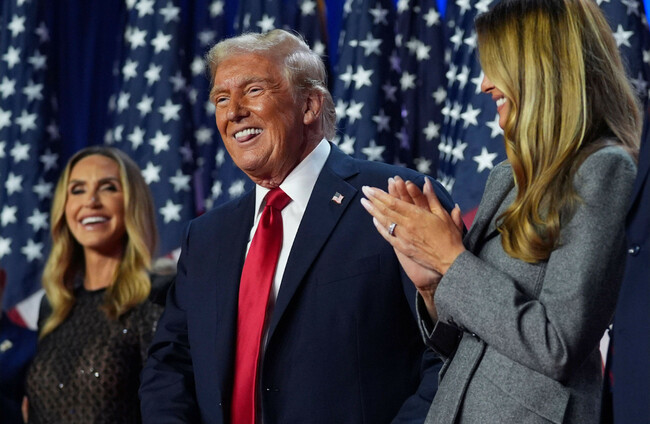
THE FIRST COUPLE of hours I spent with my fellow panellists on RTÉ television and radio late last night and very early this morning were frustrating. We tried to ascertain what exactly was going on in the country of my birth as people selected their 47th president. There was an abundance of “stuff” floating around social media – most of it misinformation and disinformation – yet precious little to work with.
The initial exit polling was a mishmash and difficult to extrapolate much from. That 71% of those surveyed regarded the present administration negatively seemed to bode well for Donald Trump. Simultaneously, however, they revealed that democracy was a bigger issue for a greater proportion of voters (35% to 31%) than the economy. That had to be a positive signal for Kamala Harris.
As such, there was lots of idle speculation. But then, a deluge of genuine data emerged and pretty quickly told the story of the election. It was near uniformly bad for Harris, who so many in the United States and internationally had vested their hopes in because they could not stomach the thought of four further years of Trump in the White House – freed from all constraints, surrounded by toadies willing to do his bidding unquestioningly.
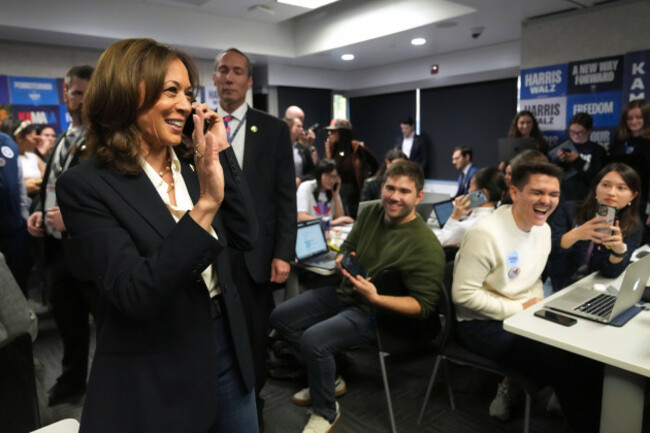
She was significantly underperforming the targets that her campaign had set and the levels of support achieved by her boss, President Joe Biden, in 2020. The cable news stations called the crucial states of Georgia and North Carolina, and subsequently Pennsylvania, the biggest battleground prize. To his credit, Trump managed to pull off an extraordinary comeback.
Following are some preliminary thoughts on what it means, while this eventuality dreaded so widely is still sinking in. To start, as noted previously in this space and without wishing to kick her when she is down, it is inescapable that Kamala Harris was not a strong candidate. Her poor messaging, inability to respond convincingly to straightforward questions posed by journalists and authenticity deficit stemming from her flip-flops on numerous issues did not do her any favours.
That said, it is an unfortunate truth that she has been held to a higher standard; as Van Jones mused on CNN, “Trump gets to be lawless…she has to be flawless.”
Second, President Biden should have announced that he would forego the pursuit of another term way earlier and passed the torch to a new generation of leaders. In a competitive primary, it is very unlikely that Harris would have triumphed. Instead, Michigan Governor Gretchen Whitmer or California Governor Gavin Newsom probably would have garnered the nomination. Both of them would have been superior challengers to Trump.
Third, this result cannot be attributed to any single element, such as the anger of Arab Americans in Michigan about the US’s role in what is transpiring in Gaza or racist, misogynistic comments made by a comedian at a rally. Instead, it was a thorough repudiation of the Democratic ticket by millions furious at the obscene rate of inflation, the amount of immigrants crossing the southern border illegally, what they say is the invasion of women’s sports by males and plenty more. Harris/Walz were seen as too far left.
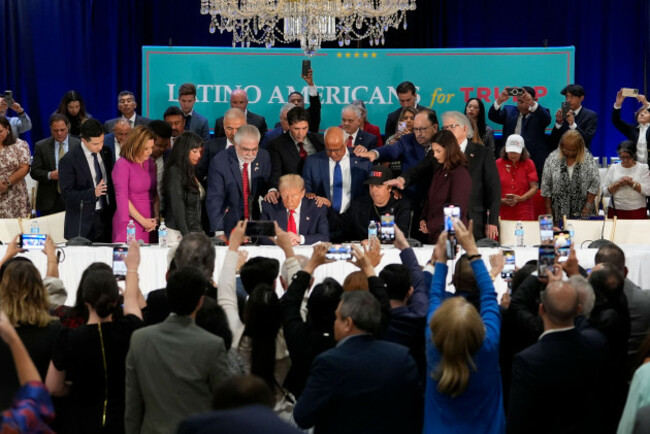
Fourth, the party which has traditionally championed the cause of newcomers to America has a serious problem with the fastest-growing ethnic group in the US: Latinos. For too long now, there has been a refusal, for whatever reason, within the hierarchy to recognise that Latinos are not simply going to line up with Democrats to the same extent that Blacks have and to thus target outreach to a key demographic accordingly. They are extremely hard-working and have been gradually climbing the socio-economic ranks. Additionally, they tend to be religious and the teachings of their Catholic or Evangelical Christian faith inform all aspects of their lives.
Latinos are drawn to GOP tax policies and are easily persuaded by the labelling of progressives as “socialists” or “communists,” owing to the despotic countries many originally fled from. They tend to be socially conservative and firmly on the political right when it comes to the culture wars. There are undeniable similarities between them and Irish Americans as heterogeneous political entities. In sum, the Democrats need to wise up to the fact that their policies on this front run quite contrary to Latinos’ collective credo.
Fifth, Trump’s return to the Oval Office is, conceivably, a threat to the rest of the world, perhaps especially to Europe and Ireland. The issue of European defence, and who foots the bill for it, will surface imminently, given Trump’s oft-repeated views on the topic.
This will require frank, difficult conversations and concomitant action on this side of the Atlantic. Here at home, Trump’s heartfelt America First fervour could jeopardise current and future foreign direct investment and have dire consequences for our economy and society. There is also the prospect of tariffs.
We don’t have to admire how the clear majority of citizens of the US have exercised their sacred right to vote this year. But we do have to respect it. And we must pivot shrewdly to address its potential effects. There is a mountain of vitally important, already in-progress work to be done in concert by Irish politicians, diplomats and businesspeople to prepare for the impending Trump presidency.
Larry Donnelly is a Boston lawyer, a Law Lecturer at the University of Galway and a political columnist with TheJournal.ie.
To embed this post, copy the code below on your site










have your say