TheJournal.ie uses cookies. By continuing to browse this site you are agreeing to our use of cookies. Click here to find out more »
Dublin: 2 °C Saturday 25 May, 2013

Column: Why I joined Dublin’s first Irish-speaking GAA club

There were no social situations where Irish speakers could use the language. Na Gaeil Óga – an all-Irish GAA club – could change that, writes Ciarán Mac Fhearghusa.

Ciarán Mac Fhearghusa

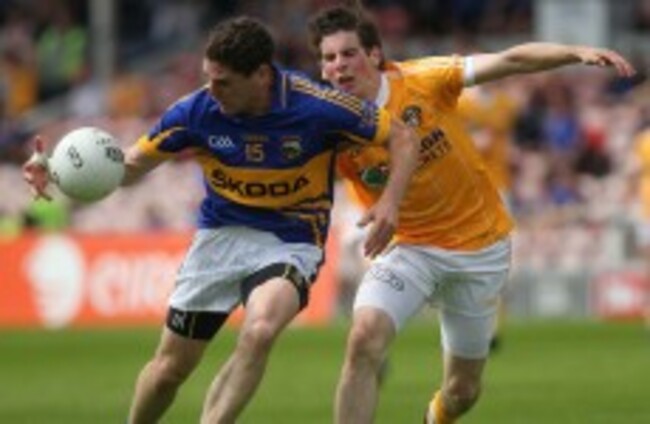
IT IS OFTEN said that the GAA, the largest sporting organisation in Ireland, is a mirror of Irish society as a whole. It has historically acted as a driving force of social change in Irish society, as a recent study has shown. At the core of this change the GAA has been hugely successful in the formation and in the cementing of friends, families and communities in parishes throughout the country. The importance of establishing local identities cannot be underestimated in the maintenance and sustenance of community structures in both rural and urban areas.

The GAA has perhaps come to be the biggest active marker of Irish identity. It is a source of confidence and enjoyment and acts as a self expression of modern Irish identity and is therefore a cause of celebration. This identity is what separates Irish cultural habits from others around the world. In a similar fashion, the use of the Irish language exhibits similar qualities.

Irish speakers

In the 2011 Census 1.77 million people reported that they could speak Irish. Yet in reality the number capable of becoming productive speakers is possibly far less. A more reliable figure is approximately 90,000 daily speakers outside educational institutions, both north and south. There is only one conclusion to be taken from these opposing figures of language capacity and language use. That is that roughly one in 20 people are capable Irish speakers, but they have no social situations or social networks which require them to converse in Irish.

The biggest challenge arising from the educational system in Ireland, whether in the Gaelscoil or subject-only approach, is the establishing and cementing of structured non-formal Irish language networks and social situations, where Irish speakers can be attracted to and thus blossom and multiply. Places where Irish speakers are free to have the full authentic experience of life through the medium of Irish. Existential well-being is considered to be a balance between the physical, the social, the psychological and the spiritual dimension of human existence.

The establishment of Na Gaeil Óga GAA Club - an Irish-language GAA club - two years ago by young Irish speakers was as much a product of self expression as an eagerness to contribute towards positive social changes regarding Irish language use and cultural identity.

In doing so, powerful steps have been taken not only towards the development of the social use of the Irish language, but also towards the existential wellbeing of Irish speakers. Na Gaeil Óga is primarily a language planning initiative, which employs the Gaelic Games as its current modus operandi and actively pursues the very same principles that have served the GAA well. Principles that are cementing Irish speakers into friends, families and ultimately into a vibrant physical community.

Empowerment

Just like the GAA as a whole, Na Gaeil Óga has become a source of enjoyment, empowerment and confidence for its members. It is a cause for celebration as it has given the language a dynamic new lease of  life in the capital. Na Gaeil Óga already boasts two men’s football teams, a newly established hurling team and a growing ladies’ football team. The men’s first team has just won the league and cup convincingly and are set for a leap up the league tables. The ladies’ team reached the semi final of the cup and and the final of Comórtas Peile na Gaeltachta.

On a personal level my own decision to move to Na Gaeil Óga – from playing midfield in the Dublin Senior Football Championship 2011 to full forward in the Junior D championship 2012 – didn’t come without some inner and outer conflict. Nevertheless it is a decision I don’t regret. In Na Gaeil Óga I have been met with an ever-expanding genuine club atmosphere incorporating a collective identity and goal that is missing in many GAA clubs in the capital.

I am often surprised at games how many players, managers and referees speak Irish with us, however much they have. In that sense we have an added role as ambassadors of the language, whose role extends to re-enforcing, or in some cases, creating a positive branding of the language.

Mocking the language

On the field we are usually met with respect mixed with curiosity and confusion. On occasions players of an opposing team wound mock the language – but that usually ended after we’d go ten points up. In reality, it would only inspire us to bring more of an intensity to our game. On other occasions a player might express a negative school experience and come out with something brilliantly insightful like ‘Irish is a stupid language’.

Fun and games aside, Na Gaeil Óga is actively engaging in social change with the core values of cultural identity and community development. It has the potential to become the greatest force of social change for Irish language use in the capital since the glory days of Conradh na Gaeilge – who were of course pivotal to the foundation of An Coiste Camógaíochta in 1905 and its revival in 1923, coincidentally using the same GAA pitches in the Phoenix Park as Na Gaeil Óga currently use.

Although Na Gaeil Óga GAA is perhaps only slightly bridging the gap of opposing census figures of language capacity and language use, its vision goes beyond a fully functioning GAA club, to the creation of social situations in Irish for the other thousand and one hobbies out there in a sustainable organic way.

Ciarán Mac Fhearghusa graduated from Acadamh na hOllscollaíocht Gaeilge in 2010 having completed an MA in Language Planning. He has played senior football in Dublin and Galway as well as playing for the Dublin Junior and South Dublin teams. Anyone interested  in participating in Na Gaeil Óga’s vision can make contact through Facebook or by emailing: cumannclg@gmail.com.

About the author:

Read next:

Comments (47 Comments)

  • Aster 08/12/12 #

    Well done. Maith thu.

    Reply
  • An-job lads… Baile áth dhia ar an obair iontach atá sibh ag déanamh chun an teanga a chur chun cinn sa bpríomh chathair. Coinnigh suas é. Feicfidh mé sa Rinn sibh mí Iúil seo chugainn ag Comortas Peile Na Gaeltachta…

    Reply
  • Maith an fear a Chiaráin, an-obair déanta agat ó thús leis an gcumann! Gura fada buan tú is é!

    Reply
  • As an English man who speaks Irish regularly. I feel somewhat proud to be classed as a terrorist or fundamentalist enjoying the luxury of mo chuid Gaeilge. It beats being a boring mono-linguistic gobsheen with nothing better to do than complain about the use of my national language on Dublin bus.

    Reply
  • Ard-obair ó ardfhear. Tuilleadh eolais ó http://www.nagaeiloga.ie Na Gaeil Óga abú!

    Reply
  • Go n-éirí leis na Na Gaeil Oga…….but they are not the first Irish-speaking club in Dublin. Clann Choláiste Mhuire, a club made up of past-pupils of Coláiste Mhuire on Parnell Square were a club that operated from the 1950s to late ’90s. They won two intermediate football championships in 1983 and ’88 and played out of Longmeadows in Islandbridge. A founder member of Na Gaeil Óga Ciaran Ó Feinneadha was a member of those two winning championship teams.

    Reply
    • There’s a Irish speaking hurling club in Ballymun as well called Setanta, they’re around since the 80′s I think

      Reply
    • Maithú Joe, is dócha gur bhotún atá ann!! Is cinnte gur bhain Clann Colaiste Mhuire amach iliomad eacht, má éiríonn linn dul i bhfeidhm ar mhórphobal peile BÁC mar a rinne CCM beimid ag déanamh an-mhaith. Is iontach an ról atá imeartha ag Ciarán go dtí seo agus le cunamh De beidh bréis sean-diograiseoirí de chuid CCM linn amach anseo!!

      Reply
  • Comhghairdeachas.
    Go n-éirí libh.

    it is indeeed a sad reflection on our education system that the majority of captains of GAA winning teams – senior & minor, are unable to string a few sentences together, as Gaeilge, after they accept the winning trophy.

    Reply
  • Togha ar fad. Seo an sli Le dul.

    Reply
  • I’ve noticed that a lot of people are giving comments thumbs down, purely because the comment is in Irish. Talk about xenophobia. Childish carry-on if I ever saw it. God forbid, we use our own language.

    Reply
  • Wonderful idea. It really is things like this that people need to have the opportunity to speak the language. The possibilities are endless, be it a knitting club, playing cards, fishing, anything. All people want is the opportunity to use the language.

    Reply
  • Maith sibh uilig, coinnigí leis!

    Reply
  • Iontach ciarán, maith thú!

    Reply
  • I know a few lads playing for them. Really nice idea :) I’d sign up if I lived in Dublin (and if I wasn’t utter tripe at sports).

    Abair haigh do Tiarnán domsa! :)

    Reply
  • Fair play, a Chiaráin! Na Gaeil Óga abú!! Díreach ag fanacht anois ar fhoireann do Na Gaeil (an-)Óga :)

    Reply
  • Na Gaeil Oga Abu!

    Reply
  • Wish we spoke more of our native language…daughter got an A1 in honours Irish, loved it, and would have seriously considered doing in college, but what could you do except teach, which she didn’t want to do.

    Reply
  • Sár-obair á dhéanamh anseo, go n-éirí libh sa toghcaí

    Reply
  • Glad to see na Gaeil Óga go from strength to strength, and it’s brilliant to see such an initiative set up by young people as opposed to government-led projects. Both are needed, but the former isn’t as common, especially amongst younger generations. Hopefully it will encourage similar social/sports groups to be set up.

    Reply
  • Ok know I’m going to get lots of red thumbs for this but if they are to save the language , they need to change the way it’s thought . Firstly stop forcing kids to learn it after , lets say , junior cert , but give incentives to doing it for leaving cert , ie points bonuses etc , then maybe the students who really want to learn it will and everyone else will ( hopefully ) have basic Irish after doing the JC . Currently it’s being forced down students throats who are leaving school with a dislike for the language ( some not all ) . I did honours Irish at leaving cert , I worked hard and did well but I’ve never had a conversation in Irish since my oral exam , not because I didn’t want to but just never did , and could I hold a conversation in Irish today , to be honest probably not .
    Let the students who love the language study it , and maybe a few who are not sure might start to cherish it too , and who knows we might actually hear people speaking the language on the street , I actually don’t think I’ve ever heard people speaking the language outside of the classroom
    If they don’t change things soon , it will be too late

    Reply
    • Aster 08/12/12 #

      Fair comment. I agree

      Reply
    • Oh, you mean ‘taught”? Your point exactly.

      Reply
    • Irish should not merely be subjected to the classroom! Unfortunately, many people regard Irish as a forced subject, studying it for 40 mins per day and leaving it between the 4walls of the classroom as they skip merrily home. Instead of letting children choose whether they want to study the language, outside activities should be provided for them through our native tongue! That way, children are submerged into the language, studying through activity based learning and fun rather than having to sit in a classroom dreaming of lunch. Na Gaeil Óga so far provide this for adults, but are looking towards underage teams in the future. The argument of not making Irish compulsive, is a good argument, but no one has taken into account that when q child is deciding what they want to study for their leaving cert, many will choose “easy points” subjects, and if they need to choose a language, they’ll choose a language they feel to be more beneficial to them, such as French or Spanish, because they’re more widely spoken. So many children who would do quite well in Irish may not ever progress past Junior Cert level, and could possibly end up regretting it in the future, but by then, it’s too late, they won’t have the drive to study it. Na Gaeil Óga is promoting Irish outside the classroom, and providing a way to socialise through Irish. It’s a foundation, that hopefully will build to more Irish lead activities, maybe a soccer team, a basketball team, a library, a corner shop, places where people can go (if they choose) to learn qnd promote our native tongue! The Irish language is not being forced on anyone, it’s the opposite, it’s not being provided for outside the classroom!! Na Gaeil Óga Abú

      Reply
  • Maith thu Ciaran, alt iontach scriobhta agat.

    Reply
  • Ciarán this is an excellent article.

    Mo dhá phingin – It’s unfortunate that there is a still a stigma around the Irish language, demonstrated by some of the completely bonkers comments on this thread. Whatever the reason, it seems that people sometimes automatically right off the language. Maybe this comes from our traumatising history as a people? A tactic of colonisation is to purposely make the indigenous people feel inferior and maybe this is still having an impact on how people feel and think about our identity and language…

    I for one think that as we mature as a society we will inevitably reach a stage where young people have little or no pre-conceived negative feelings about the language. Na Gaeil Óga shows signs of that and there’s little doubt that the Irish language is going to go from strength to strength.

    Ní neart go cur le chéile. NGÓ Abú!

    Reply
  • The opening paragraph is complete and utter shite. I thought we’d moved beyond maidens dancing at the crossroads.

    Reply
  • The people who designed the question on the Irish language in the census form had an agenda to promote Irish. The man who collected the form from me asked me why I ticked x in the no Irish box. I explained I had no Irish and he said “sure you must have a few words like “cheers in Irish” I said no and he accepted that. I bet a lot of the 1.77 million changed their minds. The new Dublin buses have announcements in Irish which I find objectionable. They are broke and wasting money on a luxury is disgraceful. It is a fine language but used by terrorists and fundamentalists which puts me off the whole culture around Irish. People also use their Irish name instead of the name on their birth cert to deceive.

    Reply
    • The GAA and force fed Irish. The only worse things in this country are religion and parish pump politics. The latter pretty much intertwined with the GAA anyway

      Reply
    • “It is a fine language but used by terrorists and fundamentalists which puts me off the whole culture around Irish” – as opposed to English, Arabic, Spanish, French etc, that have never been used by terrorists. If you mean to say that the Irish language has been politicised in some parts of the country, this may be true, however, they are a small minority in the Irish speaking community.

      This is a good news story about a group of people brought together by their love of sport and their common language.

      agus go n-éirí leo!

      Reply
    • Narrow minded comment. The GAA are responsible for promoting Gaelic games throughout Ireland and keeping that part of our culture alive. Hurling is the most skilful game ever to be played in the world and we should be proud that’s it’s roots are here. instead of dissing everything about your culture why not learn more about it and embrace it and stop following foreign football teams

      Reply
    • Frank:
      you say – Irish “is a fine language but used by terrorists and fundamentalists which puts me off the whole culture around Irish”

      perhaps, i’m wrong, Frank,
      but it doesn’t appear, that the fact that English is “used by terrorists and fundamentalists” puts you off English, at all, at all ??

      Reply
    • Caomhan 09/12/12 #

      Well that escalated quickly

      Reply
    • Frank. You’re an ignorant moron, to say the least. The name on my birth cert is the same as my name on this site, so I can assure you I am not deceiving anyone. The Irish language was not something foisted upon me, and it was not something I adopted for terrorist and fundamentalist purposes. It was there from birth and is something I hold dear. I abhor terrorism and fundamentalism (be that religious, political or any other kind of fundamentalism). Your comment, however, smacks of someone fundamentally opposed to any related to the Irish language, which, quite frankly, means that you yourself could be described as an Anti-Gaelic/Irish fundamentalist. Perhaps you should take a look at yourself before you quickly condemn others. You could also do with learning a fact or two about the Irish language and its community of speakers as it is quite obvious you know nothing about them other than your own opinions.

      Reply
    • I’m from Catalunya and I would love to see the Irish language on the street as we have the Catalan language. And about your commentary about the Irish … should I stop speaking in spanish because it’s associated with dictatorships, the inquisition or the genocide in the discovery of America?

      Reply
    • Frank, many of our ancestors were forced to change their surnames from Irish to english, by the english. Using our Irish names isn’t a tactic to deceive (don’t even know who/what we would supposedly deceive) but merely restoring our true surnames.

      Reply

Add New Comment