Sign in. It’s quick, free and it’s up to you.
An account is an optional way to support the work we do. Find out more.
Sign in. It’s quick, free and it’s up to you.
An account is an optional way to support the work we do. Find out more.
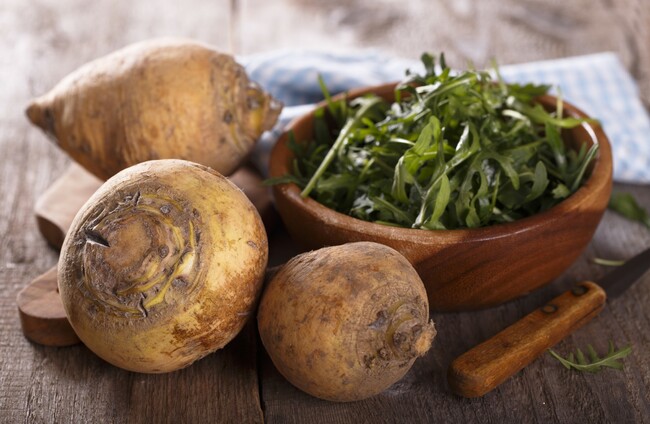

THE YELLOW-FLESHED turnip we eat in Ireland is in fact not a turnip at all, but a swede. It’s related to the turnip of course, but it’s a slower growing version which is left to grow much larger than the quicker-growing turnip.
Swedes grow well in Ireland and store well – they are not particularly fussy about the soil they grow in, though they will fare better if the soil is manured the previous autumn.
Sowing
Though they can be sown direct, a foolproof way to grow healthy swedes is to sow them in module seed trays – sow one or two seeds in each module of the tray 2cm deep.They will germinate in about a week (thin out the weaker seedling) and will be ready for planting about a month later.
Harden off early sowings. Plant seedlings out, spacing 30cm between rows and plants. Do not plant turnips where there have been brassicas for at least three to four years previously.
Since swedes store well, it’s worth putting some thought into growing for winter storage – if you sow 30 swedes in May or June, they will be ready to lift in October and will last you from October to April (consuming one a week). You will need around 2m of growing space to grow this many swedes.

Growing
Keep plants free of weeds by hoeing, and water regularly during dry weather. Plants won’t need feeding if you have added compost/manure to the soil the previous year.
Harvesting
Swedes take up to five months to mature (turnips take just six to eight weeks). Harvest when 10-15cm diameter, by simply pulling the root from the ground by the stem. Swedes can be left in the ground for the winter but there is a risk of them rotting in water-logged soil, so best to take them out and store them in sand.
Recommended varieties
Marian – purple top variety with paler yellow flesh and a good uniform shape
Problems
Swedes are affected by the same problems that afflict all brassicas, though they are rarely badly impacted. Cabbage root fly, clubroot, and flea-beatles are the main culprits.
GIY tips
Michael Kelly is a freelance journalist, author and founder of GIY.
To embed this post, copy the code below on your site














have your say