TheJournal.ie uses cookies. By continuing to browse this site you are agreeing to our use of cookies. Click here to find out more »
Dublin: 10 °C Saturday 25 May, 2013

School bus contract should be put out to tender, says US-Irish consortium

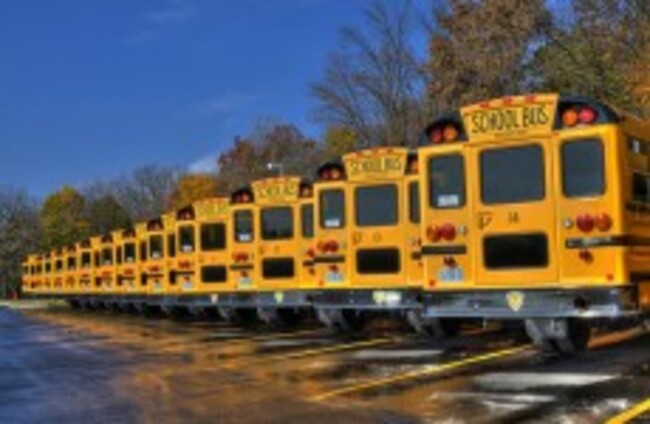
Is the yellow, high school bus en route to Ireland?

En route to Ireland?
Image: TN Countryfan via Flickr/Creative Commons

Updated, 18.11

A CONSORTIUM MADE up of Irish businessmen and American companies is taking a legal case against the State over its failure to put the country’s school bus network contract out to tender.

Headed by Dublin businessman Tim Doyle and Galway-based solicitor Brian Lynch, Student Transport Scheme Ltd (STS) will begin its challenge in front of the European Union’s commercial court on 6 June.

Lynch told TheJournal.ie that the group, which he says has a “huge amount of support from Irish operators”, hopes the court will find the current contract with Bus Eireann ineffective and force the Government to put the job out to public tender.

Doyle said they were left with no choice other than to go the European court route after the Department of Education refused to follow EU procurement processes.

“We’re simply asking for a fair, open and transparent tender,” he told TheJournal.ie today. “We’re not asking for the contract – just an opportunity to compete.”

This evening Bus Éireann insisted that it was the only body in Ireland “with the skills, experience and capability to operate the Scheme in an effective manner”.

It added that an independent value for money report carried out last year had found Bus Éireann to be efficiently and effectively managing a “significant” and “complex” scheme.

“The School Transport Scheme is an example of a successful public-private partnership with Bus Éireann working with 1,400 private operators throughout the country, who employ around 4,000 people, to deliver the Scheme,” it said in a statement.

Doyle expressed confidence that any offering involving American firms Trailways and IC Bus (the makers of the famous yellow high school bus) will be cheaper and safer, as well as create jobs in manufacturing in Ireland.

If the procurement process is opened up here, IC Bus has committed to open a facility to make its vehicles in Ireland.

“They currently do not operate in Europe and are looking at Ireland as a base,” explained Doyle, who is supremely confident that they will win their case at EU level.

‘Frustrating’

“It is frustrating,” he added. “Spending lots of time and money doing something that will actually save the State tens of millions of euro.”

The service, if the consortium wins the contract, would be provided by a number of Irish operators who have joined the legal challenge. Some already hold contracts with Bus Éireann so the matter is quite complex and sensitive.

Doyle estimates that the current contract – which has been held by Bus Éireann for the past five decades – costs the taxpayer about €180 million. Doyle believes an alternative service could be delivered for about €40 million.

Bus Éireann said, however, that it had delivered €25 million in savings since 2008 “despite more than 300 new services being introduced to the Scheme, mainly for children with special needs. Bus Éireann has committed to delivering further savings over the next number of years”.

It added that the Trailways documentation showed “a lack of understanding of the rural and provincial nature of the School Transport Scheme”.

“It seems to suggest that School Transport for rural Ireland can be managed from a computer screen in Dublin using vehicles that are untested on Irish rural roads,” the national transporter said.

“It also fails to take into account that one-third of the cost of School Transport goes towards transporting children with special needs and such services are often of a specialised nature.”

Doyle leads the consortium after spending the past year putting together the group of interested parties. He made initial contact with Trailways through a cold call at “exactly the same time they were looking at expanding globally”.

A lucky break – but also a smart one – given that the owners are described as a “bunch of Irish-Americans” who were eager to invest even before the Bill Clinton-inspired pleas by Government.

“One of the guys that came over to Ireland visited his grandfather’s grave while here. He was the first of his family to return,” Doyle recalls.

Following initial discussions, Trailways secured the interests of IC Bus and between them they are providing about 20 per cent of the funding needed to take the challenge through the courts in both Ireland and the EU.

Doyle, himself, has a business background in recruitment but no experience in providing transport systems.

When asked for a statement, the Department of Education said it could not comment on the issue as the case is yet to appear before the courts.

Read next:

Comments (27 Comments)

  • Fantastic news if case is successful. Creating a manufacturing plant that would potentially supply all of Europe with buses would be brilliant!

    Reply
  • Competition is always a good thing…….

    Reply
    • Sending profits out of the country is a bad thing.

      Reply
    • Not a bad thing in comparison to the department of finance paying excessive sums to another state-run body, CIE for something that could be done for a quarter of the price.

      Competition is good.

      Reply
    • Paul 16/04/12 #

      But it would only be competition for a national contract, no choice for the consumer. Yet again some smart bucko in an office will decide.

      While it would be good to be open to competition you have to be careful when giving contracts to replace established operators, things are often more complicated than they seem: A few months ago the courts service in England gave the contract for interpreting and translating to a company…the guy had been on dragons den. It’s been a disaster, complete incompetence, boycotts by freelancers and unqualified people showing up unable to do the job. Cheaper is not always cheaper when you take teething problems, overconfidence, incompetence, delays and lost productivity into account.

      Reply
    • @ Patrick: The Department of Education paying €180m for something than could cost €40m is also a bad thing. Surely that cash could be spent on more important things like school building?

      Reply
  • If it takes the SUV/MPV brigade off the road at school times im all for it

    Reply
  • Should be allowed tender in Dublin too & be done with Dublin Bus monoply, it’s high time!

    Reply
  • taught they didnt need school buses anymore with tinternet n all dat

    Reply
  • Government hypocrisy again.
    They are violating EU procurement laws by not putting this contract out to tender and wasting vast amounts of taxpayers money into the bargain. Yet they browbeat hardpressed families for breaking the law by not registering for the household tax because they can’t sustain their own waste of funding.
    Sickening!

    Reply
    • Hate to burst your bubble Sean but there is no EU law being broken here.

      Reply
    • The following sets out thresholds at which public service works is to be awarded following an open, transparent and competitive tendering process.

      The thresholds are (as last amended by Regulation 1177/2009 of 30 November 2009):[28]

      € 125 000 for public sector supply and service contracts as well as design contests of central government authorities: (Directive 2004/18/EC[29] article 7(a), article 67(1)(a))
      € 193 000 for public sector supply and service contracts as well as design contests of other authorities (Directive 2004/18/EC article 7(b), article 67(1)(b))
      € 193 000 for service contracts that are more than 50% state-subsidized: (Directive 2004/18/EC article 8(b))
      € 387 000 for utility supply and service contracts, including service design contests (Directive 2004/17/EC[30] article 16(a), article 61)
      € 4 845 000 for public sector and utility works contracts, as well as for contracts that are more than 50% state-subsidized and involve civil engineering activities or hospital, sports, recreation or education facility construction (Directive 2004/17/EC article 16(b); Directive 2004/18/EC article 7(c), article 8(a))
      € 4 845 000 for public works concession contracts (Directive 2004/18/EC article 56, 63(1))

      Reply
    • Sorry Sean, your thresholds below are out of date by the way (They were updated last November).

      With respect to EU Law, a contracting authority would not be required to open up every market to competition. From the perspective of CIE, they would not be governed by the public sector directives but would be governed by the utility directives.

      Reply
    • Steve the Dept. of Education awarded a €180 million contract to Bus Eireann without any tender process. This is the claimed infraction of article 2004/17.
      The Dept of Education is obliged under law to comply with EU and Irish legislation.
      In addition, although Bus Eireann are not the awarding body in this case, they are also required to comply with public procurement legislation.
      A statement issued by Bus Eireann this afternoon says “In line with national and EU procurement regulations, Bus Éireann has today invited a number of advertising agencies to tender for the provision of advertising services in accordance with the requirements outlined in its tender documentation.”

      Reply
    • The quote refers to a different fiasco.

      Reply
  • I agree John whats the problem with Halliburton & whats that to do with school buses.

    Reply
  • Rumour has it this company has affiliations with Halliburton. They seem like a really nice company.

    Reply
    • Competition of the day: Can Lynton list 5 things he actually knows about Halliburton that don’t involve the words “Dick Cheney”, “evil”, “big oil”, “evil mc evildoers” or “I read it in the Guardian”.

      He’ll win a coveted thumbs up from me.

      Reply
  • Hah? Coming over here with your fancy computers thinking you’re great. Go home Yank! The routes are ours!

    Reply

Add New Comment