Sign in. It’s quick, free and it’s up to you.
An account is an optional way to support the work we do. Find out more.
Sign in. It’s quick, free and it’s up to you.
An account is an optional way to support the work we do. Find out more.
LAST UPDATE | 5 Aug 2024
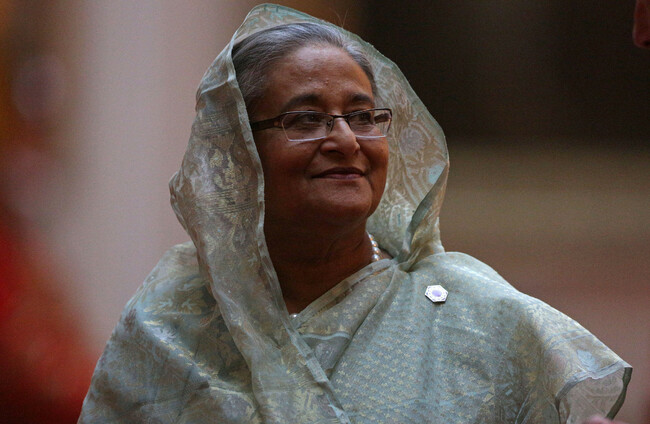
BANGLADESHI PRIME MINISTER Sheikh Hasina has resigned after weeks of deadly protests over a controversial government jobs quota, according to the country’s army chief.
Students began protesting in July after they had called for an end to a quota system that awarded 30% of government jobs to relatives of veterans of the war in which Bangladesh gained its independence from Pakistan in the 1970s.
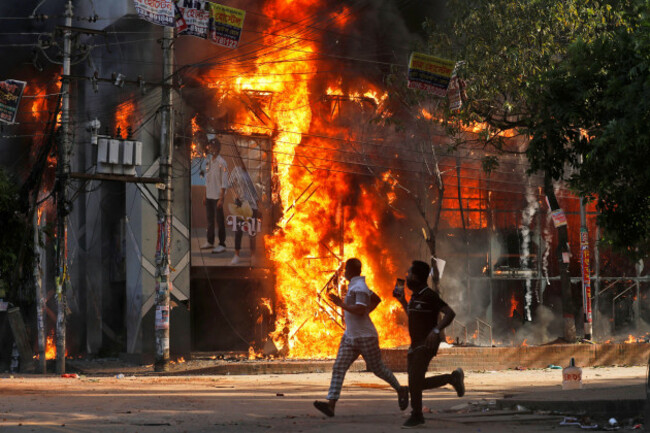
However, the protests escalated into violence and left more than 200 people dead last month. The country’s leading Bengali-language daily, Prothom Alo, said at least 49 people died in violence yesterday alone. Channel 24 reported at least 50 deaths.
Protesters then began calling for the resignation of Hasina. The army chief confirmed that the Prime Minister had resigned from her position. One source told the AFP News Agency that Hasina had fled the country.
“Her security team asked her leave, she did not find any time to prepare”, the source said, adding she left first by motorcade but then was flown out, without saying her destination. “She was later evacuated on a helicopter.”
The culturally-sensitive issue has been a point of contention between the Bangladeshi government and young voters for many years.
The legally-binding jobs quota – which was repealed 2018 – made it so that 30% of veterans, and their descendants, of the Bangladesh war of independence in the 1970s fill government jobs.
Hasina and her autocratic Awami League party, of whom many of the descendants are politically aligned with or members of, attempted to reintroduce the quota earlier this year after a high court judgment.
But protestors, made up of young undergrad students, claimed that the quota was undemocratic and prioritised ‘yes men’ or government advocates for the, often times, highly-sought-after state jobs.
After protests began, Hasina, who ruled over Bangladesh for 15 years, denounced the demonstrators with slurs and police and military soon began to intervene after counter protests by the Awami League party turned violent.
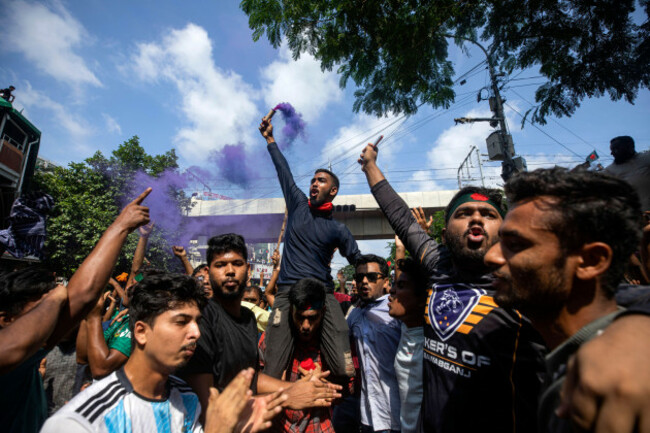
Bangladesh’s army chief Waker-Uz-Zaman said he would “form an interim government” after Hasina resigned and fled the capital in the face of overwhelming protests.
“I am taking full responsibility,” the general said, dressed in military fatigues and cap, although it was not immediately clear if he would head a caretaker government.
“We will form an interim government,” Waker said in a broadcast to the nation on state television, adding that Sheikh Hasina had resigned.
“The country has suffered a lot, the economy has been hit, many people have been killed – it is time to stop the violence,” he added. “I hope after my speech, the situation will improve.”
- With reporting by © AFP 2023

To embed this post, copy the code below on your site














have your say