Sign in. It’s quick, free and it’s up to you.
An account is an optional way to support the work we do. Find out more.
Sign in. It’s quick, free and it’s up to you.
An account is an optional way to support the work we do. Find out more.
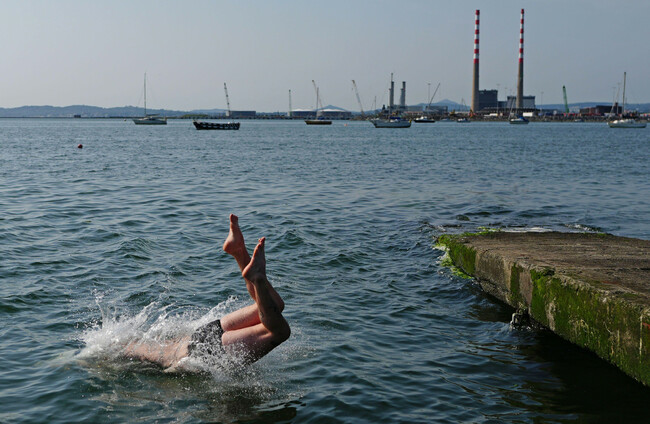
THOUSANDS OF PEOPLE are expected to swap offices for beaches, lakes and swimming spots as Ireland braces for what could be its hottest day on record.
But before diving in, swimmers are being urged to check the latest local water-quality notices, particularly after heavy rain, when sewage overflows, agricultural run-off and polluted surface water can temporarily make bathing spots unsafe.
The simplest place to start is Beaches.ie, the Environmental Protection Agency’s (EPA’s) national map of monitored bathing waters. It lists the latest test results, long-term water-quality ratings and any active advisory or prohibition notices.
The site is down for maintenance on Friday and Saturday, however.
Local council noticeboards at beaches should also carry the most up-to-date warning signs.
But swimmers should also be aware that a beach can have an ‘excellent’ annual rating while still being subject to a short-term warning after rainfall or a wastewater incident.
Separately, the ESB have warned the public not to swim in reservoirs, as they are “unsafe for swimming due to deep, fast-flowing waters, fluctuating water levels, and uneven terrain”.
There are several types of notices, and they are not all the same.
A prior warning is generally precautionary. It means heavy rain or another event may cause water quality to deteriorate, even before test results are available.
An advisory notice is issued when there is a concern about water quality and people are advised not to swim.
A prohibition notice is more serious: swimming should not take place while it remains in force.
The EPA’s broad advice is to avoid swimming for up to 48 hours after heavy rainfall.
Rain can wash animal waste, dog fouling and urban pollution into rivers and coastal waters, while also overwhelming wastewater systems and causing sewage overflows.
That does not mean every warning means the sea is definitely contaminated. But it does mean the risk is higher, and that is particularly important for children, pregnant people, older people, anyone with open cuts and people with weakened immune systems.
In Dublin, Dún Laoghaire-Rathdown County Council has issued precautionary notices at several of the city’s busiest swimming locations, including the Dún Laoghaire Baths, the Forty Foot, Sandycove and Coliemore Harbour.
The council says recent localised rainfall may temporarily affect water quality.
In north Dublin, Malahide Beach remains under a temporary bathing prohibition until 30 June following a wastewater-treatment incident.
Fingal County Council said a compliance sample at Malahide Wastewater Treatment Plant breached emission limits. The beach remains open to walk on, but people are advised not to swim.
Elsewhere, warnings remain in place at Grattan Road Beach and Ballyloughane Beach in Galway until tomorrow.
A previous warning at Lahinch in Co Clare elapsed yesterday.
The issue was raised in the Dáil yesterday as TDs argued that the popularity of year-round sea swimming has outgrown Ireland’s seasonal monitoring system.
People Before Profit TD Paul Murphy said thousands were heading for the coast during the heatwave while warning notices were in place at several south Dublin bathing spots.
“The notice warns of a possible increase in bacteria following heavy rainfall,” Murphy said. “In other words, there is a good chance you are swimming in faeces.”
His party colleague Richard Boyd-Barrett said the recurring notices reflected an overloaded sewage system, arguing that rainwater can mix with sewage during heavy downpours and enter Dublin Bay.
Independent TD Barry Heneghan opened his contribution with: “Eh, I was swimming in Dún Laoghaire this morning, so I am very worried.”
He said swimmers in Clontarf, Bayside and Howth repeatedly face warnings, arguing that Dublin needs more wastewater-treatment capacity.
Fianna Fáil TD John Connolly also called for a review of the “bathing season”, which runs from June to September. Local authorities are generally only required to sample designated bathing waters during that period, despite the growth in year-round swimming.
“Everyone who enjoys swimming throughout the year needs to know the quality of the water they are swimming in,” Connolly said.

To embed this post, copy the code below on your site













have your say