Sign in. It’s quick, free and it’s up to you.
An account is an optional way to support the work we do. Find out more.
Sign in. It’s quick, free and it’s up to you.
An account is an optional way to support the work we do. Find out more.
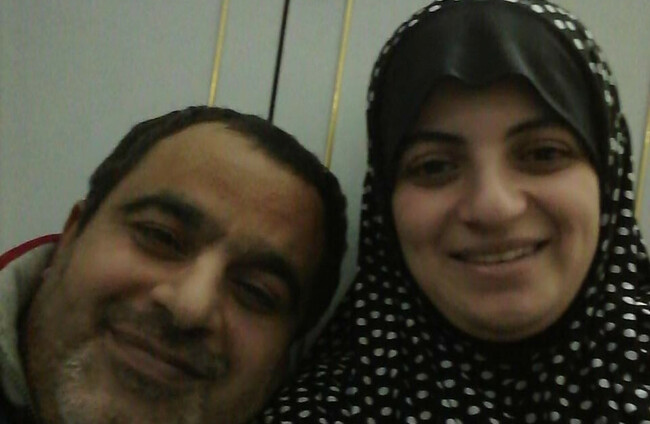
THE WIFE OF an Irish man stuck in Gaza has called on the government to help her husband escape.
Since Israel scaled-up its war on Palestinians following the Hamas attacks of 7 October, more than 70 Irish citizens have fled the besieged region.
Batoul Hania and her four sons, aged 11, 14, 17 and 19, managed to leave Gaza with the help of the Irish embassy in Cairo, safely arriving back in Dublin, where the family had lived between 2003 and 2012.
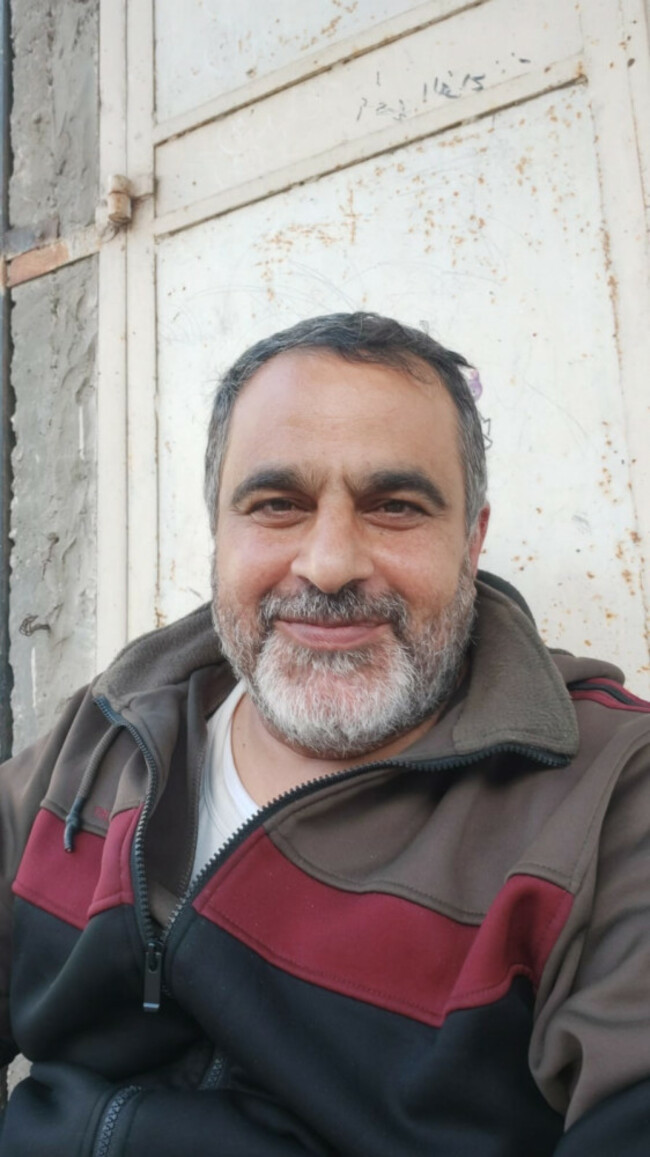
However, her husband Zak was denied exit. While Batoul and her children are now in a safe place, they worry constantly about where Zak is and whether he is still alive.
Before 7 October, Zak was working as a translator at a research centre. Batoul had just completed her diploma in Education, with a BA in English Literature. She was going to interviews for teaching jobs.
Their sons were all in school in Northern Gaza, with the eldest studying computer engineering at university.
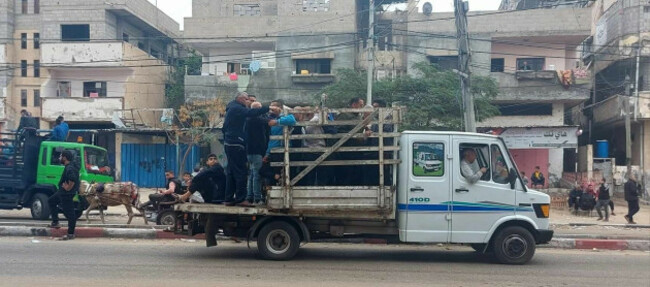
Weeks into the escalation of violence, the family, along with Zak’s sister’s family, reluctantly left their home to go south, where they were told they would be safer.
“We used to say that we’re not leaving North Gaza since the war started as [the Israeli state] were tricking us all the time,” Batoul told The Journal.
“We didn’t want to make it easy for them to just come and invade.” When it became “impossible” to stay, the Hania family went to Khan Yunis, a city close to Rafah.
Batoul and the children were then able to get out of the country, but her husband was forced to stay. She said men are treated differently to women there.
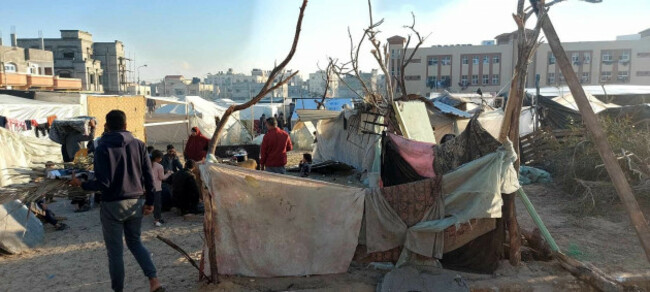
Khan Yunis was then invaded, and Zak fled to Rafah. He is now among around 1.4 million Palestinians, more than half the Gaza population, who have been packed into the city, where humanitarian conditions are dire and famine looms.
“Sometimes I feel guilty that I left the whole area, but other times as a mother I think ‘thank god, I just made my way out with my kids’,” said Batoul.
Three of her children are asthmatic and she feared that if they stayed, they would not have access to vital medicine.
Her fears are well-founded. Zak’s eldest sister was diabetic. She died in North Gaza about a month ago, after a prolonged period with no proper food or medication.
Batoul says the news deeply affected her children, who were close with their aunt.
Since arriving in Ireland in November, the state has provided Batoul and her children with an apartment in Dublin 15, which she says she’s grateful for.
Batoul’s eldest son has been able to enroll in Technological University Dublin (TUD), where he is continuing his third-level education. Her younger sons go to local schools, but the change has been tough for them.
“Back home, they were very intelligent boys, they got good marks and they were doing very well in their school,” Batoul said.
“But here regarding the language and the shift in the culture, it’s a bit challenging for them.
“They act more like introverts, especially my son in second year … Sometimes he’s overwhelmed about what’s going on around him in the school environment.”
Batoul says it’s being without their father that affects the boys most. They find it hard to express their feelings about the family’s situation and the state of Palestine, where they lived most of their lives.
The 11-year-old boy watches the news “to hear about a ceasefire, see about anything that would assure him that his father would come here”.
Batoul has contacted the Department of Foreign Affairs several times asking them to help her husband escape, but she says she has yet to receive a response.
In a statement to The Journal, the Department said it does not comment on individual cases.
“A small number of Irish citizens or immediate dependants of Irish citizens remain in Gaza. Our Embassies in the region are in regular contact with those Irish citizens remaining in Gaza,” a spokesperson said.
“The Government, through our Embassies in the region, has consistently sought clearance for all Irish citizens who wish to exit Gaza to do so. We continue to advocate with the authorities in relation to those who have not yet been able to leave.”
Batoul stays in touch with her husband as much as possible.
The internet connection in Rafah is unreliable now so phone calls are out of the question.
Zak texts his wife every two or three days to let his family know he is okay.
He relies on food packages from United Nations aid to survive. It’s mostly canned and flour-based food. Fruit, vegetables and meat are hard to come by. Batoul says it’s just “something to keep them alive”.
Zak moves around constantly. The area is so overcrowded, it’s hard to find somewhere safe and comfortable.
Batoul says it’s a “miracle” her husband is still alive, but the stress on her family mounts with every passing day, as Israel continues its bombardments and the death toll in Gaza rises.

To embed this post, copy the code below on your site













have your say