Sign in. It’s quick, free and it’s up to you.
An account is an optional way to support the work we do. Find out more.
Sign in. It’s quick, free and it’s up to you.
An account is an optional way to support the work we do. Find out more.

ESTABLISHED IN 1915, Marine Corps Recruit Depot Parris Island churns out 20,000 new Marines every year.
Every Friday, a new crop of Marines leaves the base. And they leave happily…without looking back.
The 12-week programme is widely considered the most hellish of all recruit-training regimens in the US Military.
At Parris Island, the legendary drill instructors (DIs) make sure every waking moment of a recruit’s life is jam-packed with training.
There’s only one major road running into Parris Island.
Gorgeous marshlands stretch for as far as the eye can see all around the island.
Recruits who want to run away can’t take the only road and are unlikely to brave the alligators in the swamp.
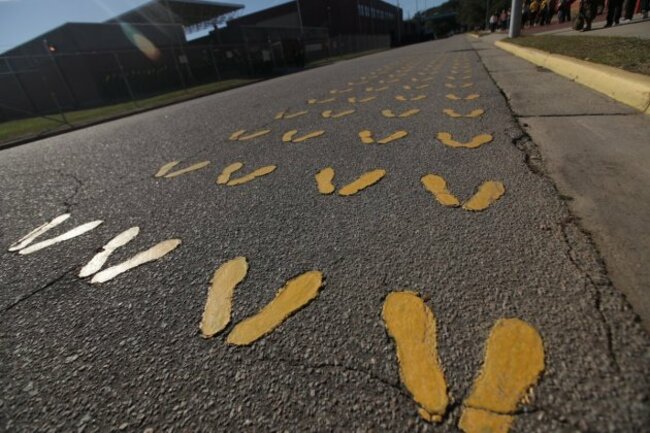
Once they arrive, the first thing they do is shuffle off the bus and line up on the famous yellow footprints.
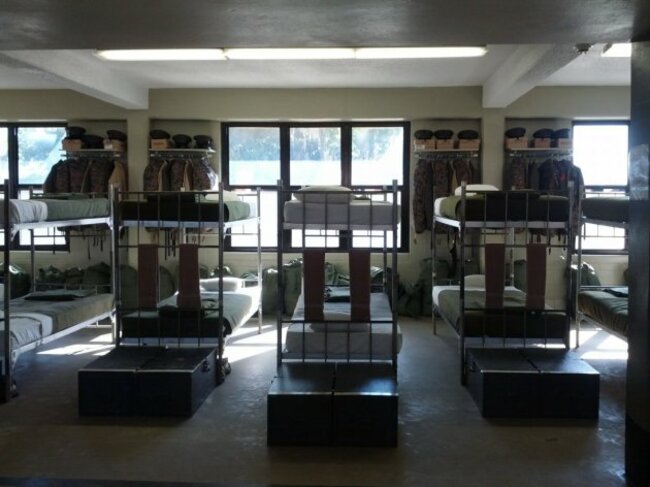
This is what the “house” — as DIs call it — looks like.
There are three “decks,” each one housing a training platoon of anywhere from 60 to 85 recruits.
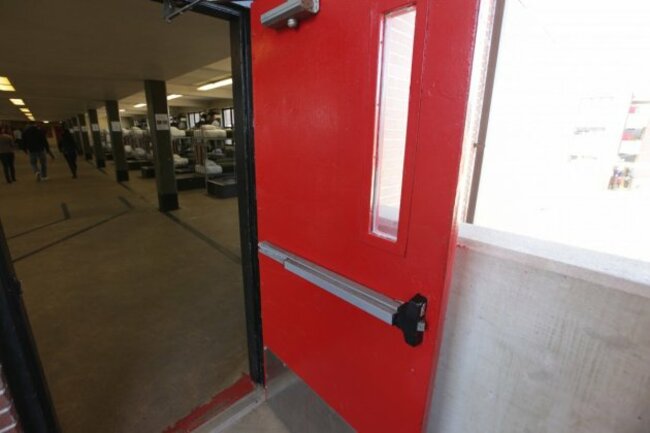
This is the back door, and the door the recruits take to get outside. The front door is only for the DIs.
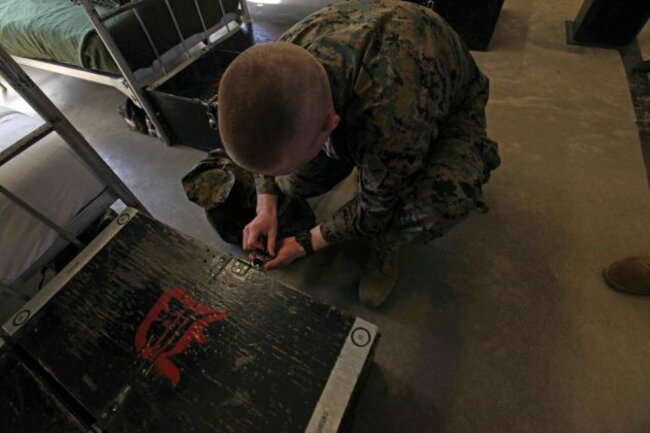
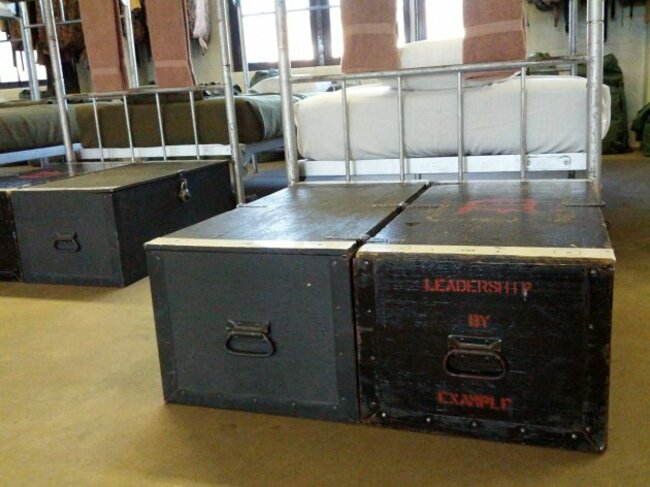
Notice that the footlocker is marked on both ends with the marine’s name and recruit laundry number. Marines are required to mark their issued gear and DI’s teach recruits the importance of marking everything periodically….
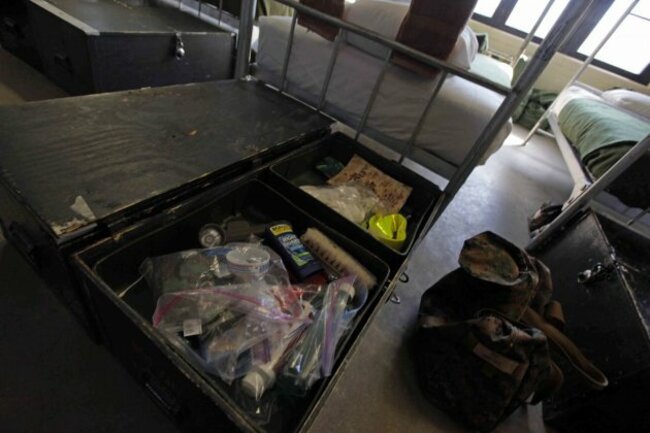
Because every so often they order them to open the locker and dump everything out. They then pile the entire platoon’s belongings into the middle of the squad bay and time the recruits as they sort it all out again. A recruit’s entire life is held inside this box. He or she owns nothing else.
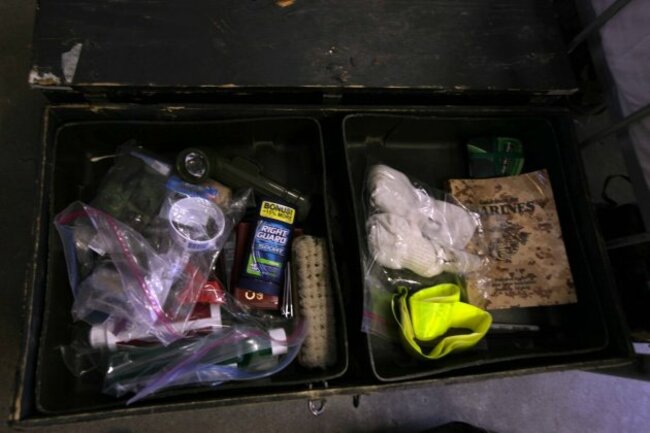
The two removeable containers hold hygeine gear and handbooks. Below them a recruit’s issued utility uniform is usually folded neatly and staged for use.
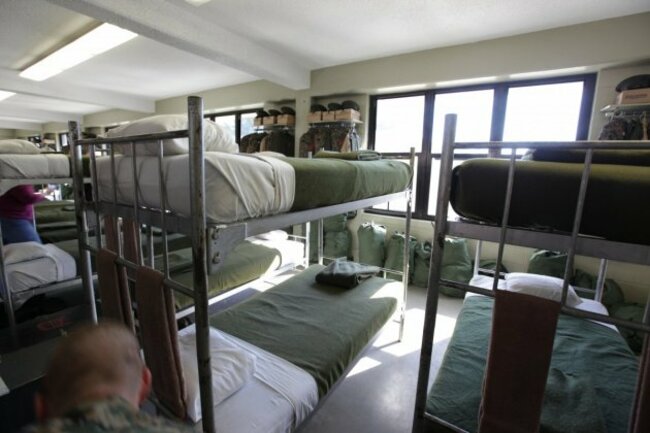
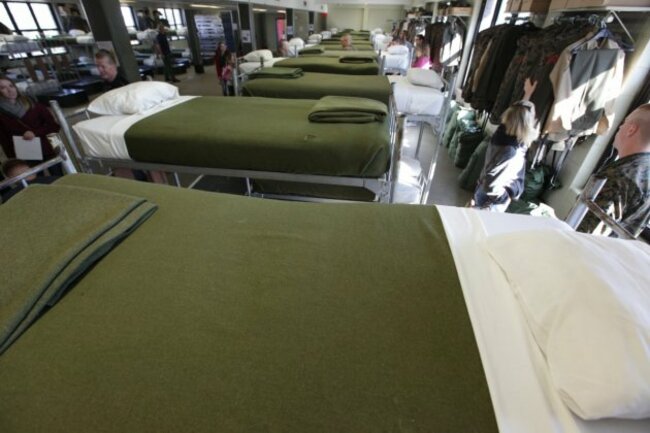
Not an inch of space is wasted in the “squad bay,” the common living area for recruits.
Everybody’s space is identical to the person beside them.
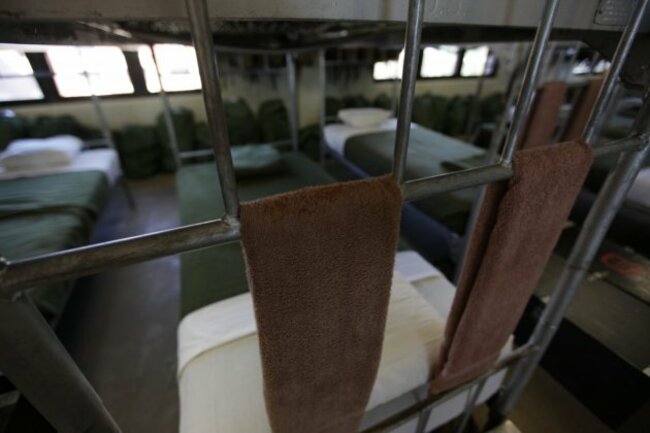
Towels are folded neatly into six-inch sections and hung from specified rungs.
Here you’ll notice that the recruits oscillate their beds head to toe all the way down.
Racks are also staggered in order to keep disease and sickness from quickly spreading through the platoon. Regardless, each recruit will become ill at least once (on average) during the 12-week training.
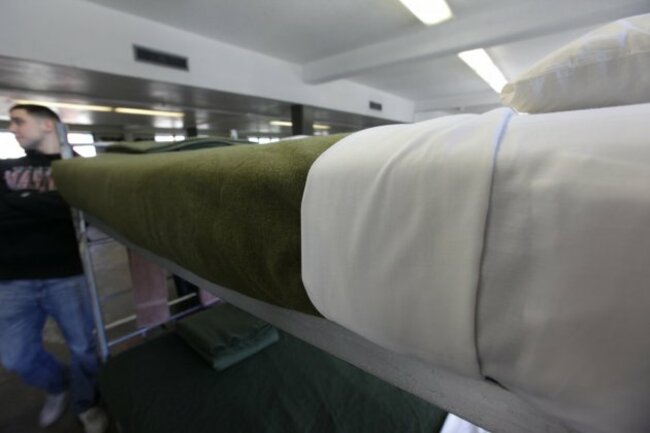
There should be at least six inches of sheet and blanket pulled back in a fold, and another twelve inches of bed sheet showing, for exactly “18 inches of white” at the end of the bed.
Throughout boot camp, recruits are bombarded with general Marine Corps knowledge as part of a comprehensive indoctrination programme.
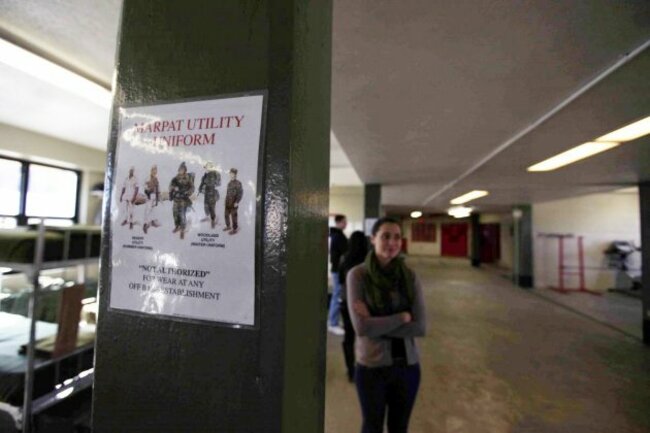
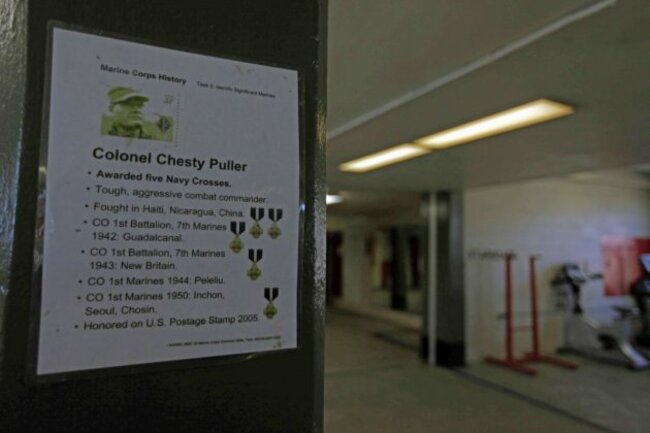
Posted all over the squad bay are bits and pieces of general knowledge a recruit is expected to know prior to taking written exams.
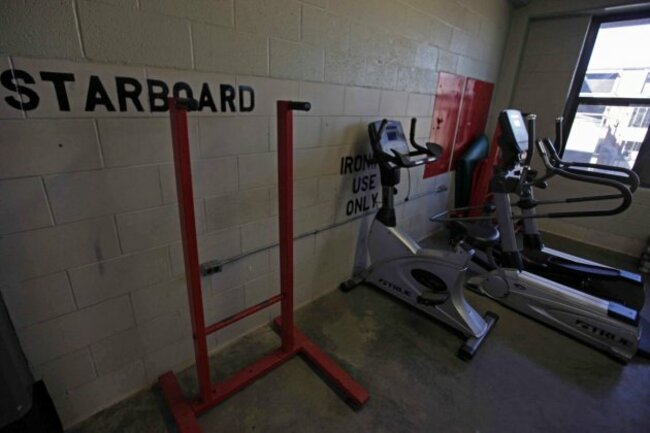
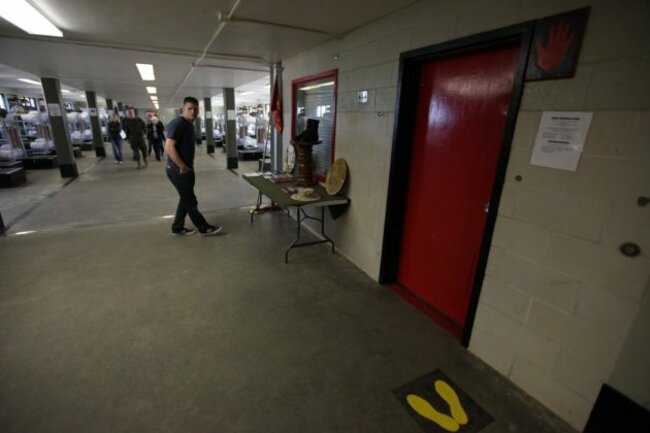
Further toward the front of the bay is the quarterdeck, part of which is set aside for a small “gym”.
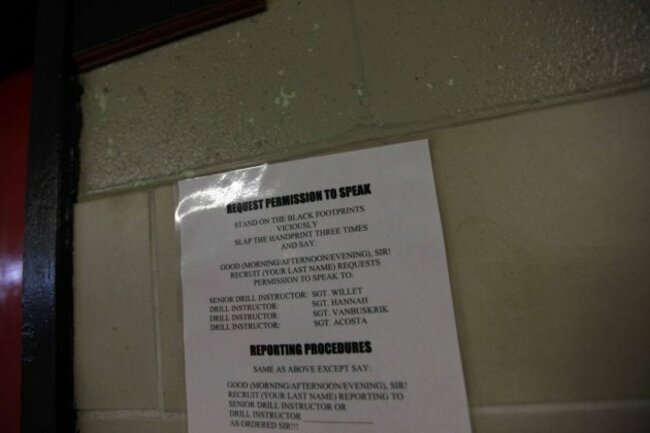
Recruits who are reporting or requesting permission to talk to DIs will stand on those footprints and slap that hand print outside their “hut”.
And in case they forget how to ask permission, here are the exact directions:
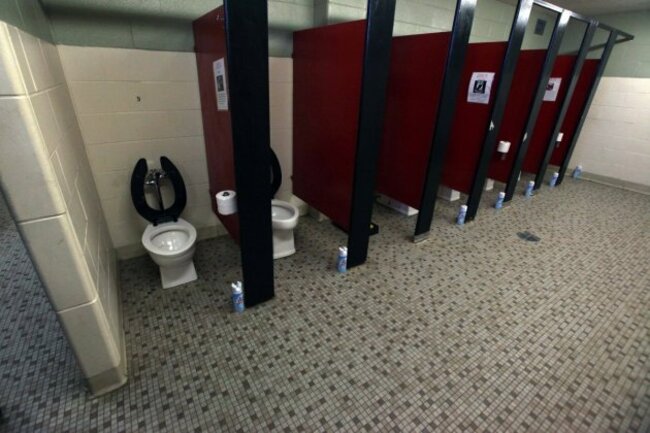
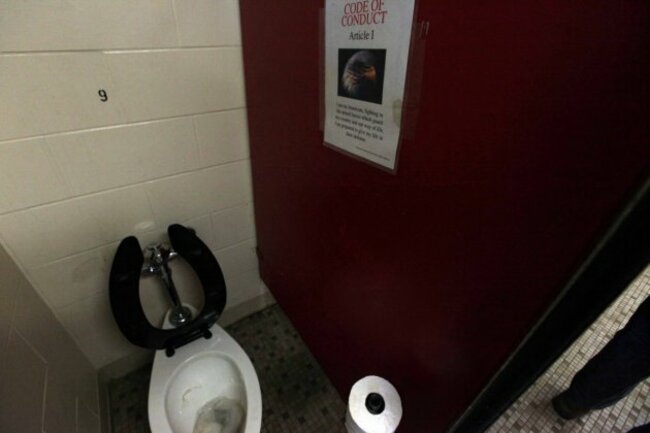
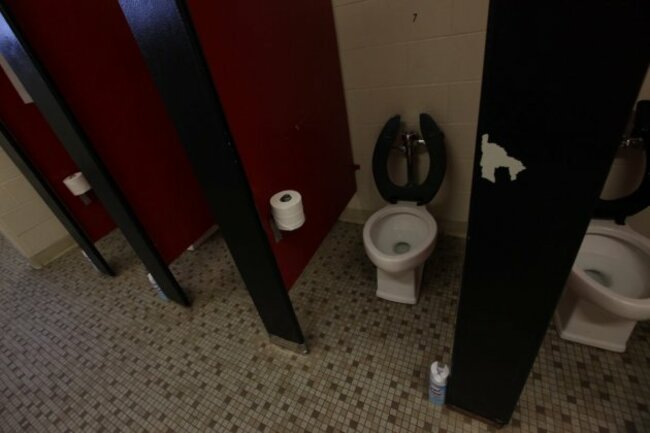
Toilets do not have doors. Why? So recruits can’t hide from DIs, for safety purposes.
There are no doors, but there are handy fact sheets to study.
Lysol and toilet paper is also stowed in precise fashion all the way down.
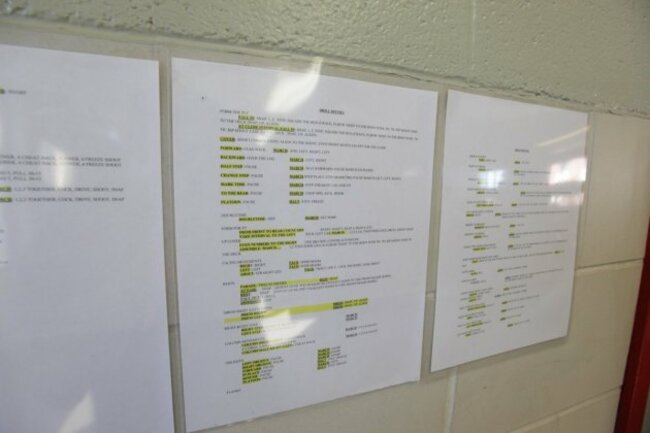
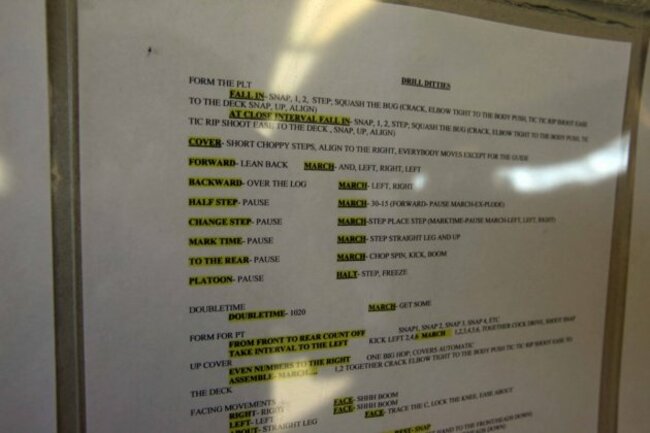
Back outside, near the DI hut, drill orders are written out for recruit memorisation. Close order drill is of major emphasis at Parris Island.
Recruits memorise drill movements through use of “ditties,” words and phrases they say in unison as they receive the order on the march. Later, once they’re good, they’ll drop the ditties and perform all orders silently.
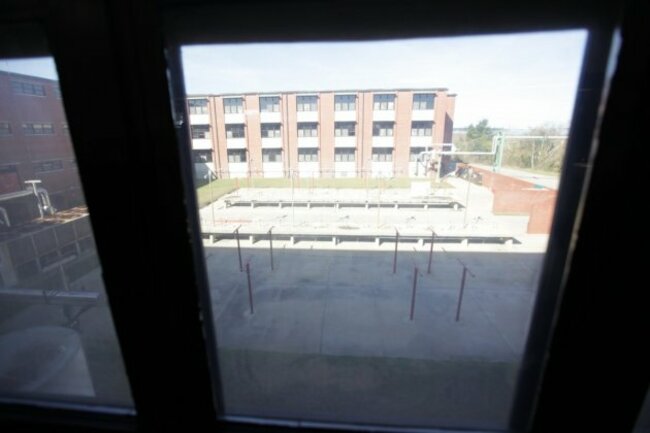
This is a recruit’s view from his window – more barracks and laundry equipment.
Recruits doing situps in the sandpit. They chew dirt while the DIs scream.
Would you like the army life?

To embed this post, copy the code below on your site



















have your say