Sign in. It’s quick, free and it’s up to you.
An account is an optional way to support the work we do. Find out more.
Sign in. It’s quick, free and it’s up to you.
An account is an optional way to support the work we do. Find out more.
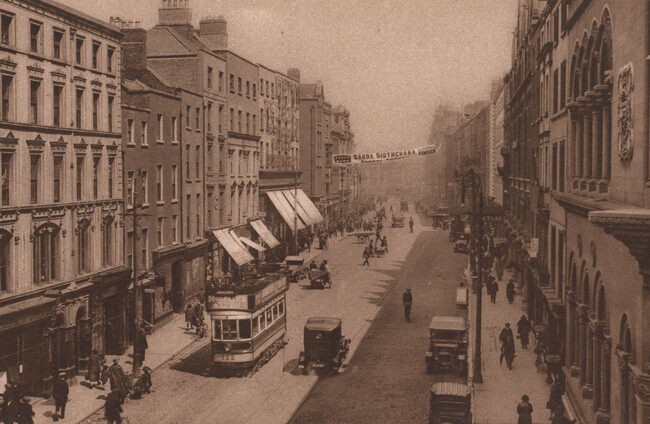
THE FULL RELEASE of the 1926 Census shows that Irish life has changed dramatically in 100 years, especially in rural Ireland.
The comparison is clear in the release of data by the Central Statistics Office (CSO) comparing the 1926 census with the most recent census taken in 2022.
The population of the country rose from 2.97 million in 1926 to 5.15 million in the most recent census in 2022.
The population share of people living in Dublin has risen from 17% in 1926 to 28.3% in 2022.
Kildare saw the biggest percentage change in population at 327%, followed by Meath at 251%.
Leitrim saw the biggest drop in population, with a -37% change between 1926 and 2022.
Galway and Cork remain relatively unchanged, with Galway falling from 5.7% of the overall population in 1926 to 5.4% in 2022, and Cork dropping from 12.3% to 11.3% in the same period.
The life-expectancy has changed from 57 for men and 58 for women in 1926, to 81 for men and 84 for women in 2022.
The percentage of people employed in the agricultural sector has fallen from 51% in 1926 to 4% in 2022, as the number of people working in the non-manual sector has risen from 12% in 1926 to 43% in 2022.
There were some notable jobs in 1926, including one female chimney sweep of a total of 211, as well as an early indication of modernisation, with 4,069 motor mechanics and 2,475 electrical fitters.
Comparing this to 2022, there were 23,187 electricians and electrical fitters, as well as 3,141 electrical and electronics technicians.
In the health service, the number of medical doctors has risen from 2,051 to 17,953; nurses and midwives from 5,832 to 62,483; and dentists from 536 to 2,330.
The 2022 data shows the growth and diversity of health related occupations, which includes medical and dental technicians, nursing support, paramedics, pharmacists, psychologists, and therapy professionals.
The number of Irish speakers was recorded at 18% in 1926, and this included native speakers, people who could speak both Irish and English, and people who could read Irish without speaking it.
In 2022, 40% of people spoke some level of Irish, and this included everyone aged three and over than had any level of spoken ability.
Galway recorded the highest level of individuals having Irish in both censuses, with 47% in 1926 and 50% in 2022, with Galway City at 45%.
In 1926, Roman Catholics accounted for 93% of the population, compared to 69% in 2022.
The number of people recorded on census night who were born in Ireland has dropped from 97% in 1926 to 80% in 2022.
In 1922, most people born outside of Ireland were born in Great Britain (1.7%), and in 2022, most people were born in ‘other countries’, not including Great Britain, Northern Ireland, and the United States (13.7%).
Maria Yasin, Statistician in the Census Division of the CSO, said:
“As the first census carried out by the Irish Free State, it records the demographic and social conditions of the time, including population size, religion, occupation, migration, and Irish language.”
Since the launch of the Census 1926, the National Archives website has seen 20 million views, with 834,000 users browsing the contents of the website.
It is also the first Irish census to be released since 1961, which saw both the 1901 and the 1911 censuses made available to the public.
To embed this post, copy the code below on your site












have your say