Sign in. It’s quick, free and it’s up to you.
An account is an optional way to support the work we do. Find out more.
Sign in. It’s quick, free and it’s up to you.
An account is an optional way to support the work we do. Find out more.

WHEN BERTIE AHERN stuck on his hard-hat and headed west in February 2005, it was to launch an ambitious new development project aiming to ease the capital’s housing crisis of the day.
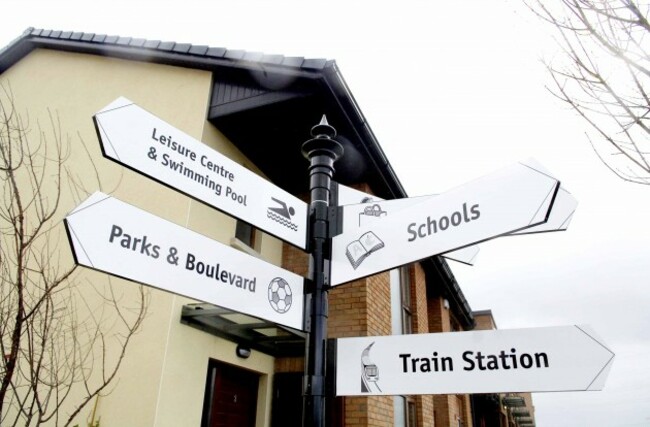
RTÉ’s report from 7 February 2005 said the €2 billion new town would house 20,000 people who could enjoy 70 acres of parkland, sports facilities, a rail station and multiple schools.
It was the first of the so-called Strategic Development Zones (SDZ) which benefitted from fast-track planning – and the first ‘new town’ planned since Shannon was created in 1982 in Clare.
At the time, the Taoiseach said the town was also “carefully planned”, despite reservations about traffic jams.
However, within three years the economy had collapsed and the government was dealing with much more than just a housing crisis and congestion.
Plans for Adamstown stalled and it became Ireland’s first ‘ghost town’, garnering international media attention.
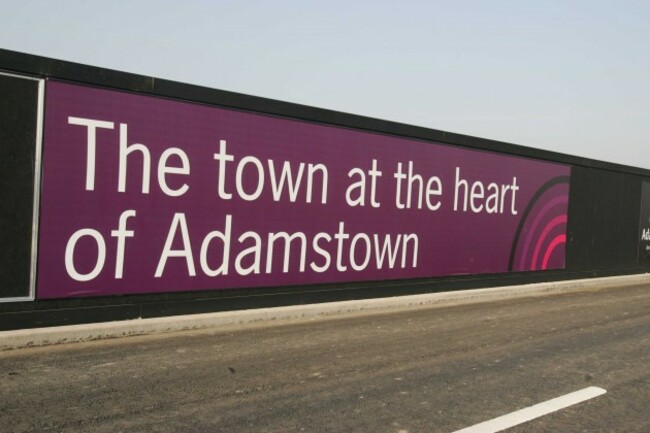
The shiny, colourful hoardings were a symbol of the Celtic Tiger, their continuing presence a sign of the devastating bust.
Last year, South Dublin County Council stepped in to ensure Adamstown would not stay ‘unfinished’. With just 1,400 of the 10,000 planned homes built, authorities wanted to kickstart construction.
Although now boasting GAA and soccer clubs, the planned leisure centre never emerged. Neither did the supermarket, library, health centre or cinema. In fact, no work has been completed in the district centre, leaving those who do live there without many facilities.
The new proposals, agreed by council last February, were approved by An Bord Pleanála just two months ago. This will mean more houses can be built to justify continued plans for the infrastructure to be put in place.
“These changes will hopefully kickstart sustainable development in Adamstown. This will help meet demand and support construction jobs while ensuring that Adamstown is not left as another unfinished development which was local residents’ worst fear,” councillor William Lavelle said at the time.
Adamstown is situated on 220 hectares in west Dublin, about 16km from the city centre.

To embed this post, copy the code below on your site










have your say