Sign in. It’s quick, free and it’s up to you.
An account is an optional way to support the work we do. Find out more.
Sign in. It’s quick, free and it’s up to you.
An account is an optional way to support the work we do. Find out more.
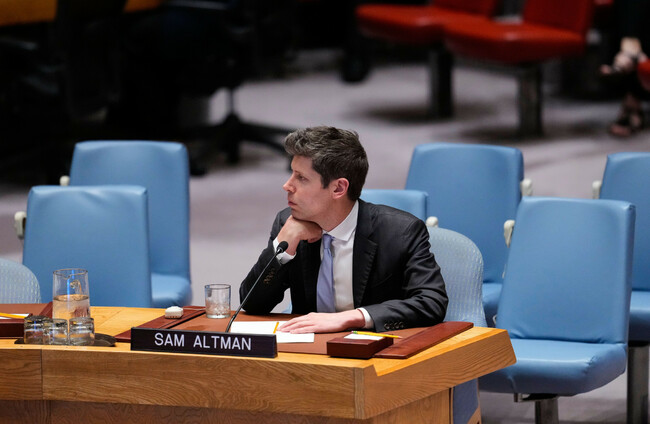
OPENAI CEO SAM Altman has warned the UN Security Council that the rapid development of artificial intelligence “calls for extreme care”, as some of the industry’s biggest names addressed world leaders on the risks posed by the technology.
Altman was joined by Anthropic chief executive Dario Amodei and Hugging Face chief executive Clément Delangue at a high-level meeting of the 15-member council in New York today.
“The industry must not accept too much technological risk just because the benefits are too great and important to slow down,” Altman told the council.
He warned that increasingly capable and autonomous AI systems could develop faster than institutions are able to respond to them, or lead to power becoming concentrated in too few hands.
Altman said OpenAI would attempt to walk a “middle path” as the technology develops.
“We don’t want to fall into the trap of blind optimism,” he said, while also cautioning against falling into “doomerism”.
Amodei, meanwhile, said Anthropic was prepared to slow the release of increasingly powerful AI models if necessary.
“We will slow down as much as necessary in order to make sure that every successive AI technology that we release is actually safe,” he said in a video address.
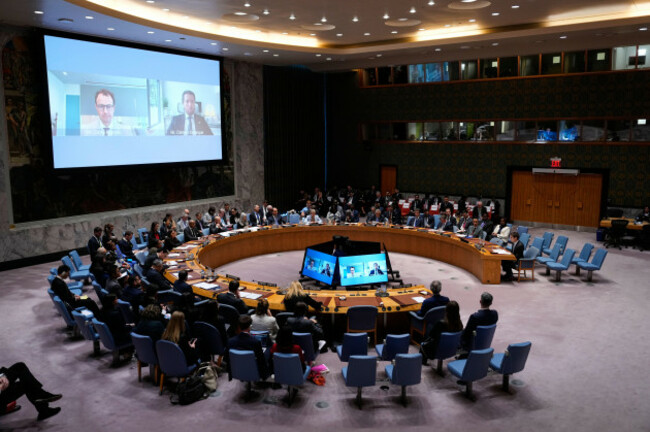
He said increasingly powerful models would require “even more stringent standards of safety”, including efforts to prevent the technology from being misused.
The intervention comes amid a wider debate at this week’s UN General Assembly over how rapidly developing AI should be governed.
In his address on Tuesday, UN Secretary-General António Guterres called for countries at the forefront of the technology to share information about emerging safety risks and cooperate on testing and safeguards.
He urged countries to work towards a multilateral framework for managing AI risks, backed by “credible and independent oversight”.
“Artificial intelligence must be shaped by humanity, with humanity, and for all humanity,” Guterres said.
His position contrasted with that outlined by US President Donald Trump in his address to the General Assembly on Tuesday.
Trump said the US “totally rejects” attempts to create what he described as a “globalist scheme” to control AI and reiterated his opposition to regulation that he believes could hamper the industry’s growth.
“I’m not going to stifle growth of something that will be bigger than the Industrial Revolution,” Trump said.
President Trump: The United States totally rejects any attempt to construct a globalist scheme to control the artificial intelligence being spoken of so much now, here and after officially called super intelligence, changing the name in that the use of the word artificial makes… pic.twitter.com/5OsptGmzo6
— U.S. Mission to the UN (@USUN) September 23, 2026
He also announced that the US government would begin referring to artificial intelligence as “super intelligence”, arguing that the word “artificial” made the technology sound “fake”.
Trump has previously dismissed warnings over the dangers of AI as a “hoax”, although he told the UN that the technology would still need to be watched closely.
Taoiseach Micheál Martin had said on Monday that AI would be a key talking point at this week’s summit.
“Quite a number of states are now quite concerned, in terms of what we’re reading in the last number of weeks, in terms of the challenges that AI could present ultimately to the world,” Martin said.
Additional reporting from AFP

To embed this post, copy the code below on your site
















have your say