Sign in. It’s quick, free and it’s up to you.
An account is an optional way to support the work we do. Find out more.
Sign in. It’s quick, free and it’s up to you.
An account is an optional way to support the work we do. Find out more.
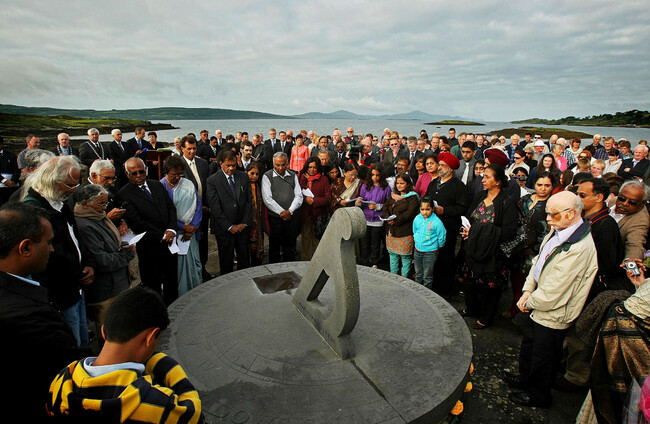
TAOISEACH MICHEÁL MARTIN has told a commemoration marking 40 years since the Air India disaster in West Cork that while the scale of the atrocity was global, it remains “an intensely personal tragedy” for the people who lost loved ones.
In June 1985, Air India Flight 182 was brought down off the coast of Cork in what was the worst aviation disaster in Irish and Canadian history.
Some 329 people were killed, including 29 families, the majority of whom were Canadians of Indian descent.
The plane crashed as a result of a terrorist attack, and was the worst aviation act of terrorism until the 11 September attacks.
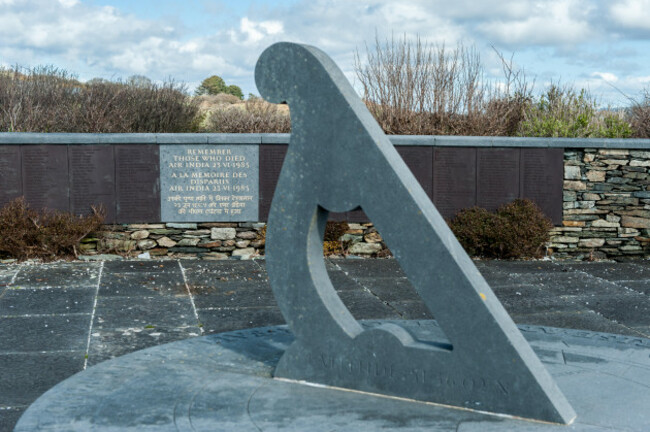
An annual commemoration is held at the Ahakista Memorial in Cork.
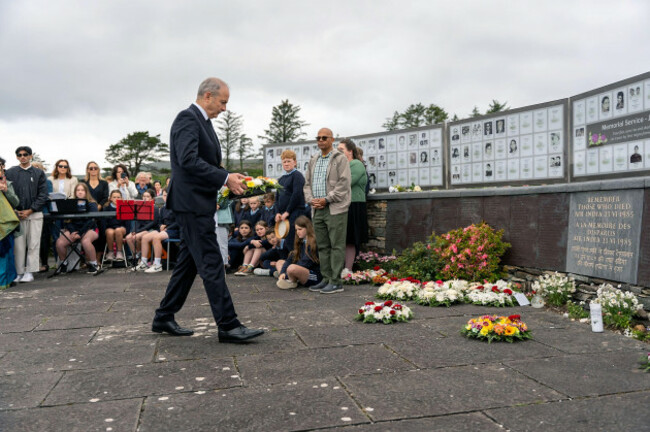
Taoiseach Micheál Martin spoke at the memorial today and said it was “always a privilege and honour” to do so.
He praised families for the “dignity, dedication and care” with which they remember their loved ones, “who died so horrifically 40 years ago today”.
“392 innocent people lost their lives over the skies of Ireland that morning, and the passing of time does not dim the scale of loss and of this atrocity,” Martin said.
“We feel the enormity of your loss when we see the faces and read the stories on the memorial here before us.
“So many young lives taken far too soon.”
Martin said that while the scale of the atrocity was global, “we should never forget that this is an intensely personal tragedy”.
At the 20th commemoration of the disaster, Paul Martin became the first Canadian prime minister to visit the memorial.
On RTÉ’s Morning Ireland this morning, retired Irish Navy captain James Robinson spoke about how he and his crew helped to recover some of the bodies from the scene.
He told the programme that they were working close to Co Kerry at 8am that morning when they picked up a radio message from Valentia Island that an aircraft had disappeared from radar screens.
“We straight away, headed towards the scene, not knowing at the time, as we went out there what nature of tragedy had taken place,” Robinson said.
He said in the couple of hours it took them to reach the scene, they were preparing to rescue survivors.
“We were taking blankets out of the stores. I recall soup was being put on the stove in the galley, to warm people up. When we got to the scene, we very quickly became aware that we were in the business of recovering bodies and wreckage.”
Robinson, who is attending the commemoration this morning, said he and his crew did not feel the impact of what had taken place right away as “we had a job to do”.
It was subsequently that the enormity of what had taken place dawned on us. There was a lot of anger that this devastation could be wrought on so many innocent civilians.
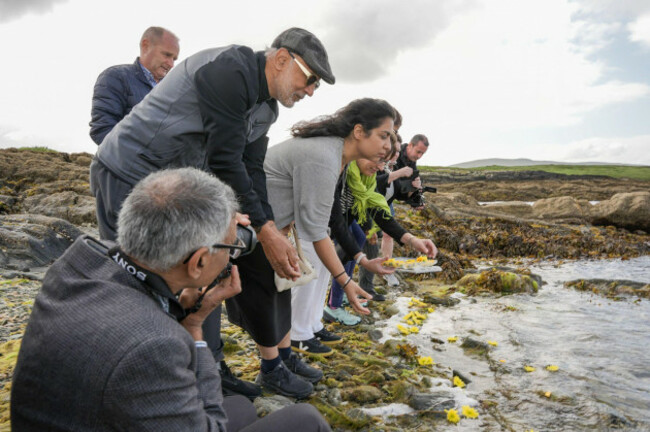
“But also, I felt very great pride in my crew. They were young Irish people who did a remarkable job and asked for nothing in return.”
With reporting from Press Assocation and David Mac Redmond

To embed this post, copy the code below on your site







have your say