Sign in. It’s quick, free and it’s up to you.
An account is an optional way to support the work we do. Find out more.
Sign in. It’s quick, free and it’s up to you.
An account is an optional way to support the work we do. Find out more.
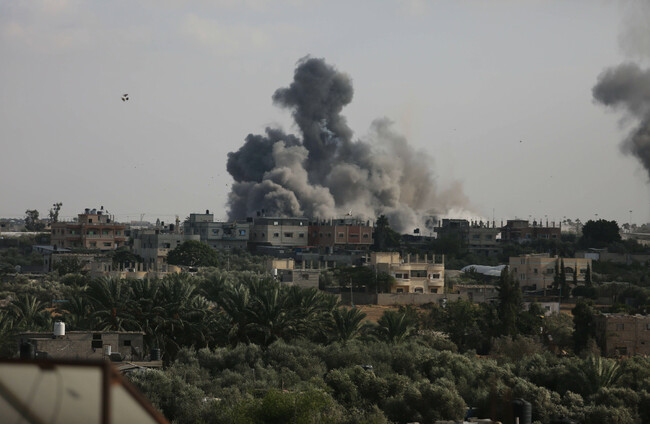
AMNESTY INTERNATIONAL HAS said “numerous governments continue to brazenly flout the Arms Trade Treaty rules” and that it is “leading to a huge loss of life in conflict zones”.
On 2 April 2013, 155 states voted to adopt the Arms Trade Treaty and it entered into force in December 2014.
It’s an international treaty that regulates the international trade in conventional weapons.
It also seeks to prevent and eradicate illicit trade and diversion of conventional arms by establishing international standards governing arms transfers.
However, Amnesty said some of the biggest arms exporters continue to flout the rules, particularly in Gaza, Sudan and Myanmar.
The 10th Conference of States Parties to the Arms Trade Treaty is taking place this week and Amnesty International will be calling for a halt to arms sales to Israel.
Patrick Wilcken, Amnesty International’s researcher on military, security and policing, said the Arms Trade Treaty means that the “legality of an arms transfer is now explicitly linked to international human rights and humanitarian law rules”.
“Although progress has been achieved, numerous governments continue to brazenly flout the rules, leading to a huge loss of life in conflict zones,” said Wilcken.
He called on state parties to “live up to their legal obligations and fully implement the Arms Trade Treaty” and to “prohibit the flow of arms to countries when it is known they would be used for genocide, crimes against humanity, or war crimes”.
Amnesty described the continued transfer of arms to Israel as a “stark example of the failure by state parties to fully comply with the Arms Trade Treaty”.
Wilcken said Amnesty International has long called for a “comprehensive arms embargo on both Israel and Palestinian armed groups”.
He said there have been “longstanding patterns of serious violations of international human rights and humanitarian law, including war crimes, leading to horrific impacts on civilians, including women and children”.
He said countries such as the United States – the largest provider of arms to Israel – “continue to licence arms transfers to Israel in spite of overwhelming evidence of war crimes committed by Israeli forces”.
Amnesty said it has been documenting unlawful arms transfers that facilitate grave abuses and cited the use of US-manufactured weapons in a number of unlawful airstrikes.
This includes US-made Joint Direct Attack Munitions being used in two air strikes on homes in the Gaza Strip which killed 43 civilians – 19 children, 14 women and 10 men – on 10 and 22 October 2023.
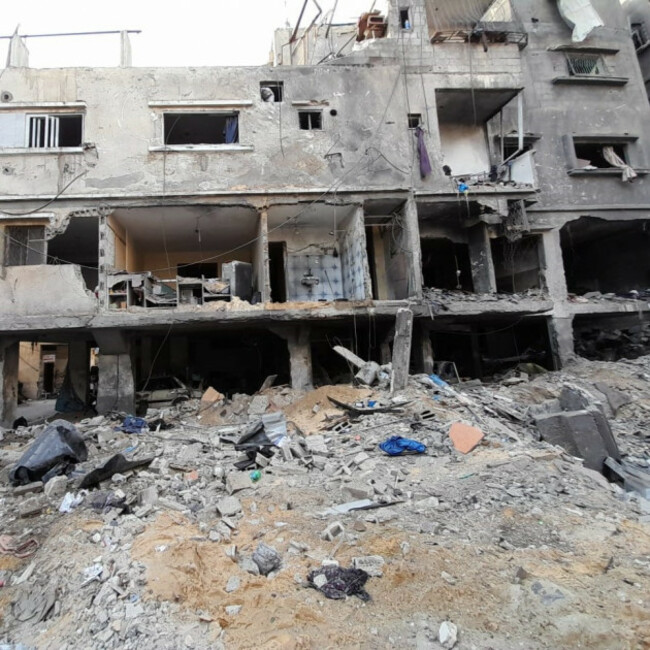
It also pointed to the use of a GBU-39 Small Diameter Bomb, made in the US by Boeing, which was used last January which hit a family home in the Tal al-Sultan area of Rafah, killing 18 civilians, including 10 children, four men, and four women.
Amnesty said illegal arms transfers have also fuelled unrest in Sudan.
War has raged in Sudan since April 2023 between the Sudanese army, under the country’s de facto ruler Abdel Fattah al-Burhan, and the paramilitary Rapid Support Forces, led by his former deputy Mohamed Hamdan Daglo.
Ceasefire talks began last Wednesday in Switzerland, hosted by US, Saudi and Swiss mediators, though the Sudanese army refused to take part.
Previous rounds of negotiations in Jeddah in Saudi Arabia have failed to produce an agreement to end the fighting.
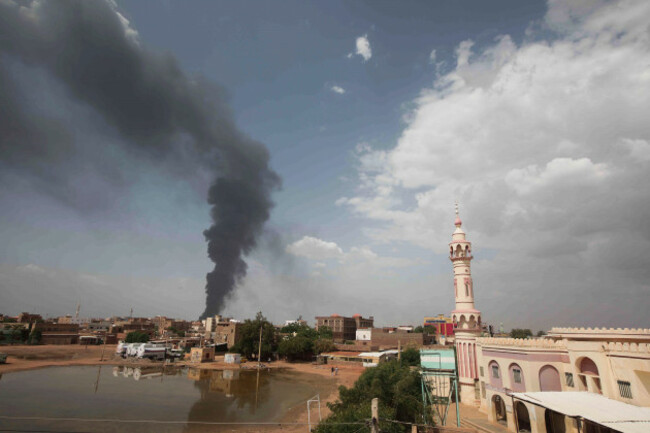
The fighting between the Sudanese Army and the Rapid Support Forces and their allies has killed more than 16,650 people and displaced millions, making Sudan the world’s largest internal displacement crisis.
Despite a UN Security Council arms embargo on the Darfur region of western Sudan, Amnesty said it continues to document “substantial flows of weapons into the conflict”.
Amnesty said it has identified recently-manufactured weapons and military equipment from countries such as China and Serbia, who are state parties to the Arms Trade Treaty, and signatories Türkiye and the United Arab Emirates, that are being imported in large quantities into Sudan, and then in some cases diverted into Darfur.
Tom Andrews is the UN’s Special Rapporteur on the situation of human rights in Myanmar.
Andrews said UN Member States are enabling this trade “either through outright complicity, lax enforcement of existing bans, and easily circumvented sanctions”.
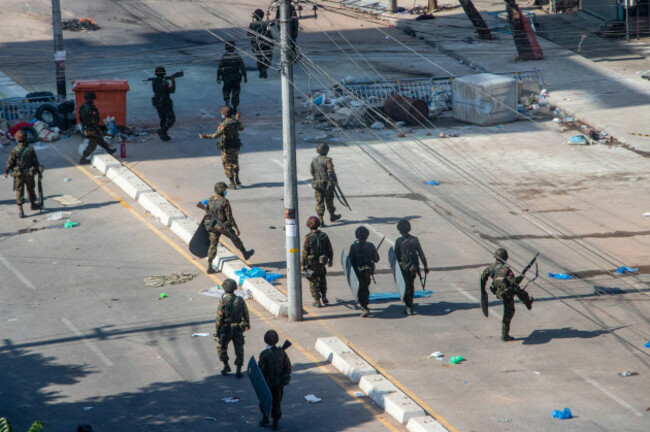
He pointed to Russia and China as the main suppliers of advanced weapons to the Myanmar military since the coup.
Former leader Aung San Suu Kyi has been detained since the military seized power and was reportedly moved to house arrest in April amid a heatwave.
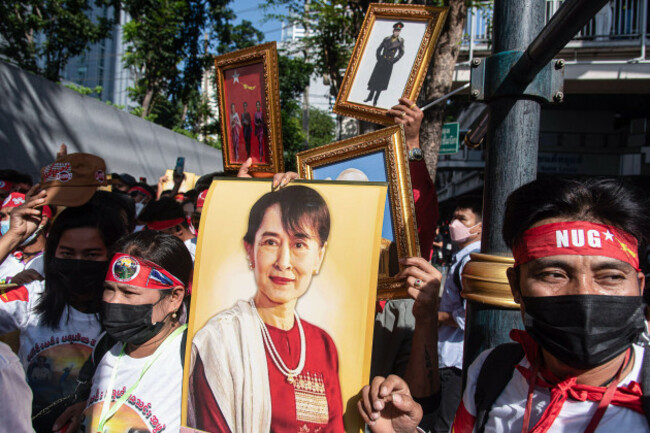
Amnesty’s Patrick Wilcken said the Myanmar military has used these weapons to “repeatedly attack civilians and civilian objects – often destroying or damaging schools, religious buildings and other key infrastructure”.
Wilcken added that “State parties and signatories to the Arms Trade Treaty cannot afford to shirk their obligations any longer” and called for states to “stand true to the treaty and reduce human suffering”.

To embed this post, copy the code below on your site














have your say