Sign in. It’s quick, free and it’s up to you.
An account is an optional way to support the work we do. Find out more.
Sign in. It’s quick, free and it’s up to you.
An account is an optional way to support the work we do. Find out more.
WHEN IS AN investment not an investment?
This might sound like the start of the world’s driest riddle.
But actually, it’s an important question after the Irish state has finally sold the last of its private banking shares.
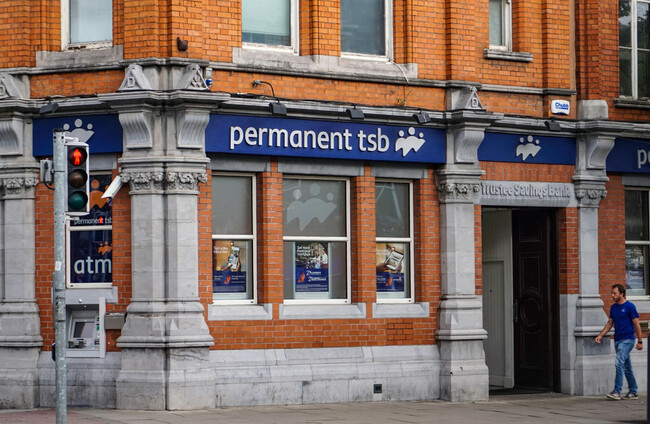
The vote from PTSB (formerly Permanent TSB) shareholders earlier this week voted in favour of a €1.6 billion takeover by Bawag.
With its 57% stakeholders, the state will pocket about €931 million. While there are still some disgruntled investors who could try to use the courts to block the transaction, it’ll likely go through.
But more significantly – it will mark the last sale of shares in banks bailed out during the financial crisis.
The state spent €29.4 billion bailing out PTSB, BOI (Bank of Ireland) and AIB after the 2008 financial crash. In return, it took ownership stakes in the three lenders, which it has since been steadily selling down.
BOI returned to private ownership back in 2022.
AIB went last year. PTSB is the final one.
Now we come back to the earlier question – how much of the money which the state ‘invested’ in the three lenders did it get back?
If you were to just read government press releases, you would likely be under the impression that the Irish state did very well.
“On an overall basis, the state is €1.3 billion above break-even on its €29.4 billion investment in AIB, Bank of Ireland and PTSB from direct shareholding linked income,” Minister for Finance Simon Harris has said.
“[It] has recovered a further €1.8 billion from the banking sector since the introduction of the bank levy.”
Wow, so an extra €1.3 billion plus another €1.8 billion – sounds like Irish taxpayers made over €3 billion on their investment into the three lenders.
It sounds great – until you realise that these numbers are a ‘cash in, cash out’ basis. That is, you just look at the upfront money in, and don’t consider any other factors.
But if we are truly treating the bailout as an investment, there are at least three other things which we should also consider:
When you factor in these three, things look far less rosy. Let’s take them one at a time.
First, financing. When the Irish state poured billions into the banks, it borrowed money to do so. There is a cost to doing this, something which the Comptroller and Auditor General (the state spending watchdog) previously examined.
It estimated that the debt servicing costs related to the bailouts in AIB, PTSB and BOI had amounted to €8.5 billion as of the end of 2021.
There has been no official estimate since then, but it’s likely that debt financing related to the three lenders has cost the Irish state about €200 million per year since. Given that was 4.5 years ago, debt servicing costs are likely now close to €9.5 billion or so. That should be added to the final bill.
Then we have inflation. Say you invest €10,000 for 10 years. If prices rise by 10% over that period, but your investment earns nothing, you’ll still have €10,000.
The problem is that €10,000 now buys about 10% less than it did a decade earlier. That’s why investments generally need to outpace inflation.
€29.4 billion from 2010 converted to today’s money is about €39.6 billion. Again, this means the Irish state is really another €10 billion down on its banking ‘investment’.
Finally, there’s opportunity cost. That is, the money which the state’s cash could have generated if it had been used elsewhere.
For example, $1,000 invested in the S&P 500 in early 2010 would be worth roughly $7,000 – about seven times more – today.
You could credibly argue that the Irish state was never about to throw billions into the stock market. But the €29.4 billion could have been used to do something like pay down the national debt, avoiding the billions in debt servicing costs we discussed earlier.
Now you might say – well, the bailouts shouldn’t be treated as ‘investments’. They should be treated as an emergency measure to save the country’s banking system.
If they were judged solely from that perspective, they have been successful – the three banks are now all in solid financial positions.
However, the government has repeatedly insisted on referring to the bailouts as ‘investments’. It is the one which has continuously insisted that the Irish state has made a profit. In doing so, it is the one which is creating a misleading picture.
When asked why the government just looks at its bank investments on a ‘cash in, cash out’ basis, the Department of Finance referred The Journal to a ministerial brief prepared by its officials last year.
It again contained similar claims around the state’s returns, saying: “€29.4 billion went into AIB/EBS, BOI and PTSB. In recent years, the Department has recovered the full amount of this investment and retains a further c. 57.4% stake in PTSB [note - now being sold].”
“Unlike the approach of the C&AG, we have not factored in a funding or opportunity cost for these investments.”
On the justification for this decision, the briefing states: “While the C&AG funding cost figures are perfectly rational, what they don’t measure is the benefit to the wider economy from rescuing the core of the banking system which was the reason for the intervention in the first place.”
This argument is again somewhat misleading. It is essentially impossible to measure the economic benefit to wider Irish society of rescuing the three banks.
Also, if the true point of the ‘investment’ was to benefit the wider economy, then why not call it what it was – a bailout?
The department and government is trying to have its cake and eat it too. On the one hand, say that the state got a return on its ‘investment’ into the three private banks.
On the other, say that the move actually can’t be viewed as an investment due to it essentially functioning as a bailout.
This issue is something which we’ve previously discussed, when the Department of Finance last year highlighted being ‘above break even on its €29.4 billion investment’.
Maybe all this seems like a silly quibble over terminology – who cares if the money which went into the three banks was an investment or a bailout?
But the reason it matters is because it fundamentally changes how you view the return Irish taxpayers got.
If you view it as a bailout, there’s a very strong argument that it was the right move as it kept the country’s private banking system alive.
But viewed purely as an investment, it looks like a poor one. The state got back billions less than it put in and also couldn’t use the cash for other important spending.
The government and Department of Finance are the ones insisting on calling it an investment, in a move which looks purely like an attempt to spin a narrative.
It’s well past time to rethink that approach.

To embed this post, copy the code below on your site













have your say