Sign in. It’s quick, free and it’s up to you.
An account is an optional way to support the work we do. Find out more.
Sign in. It’s quick, free and it’s up to you.
An account is an optional way to support the work we do. Find out more.
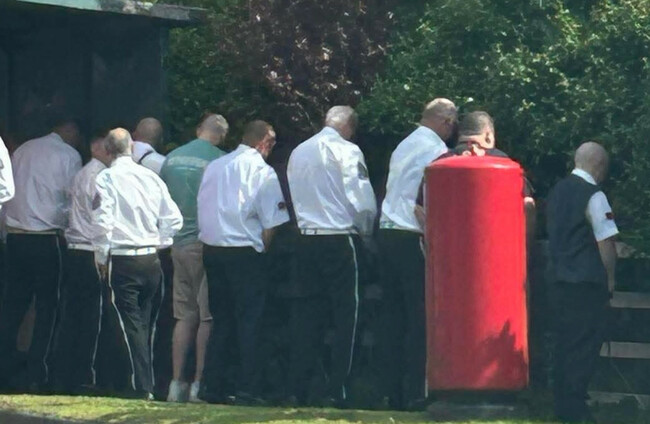
THE APPRENTICE BOYS of Derry have issued a public apology after images circulated online showing several members urinating at a bus stop near homes during their annual ‘Relief of Derry’ celebrations.
The incident occurred in the Culmore Road area on Saturday during the parade, which commemorates the end of the 105-day Siege of Derry in 1689.
The Apprentice Boys are a Protestant fraternal group in Derry, who hold annual parades to commemorate the siege – an important event in loyalist history.
Photos shared online during the parade over the weekend showed at least ten Apprentice Boys relieving themselves against a wall by a bus stop close to several homes.
Scottish Orangemen disgustingly exposing themselves on the Culmore public Road today.
— 🇮🇪 𝐁𝗋ó𐓣ƶy 🇮🇪 (@BronzyGuevara) August 9, 2025
Every year in Derry, thousands of Apprentice Boys' and their bands mark the end of the Siege of Derry in 1689 by marching through our City Centre, In the process the people of our City are… pic.twitter.com/kyJor9PK6o
General Secretary of the Apprentice Boys, David Hoey, condemned the behaviour as “disgusting” and “unacceptable,” and apologised to the local community.
Speaking to BBC Radio Foyle, Hoey confirmed the organisation is working to identify those responsible, and promised robust action.
“We have had messages from associations across the country expressing how disgusted they were about this,” Hoey told BBC Radio Foyle.
“There were more toilet facilities than ever, so there was no excuse for this.”
He stressed that the city “is at the heart of our association” and said the actions undermined the purpose of the day, which was otherwise considered successful.
Sinn Féin Foyle MLA Pádraig Delargy also condemned the incident
“Once again, visiting loyalist bands have shown a disgusting lack of respect for the people of Derry,” Delargy said in a post online.
“Year after year, utterly despicable scenes.”
“Those organising these events must take responsibility and ensure we don’t see a repeat of these scenes and other offensive behaviour,” he added.
Additional controversies arose during the parade, including some bands displaying banners linked to loyalist paramilitary groups such as the Ulster Defence Association (UDA).
UDA flag on display at Derry Day march yesterday. No arrests of course. RUC more interested on arresting elderly people wearing Palestinian Action shirts. pic.twitter.com/oJUWlfoxWD
— Poblachtach Sócialach 🇮🇪 (@PSocialach) August 10, 2025
The ‘East Bank Protestant Boys Londonderry’ marched with a banner commemorating Gary Lynch, a UDA member killed by the IRA in 1991, while the Tullycarnet Flute Band from east Belfast carried a UDA emblem on their banner.
Mark H Durkan, former SDLP leader and Foyle MP, called for police to take firmer action against disrespectful behaviour during the parade.
“While most people take part in good faith, a small minority have caused issues over recent years,” he said.
“Carrying UDA banners and openly urinating in local communities has caused considerable anger and upset.”
Durkan urged the PSNI to investigate offences and for parade organisers to cooperate fully.
Local Aontú councillor Emmet Doyle similarly condemned the incident, saying in a statement: “This can’t go on.”
“Every year people say it’s awful and then nothing is done. Not this time,” Doyle said.
“We love our City, green and orange. Respect it or don’t come at all.”
The Apprentice Boys stated they will conduct a thorough review of the events with police and marshals to learn from the incidents and improve future parades.
The Relief of Derry parade, held annually on the second Saturday in August, commemorates the city’s Protestant residents shutting the gates against King James II’s forces during the Williamite War in Ireland.
It marks a key event in Irish history, and a significant Protestant victory in Northern Ireland.

To embed this post, copy the code below on your site








have your say