Sign in. It’s quick, free and it’s up to you.
An account is an optional way to support the work we do. Find out more.
Sign in. It’s quick, free and it’s up to you.
An account is an optional way to support the work we do. Find out more.
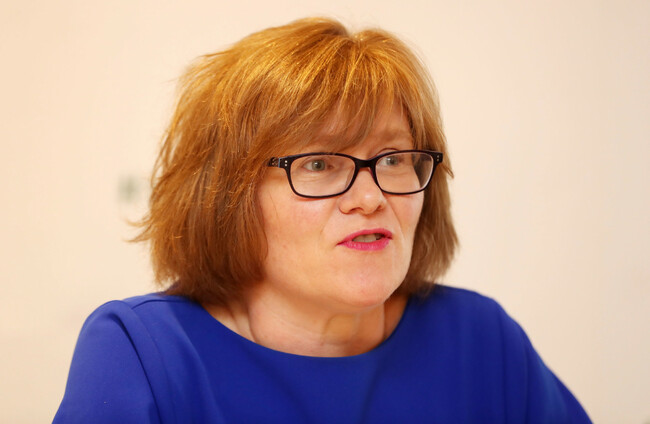
THE NATIONAL WOMEN’S Council of Ireland (NWCI) is urging the government to establish a 40% legislative quota for gender balance on non-state boards with “appropriate sanctions” in place for non-compliance.
In a new report into female representation on corporate boards, launching later today, the NWCI argues that with a three-year implementation period, and a required benchmark of 50% mandatory improvement each year, gender balance will be over the 40% minimum by the fourth year – if these goals are met.
The Case for Legislative Gender Quotas in Ireland report found that the private sector had made the least amount of progress improving gender balance on boards.
An average of 22.4% of Irish listed companies has female board members, while 19% of all companies had no female directors, according to the report.
It recommends that progress be monitored by a dedicated state committee and external industry and advocacy groups. This monitoring would include the publication of detailed gender metrics statistics on changes in publicly listed board gender composition every six months, and identify the companies that are taking action towards the goals, as well as those that are not.
To increase accountability, the NWCI says the proposed state committee should be obliged to report to the Oireachtas Equality Committee.
Should non-compliance be found, the report recommends the use of sanctions such as financial penalties; suspension of any advantage financial or otherwise for board members; ‘empty chair’ supervisory board position remain vacant until quota reached; and denial of consideration for public subsidies and state contracts.
In a submission to the Citizen Assembly last year, The Irish Human Rights and Equality Commission (IHREC) recommended that the Government implement a system of statutory gender quotas for company board membership.
The IHREC made its recommendation against the backdrop of Central Statistics Office data that revealed that fewer than one in five board members in Ireland are women.
The Citizens’ Assembly on Gender Equality later agreed to 45 priority recommendations which were sent to the government – one of which was to enact gender quota legislation that requires private companies to have at least 40% gender balance on their boards.
NWCI director Orla O’Connor says the publication of today’s report makes the case for legislative gender quotas as the pace of change is too slow, “if we are to make real the concept of equality for this generation substantive changes are required”.
“A voluntary target-led approach has not produced the results necessary to justify the continuation of soft-approaches. A legislative quota of 40% women on non-state boards is a blunt instrument, but a necessary tool if we are to enact meaningful change. This report outlines the benefits of more women on boards, for society and for business,” she writes in today’s report.
“We have an opportunity for change and NWC is proposing a set of key recommendations to spark that change. Structures must be changed so that every woman has equality of opportunity. Our boardrooms should be reflective of society today.”
The NWCI says that quotas should not just be the end result of the debate on improving gender balance on boards and that diversity, equity and inclusion requires an intersectional approach that includes race, ethnicity, disability, LGBTQ+ in actions to diversify economic decision making.

To embed this post, copy the code below on your site














have your say